This former Great Northern Railway (GNR) signal box has been around for quite some time. It was built in 1873 and is the second oldest GNR signal box still standing and is now a Grade II listed building.
Apparently the signal box designs used by GNR were relatively unstandardised and almost every one built in the 1870s is different in some way.
Yashica Mat 124G & Lomography Color Negative 400. Lab developed. Home scanned and converted using Negative Lab Pro.
I took this picture literally straight after leaving the car park (my car is about 50 metres beyond the Beetle). Sometimes opportunities present themselves straight away..
Yashica Mat 124G & Lomography Color Negative 400. Lab developed. Home scanned and converted using Negative Lab Pro.
Another batch of Kodak Pro Image photos from Lincoln today. Again, I’m really enjoying the colours from this roll.
Today has been a nice day. I started off with a bit of a lie in (nothing to extravagant – the days of laying in bed all morning are a thing of the past, my free time is too precious these days – but staying in bed till 8:30 is still a joy).
Later in the morning my wife and I went to view a bungalow (as we are planning on moving house). The property had a lot of potential, but would no be somewhere we could move straight into as it has too many things that would need to be done to make it liveable. It would cost quite a lot of money to carry out the necessary work too. The house was vacant and we were told that the lady who originally owned it had moved into care and the council was now selling the house to pay for this. While all the furniture had been removed, there were still a few small signs of the person who had lived there before, including a certificate of her husband’s retirement from his job on one of the walls, beside which was stuck a sheet of paper listing names and birthdays of people the owner had once known. It was quite sad to see these small reminders of lives now moved on.
Then, this afternoon, we went strawberry picking. The weather had forecast rain showers, but this changed and it was a lovely warm day with blue skies scattered with fluffy lumps of cumulus. We got three large punnets of strawberries, most for us, but also for my day, my sister-in-law, and our niece. I snuck a few berries while picking them and they were delicious. I’ll enjoy more of them this evening with a bit of cream.
It’s very nice to have a day like this.
Olympus OM-10, Zuiko Auto-S 35mm f/2.8 & Kodak Pro Image. Lab developed. Home scanned and converted using Negative Lab Pro.
One thing I noticed with this first roll of Kodak Pro Image is that a few shots seemed to lose a lot of shadow detail, including the one below. I actually cropped this one as the lower bottom left of the image fell to mush, although you can still see some of the effect in the hedge. I had another shot from the roll that looked similar too.
I’m not sure if my camera just metered badly in these cases as all other images on the roll are well exposed. It’ll be interesting to see if I spot any similar issues when I scan the next roll.
Olympus OM-10, Zuiko Auto-S 35mm f/2.8 & Kodak Pro Image. Lab developed. Home scanned and converted using Negative Lab Pro.
While Kodak Pro Image isn’t grain free, it’s still pretty fine and it renders a lot of detail in scenes. Its colour rendering works nicely with these two houses gentle paint schemes.
Olympus OM-10, Zuiko Auto-S 35mm f/2.8 & Kodak Pro Image. Lab developed. Home scanned and converted using Negative Lab Pro.
I mentioned the other day about posting some colour medium format pictures from my trip to Lincoln. Those are still to come, but I almost forgot about the partial roll of colour 135 shots I took as well!
These are shot on Kodak Pro Image film – the first time I’ve ever shot this stock. I bought a pro-pack of five rolls a few years ago – long enough back that they’re now expired. Luckily, they’ve been cold-stored since I bought them and so show no signs of age.
I was very pleasantly surprised at the results I got. They converted very nicely in Negative Lab Pro, producing good results from the off with little tweaking required. I like the colours too, nothing brash, just nice, slightly pastel tonality. Some of the later shots from the roll were shot on an overcast day and those look nice too.
I took another roll of the film on my recent holiday in Spain, so it will be interesting to see how those turn out when I get them back from the lab, but overall I’m happy with the film and will probably buy more when my existing colour stash runs a bit drier.
Olympus OM-10, Zuiko Auto-S 35mm f/2.8 & Kodak Pro Image. Lab developed. Home scanned and converted using Negative Lab Pro.
A few weeks back I mentioned in this post that I’d found, and photographed a large “pebble” made of housebricks. I’d not yet finished the roll of film containing the picture at that time, but I have now, so here’s a picture of the somewhat unlikley looking product of erosion.
It actually looks quite interesting, and I’ve idly wondered how it would look if polished to a smooth finish and used as the top for a small table or something. It would certainly be a talking point.
I also wonder where it came from? Someone’s house, a clifftop wall? And how long has it been subjected to the forces of nature to reach this state?
Olympus 35 RC & Kodak Gold 200. Lab developed. Home scanned and converted with Negative Lab Pro.
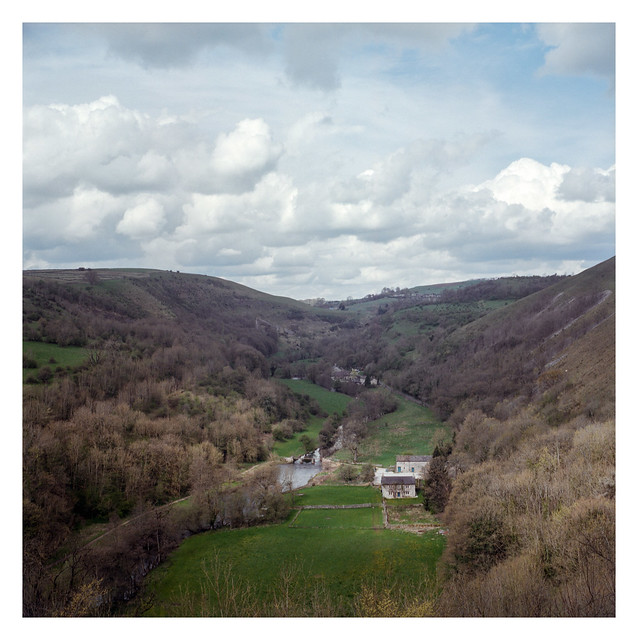
On the day that I visited Ashford-in-the-Water, I also drove up to Monsal Head, a scenic viewpoint which overlooks a stretch of Monsal Dale where the valley takes a sharp bend. As with Ashford, the River Wye flows through (and indeed, eroded) the dale here too, a few miles upstream from the village.
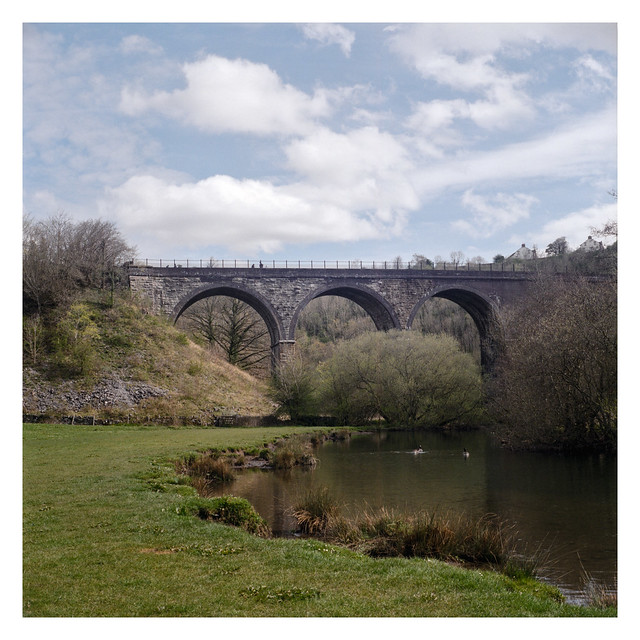
One of the main features of the valley is the disused Headstone Viaduct which used to carry the Manchester, Buxton, Matlock and Midland Junction Railway. The line was open between 1863 and 1968. The route of the railway now forms the Monsal Trail, a popular route for hiking and cycling. The viaduct is 300 feet in length and 70 feet tall.
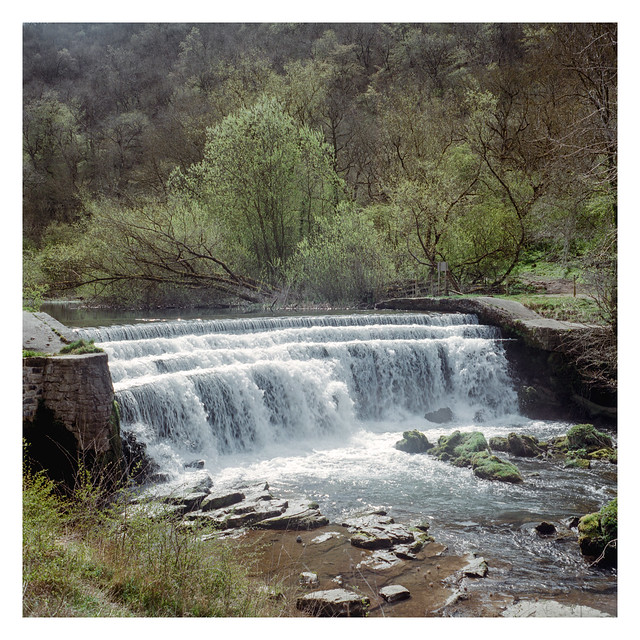
A little downstream from the viaduct a weir slows the flow of the river.
Yashicamat 124G & Fujifilm Pro 400H. Lab developed. Home scanned and converted with Negative Lab Pro.
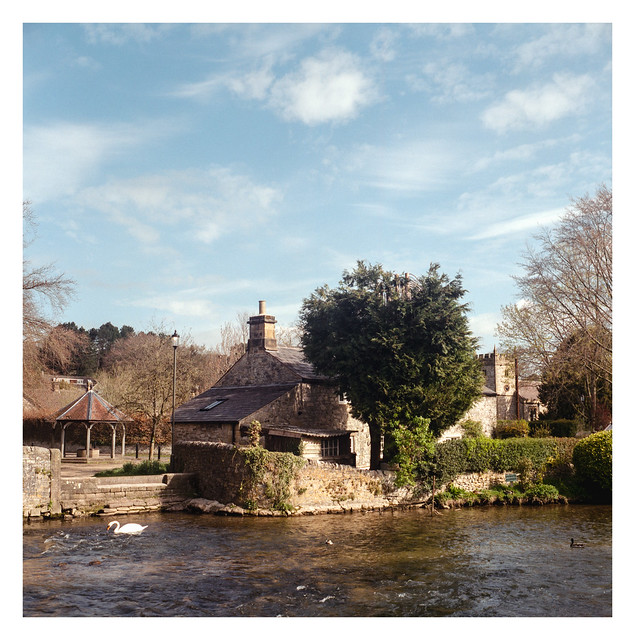
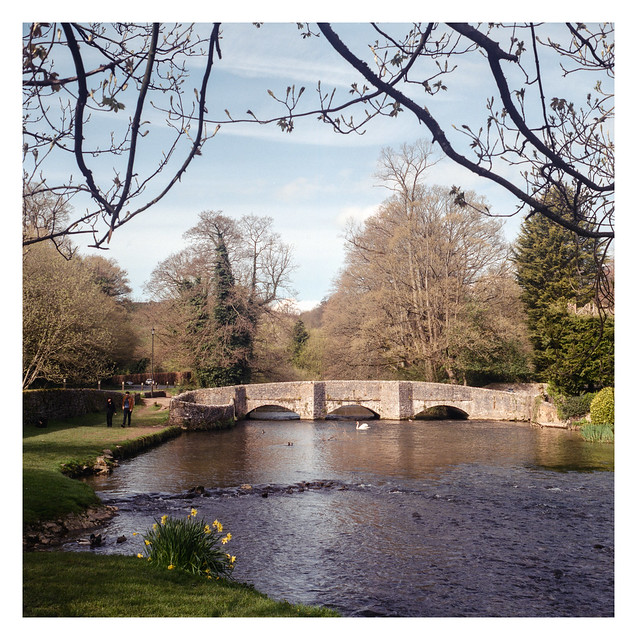
Three more photos from Ashford-in-the-Water, all taken on the banks of the River Wye where it flows past the edge of the village. It’s really quite picturesque.
The bridge in the third image is Sheepwash Bridge, a 17th century packhorse bridge which is a Scheduled Monument, giving it legal protections from modification. To the left of the bridge in the image is a stone pen. Lambs would be places in this pen so that their mothers would be enticed to swim the river to get to them. As they swam they would be pushed beneath the surface to clean their coats before they were sheared. There were no lambs in the pen on this day, although there were a couple of ducks.
That’s the same swan in all three shots. 🙂
Yashicamat 124G & Fujifilm Pro 400H. Lab developed. Home scanned and converted with Negative Lab Pro.




 Steel City Snapper photography