I wonder what used to stand here, beside this (I presume) wharf building? You can see where it once stood, the whitewashed outline of it’s gable tattooed on the structure it shared space with.
I’m sure someone familiar with King’s Lynn would know.
This attractive old building is the Custom House in King’s Lynn, Norfolk. It dates all the way back to 1683 where it was originally a merchant’s exchange. It took on the role of Custom House in the 1700s and continued to do so through to 1989. The bottom of the building used to be an open arcade serving as a meeting place for merchants, the upper part of the building supported by supported by columns, but the arches have since been filled in, and the columns replaced by masonry.
One of my sons has gone on a trip to Europe with his friends. This is the first time he’s done this (although some of his friends have been away together before), partly because he doesn’t like flying, and partly because, being fair skinned, he’s not a huge fan of sunshine holidays. This trip is a city break though, and it’s November, so hot weather and too much sun are unlikely to be an issue.
Hi mother and I are understandably nervous – it’s one of those “firsts” that you go through with your kids. First night away from home. First time on a bus by themselves. First time driving alone. First trip to a pub. First trip to a nightclub. The list goes on.
He’s a sensible young man and, while I’m sure he’ll avail himself of some drinks while there, he won’t do anything foolhardy, but your children are precious and it’s natural to be concerned for their safety, security, and happiness, even if the likelihood of anything affecting these things is small.
He left the house early this morning to walk to the house of his friend who was driving some of them to the airport. I was asleep when he left, but woke at around four to go to the toilet and realised he had already set off. I was then unable to get back to sleep until I got a message from him saying he was at the airport. I slept off-and-on for the rest of the night and when I did wake properly, kept checking the progress of his flight. I was much happier when I knew he’d arrived safely and, while I’ll be much happier when he’s back home again, I feel less on edge today than I have for the last few. Being a parent can be stressful!
My other son (we have three) had a review meeting today for the internship he’s attending this year. We went along with him and were extremely happy with his progress. He is getting along great and we couldn’t have hoped for better feedback from the staff at the place he is working. We are very proud of him. There are also positive signs that there may be a permanent position for him, which is very good news. Being a parent can also be very rewarding. 🙂
Back in September I decided to visit the town of King’s Lynn, in Norfolk. I did this for no other reason than I had never visited the place before and that I thought it might be an interesting place to take some photographs. It was, and I’ll be posting some of the results over the next week or so.
I didn’t get the best weather on the day – it being largely overcast through the morning – although it did brighten up in the afternoon, so the light was a little low for the first part of the day. This didn’t really harm the Tri-X I had loaded, although I was effectively shooting it at 200asa because I had a yellow filter fitted to the camera, but I did wonder how the roll of Delta 100 in the other camera I took would fare. More on that in another post though.
This roll of Tri-X was also the first I’ve ever developed using Rodinal. I’d previously shied away from using this developer with faster films, having heard tales of “golfball”-size grain but, having read some posts by Andy on his S.H.O.U.T photography blog about his experiences with Rodinal, I decided to see how I would get on.
I think the results are, on the whole, pretty good. There’s more grain that I would have seen had I developed it in my usual Ilfotec DDX, but nothing outrageous, and the tonality of the negatives is good.
I’m not sure I would rush to develop 135 Tri-X in Rodinal, but I’m not averse to using it for Tri-X (or perhaps HP5+) again in future. It’s certainly a more cost effective option.
Anyway, the photo today is of a statue of King’s Lynn born George Vancouver (22 June 1757 – 10 May 1798) a British Royal Navy officer best known for his exploration of the American north-west coast. The city of Vancouver, Vancouver Island, and Mount Vancouver are all named after the man, as is another Mount Vancouver in New Zealand! He also named a number of other locations after his friends, colleagus and fellow officers, including Mount St. Helens, Puget Sound, and Mount Rainier.
That’s the top of the custom’s house behind his head, and not some sort of fancy hat he’s wearing.
This big boat of an Oldsmobile made for a pretty nice picture. I think the touch of corrosion on the bonnet (hood) adds to it.
I think that this is a Cutlass, but please correct me if I’m wrong.
EDIT: The owner of the car has discovered my blog post and contacted me to let me know that the car is actually an Oldsmobile Ninety Eight, which was the flagship model. I did speak with him on the day I took the picture and he told me that the corrosion on the bonnet was on his list of things to sort out, and he’s re-confirmed that, along with a few stats on the vehicle, namely that it has a 425 cubic inch engine, which means it is a 7000cc V8 engine. Around town it manages 8MPG, and 13.7MPG on the motorway.
Fujica GW690 & Kodak Plus-X (expired 2008 and shot at 100asa). Adox Rodinal 1+50 13mins @ 20°.
It’s been a while since the last one of these posts, but with a shorter gap than before – 7 months this time, as opposed to the 17 month gap between the last two Expiriment posts.
This time, the subject was a roll of Kodak Vericolor HC which had expired in 1992. I have no idea of the entire provenance of the film before I got it, although it’s been in my freezer for about three years now.
Kodak describes Vericolor HC as follows:
KODAK VERICOLOR HC
Professional Film
This improved color negative film has greater sharpness and finer grain than KODAK VERICOLOR II Commercial Film, Type S.
This film is ideal for commercial illustration, industrial applications, low-level aerial photography, environmental portraiture, and other applications that call for increased contrast. It may also be used for any copy work that needs increased contrast, and for outdoor portraiture under low-contrast lighting conditions, such as on cloudy days or in deep shade.

FEATURES
•	Extremely fine grain, extremely high sharpness, and high resolving power
•	Built-in dye mask
•	Balanced for exposure by daylight, blue flash, or electronic flash
•	Designed for processing in Process C-41 chemicals

BENEFITS
•	Produces excellent-quality high-contrast prints even with a high degree of enlargement
•	Makes excellent-quality color reproduction possible without supplementary masking
•	Allows exposures from 1/ 10 second to 1/10,000 second without filters
•	Can be processed with KODACOLOR and other KODAK VERICOLOR Films
I took a different approach when shooting this time. Usually I only have a single roll of a particular expired film and tend to take a chance and shoot the whole roll with the same settings, without any bracketing. This going-for-bust approach risks disaster if I misjudge the settings, but the reward is a full set of different images if it works well, rather than a curtailed set of identical compositions taken at different shutter speeds.
This time though, I decided to take the cautious apoproach. The primary reason for this being that I have an entire pro-pack of the film so using one roll as a sacrifice would mean I can shoot the other four knowing what settings will work well. In order to still maximise the number of different compositions, I chose to shoot the roll with my Bronica ETRSi, which gives me 15 shots per roll of 120 film. I decided to shoot each composition at three settings, allowing me five different compositions from the roll.
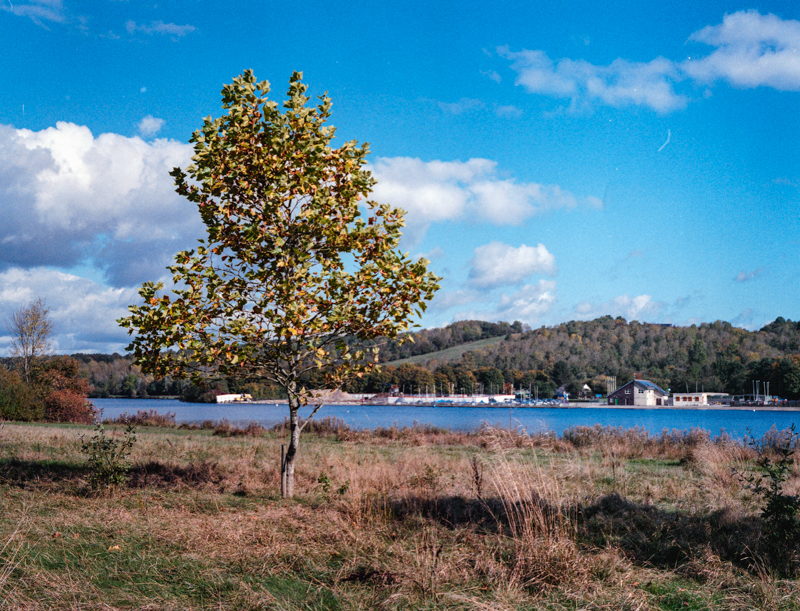
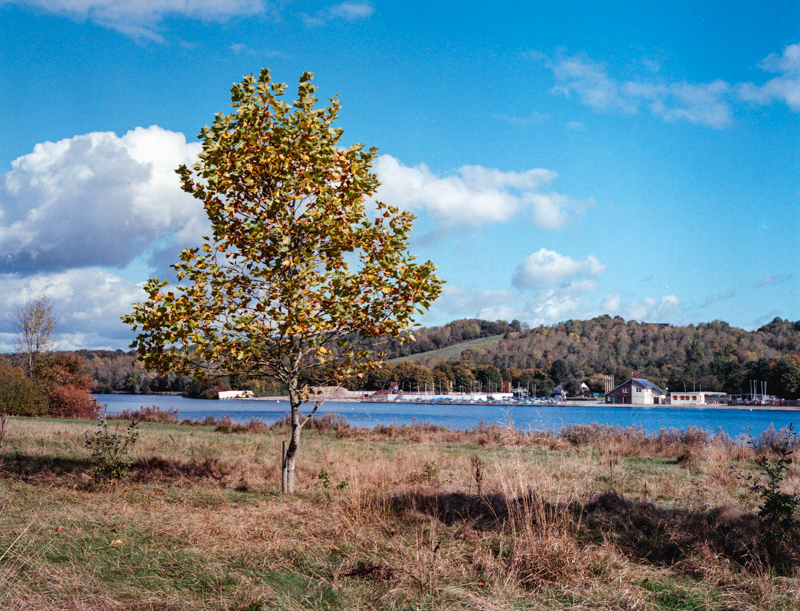
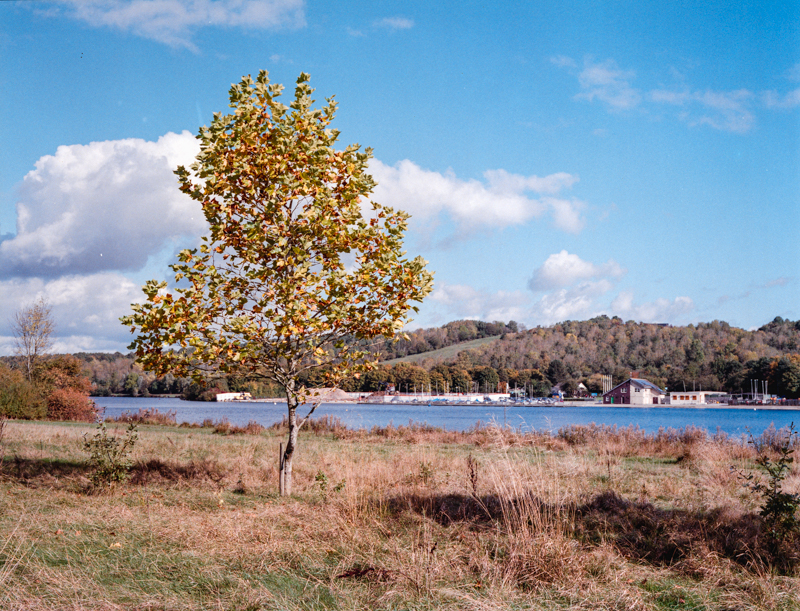
I didn’t see any point in shooting any of the shots at box speed, so planned on shooting each composition at one, two, and three stops of overexposure. As the film is rated at a box speed of 100asa, I chose to set my light meter to 64asa as a baseline, take a reading for the composition, and then shoot two additional frames with an increase of one stop of exposure for each. That was the plan, at least…
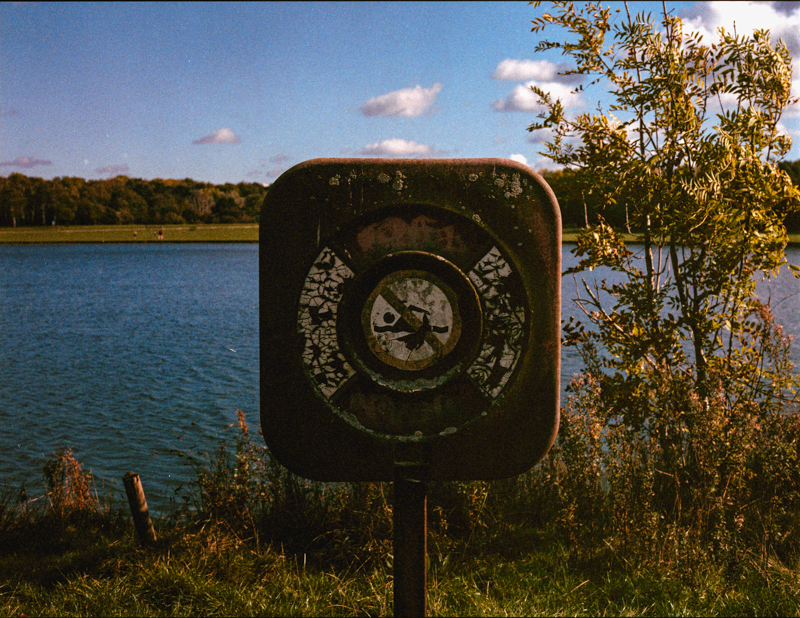
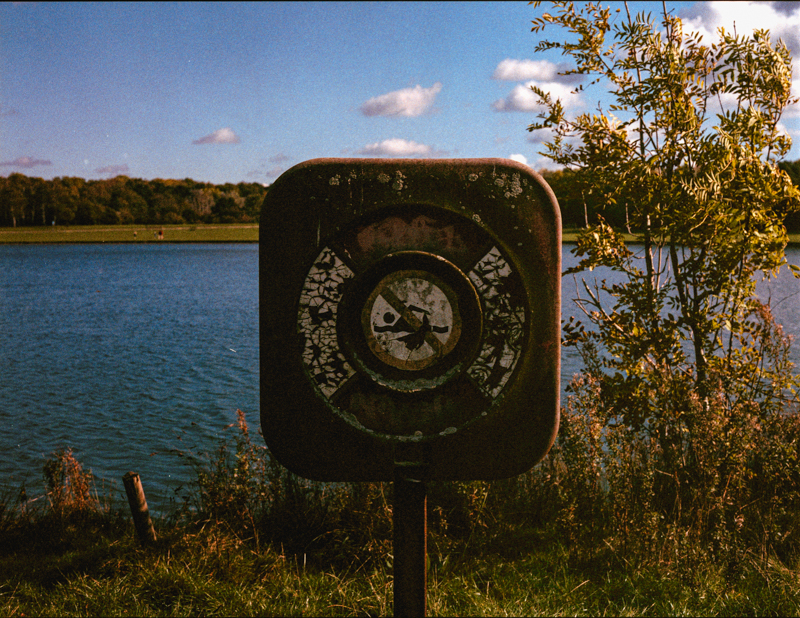
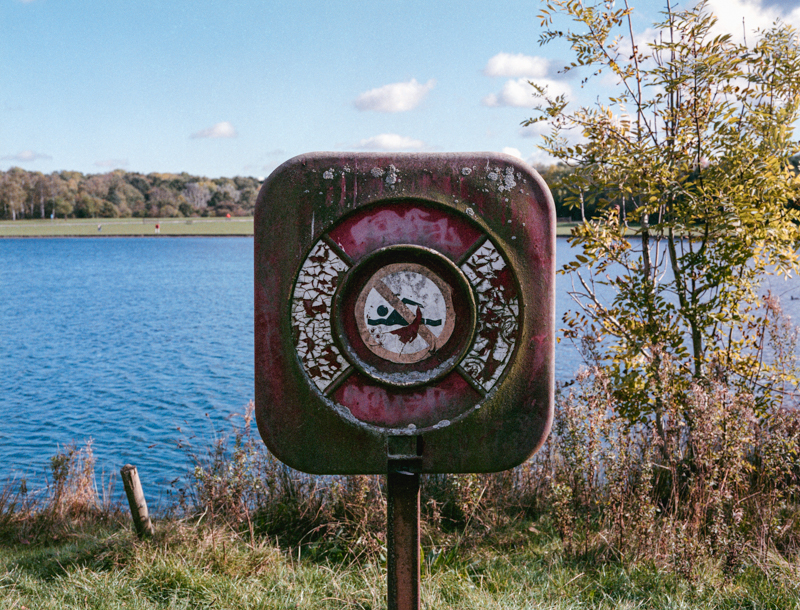
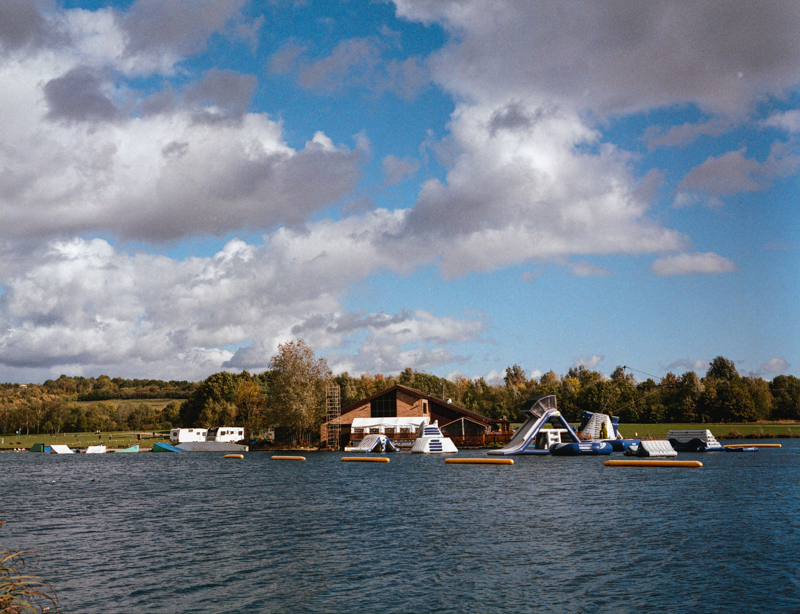
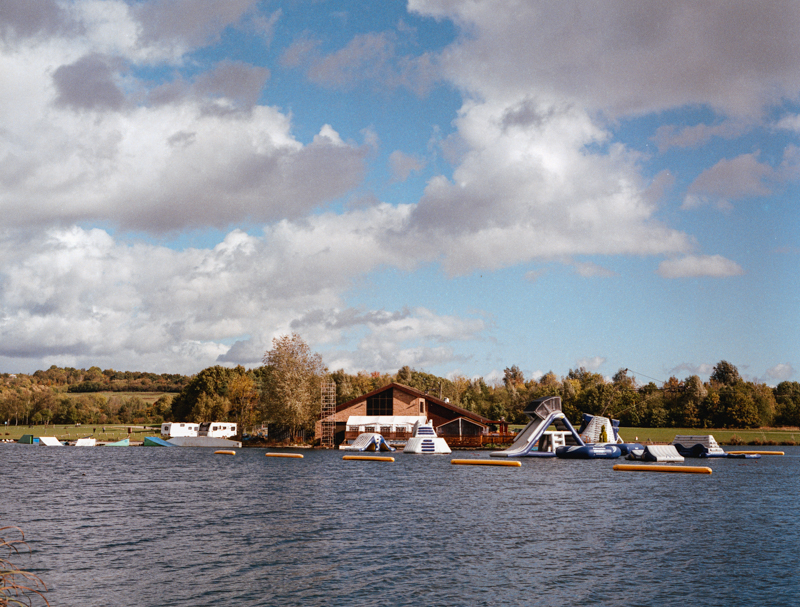
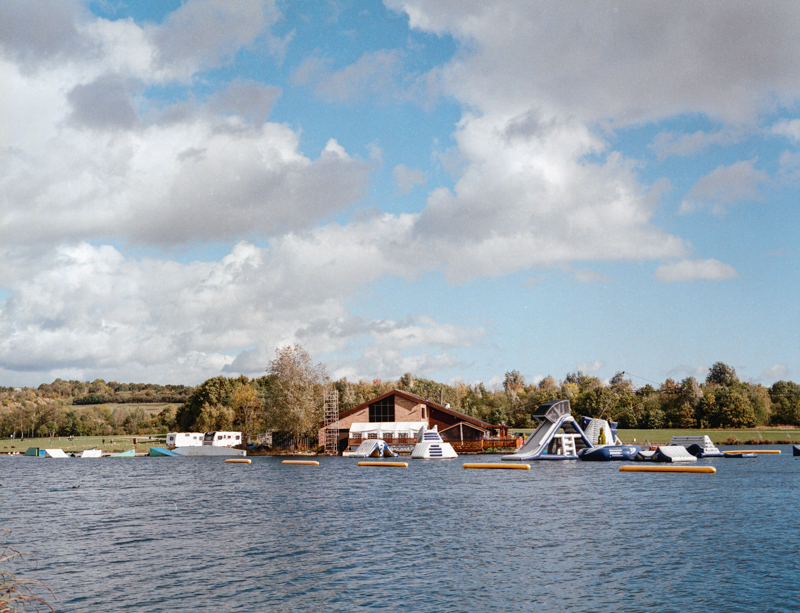
This plan worked ok for the first shot, and the results can be seen below, withe the first image shot at the settings given for 64asa, and the following two images with a stop more exposure over the previous one:
Fot this first shot, the results were all good. The middle image (effectively shot at 32asa) is the one I prefer. The first doesn’t show any major issues with underexposure, although the sky is a bit deeper, and the third, while clearly brighter, is still very acceptable (and I would have been perfectly happy with it if I didn’t have the others to compare it to).
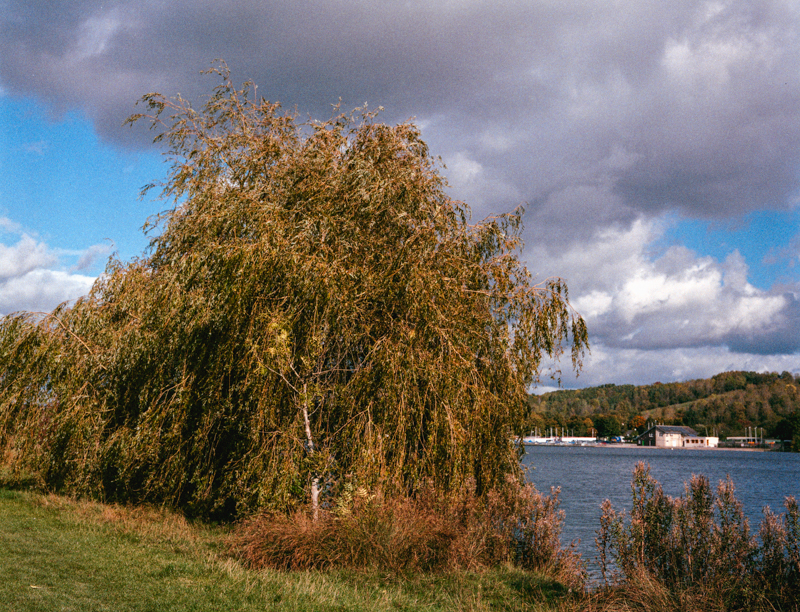
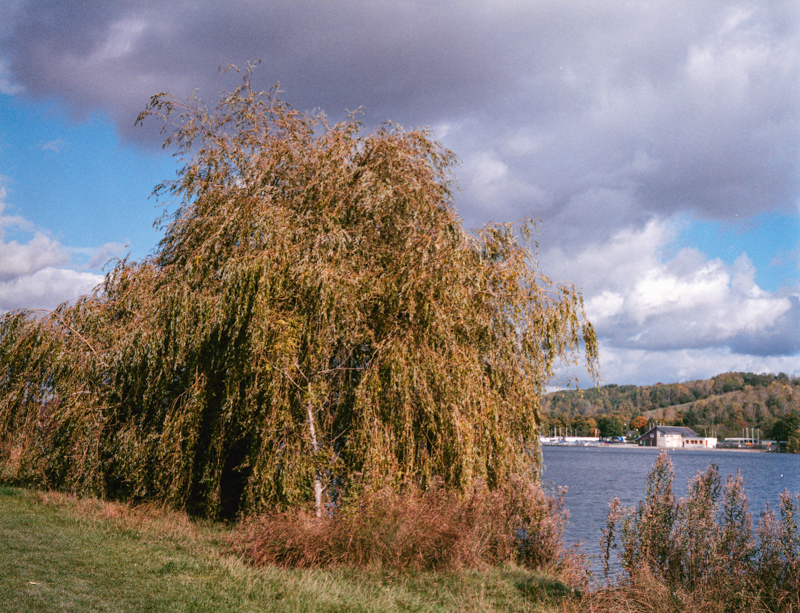
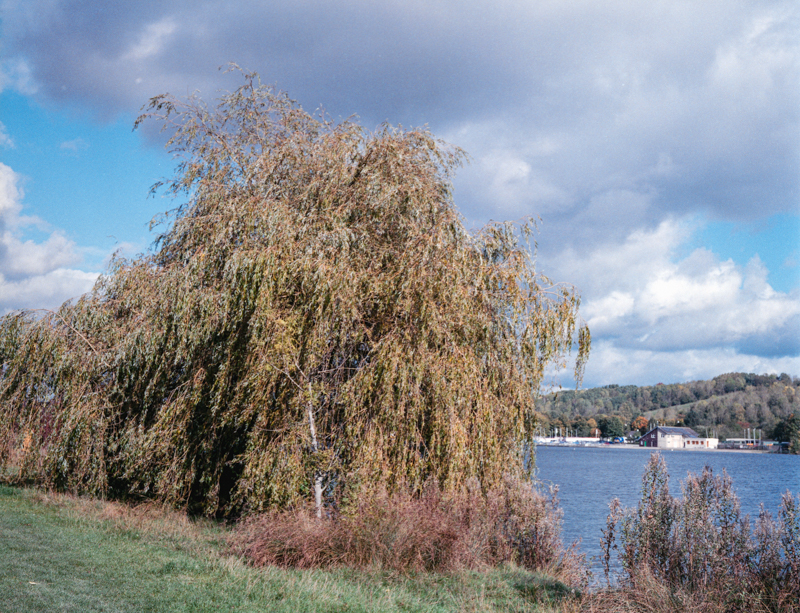
The results were similar for these shots of a willow tree:
Again, the middle image is the best exposed, I think.
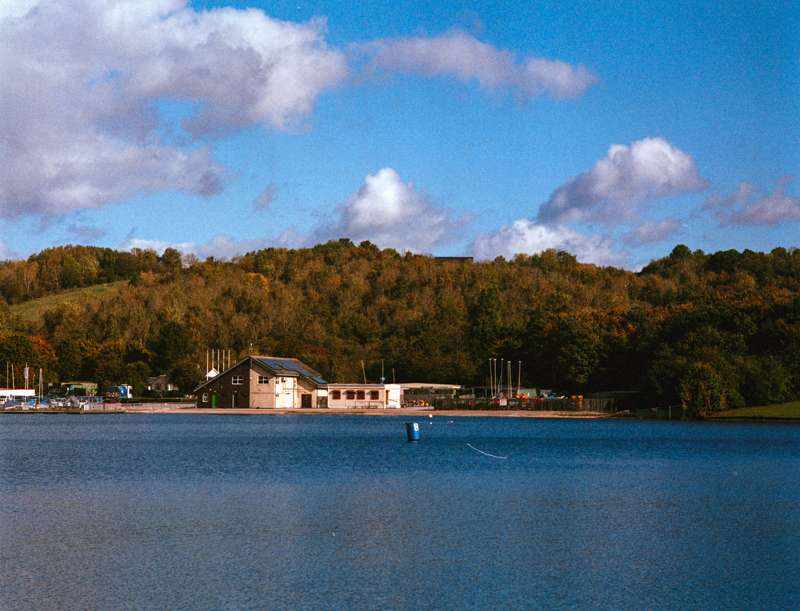
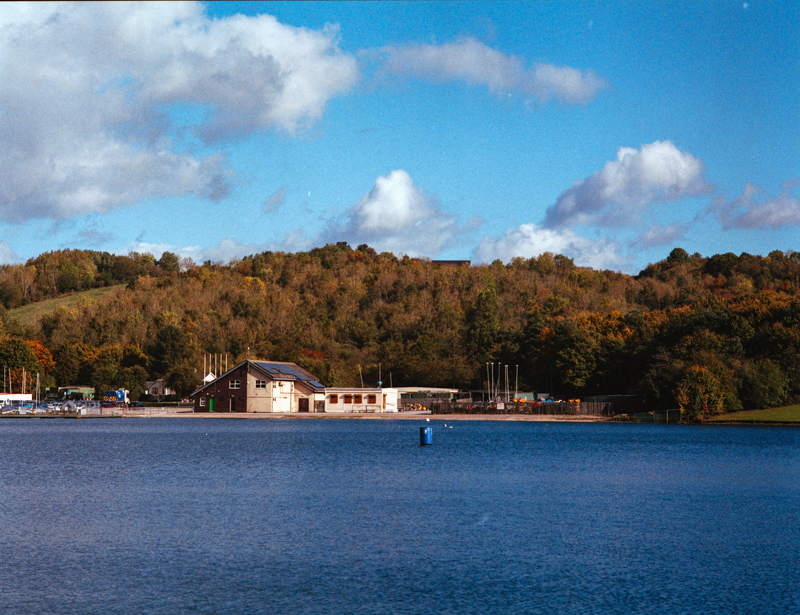
The next six shots had an issue – not only did I tamper with the process by changing lenses, I also managed to somehow mess up the metering – shooting each shot at box speed, then one and two stops over for both these compositions. While this was an error, it just means that the best exposed image is now number three, with the fist shot in each sequence being at actual box speed for the film. It clearly shows problems rated at box speed in terms of underexposure.
—
For the final composition I realised my error and got back on track. The middle shot again being the best exposed.
Beyond the issues with underexposure and some small spotty defects in the emulsion, the results are pretty outstanding for a film that expired over thirty years ago. The colours still look very nice too.
I feel confident that, if I meter for 32asa, that I can expect pretty good results from the remaining four rolls I have, although I’ll perhaps overexpose a little more in dim conditions.
Overall outcome: Success!
Expiriment #6 coming soon (I do actually have some more expired film I’ve shot recently, so this might actually be true)…
Bronica ETRS1, Kodak Vericolor HC (expired 1992). Shot bracketed and lab developed for box speed.Home scanned and converted with Negative Lab Pro.
Taken on 11 November 2024
I’ve uploaded the images above directly to my blog, but if you want to see the ones with the best exposure at higher resolution, they can be found here on my Flickr account.
I don’t often photograph cars from the side, usually because there’s always something else in the way or the lens isn’t wide enough to fit it all in. But I had the chance to do so with this Austin 7 (which I think is a Ruby Saloon from 1936).
I’ve just managed to squeeze it into the frame (and I’d normally leave a little more space) but I think the shape of the car lends itself to this tight framing.
I like the way the guy is framed through the window. You can also see me in a reflected selfie. 🙂
Fujica GW690 & Kodak Plus-X (expired 2008 and shot at 100asa). Adox Rodinal 1+50 13mins @ 20°.





 Steel City Snapper photography