
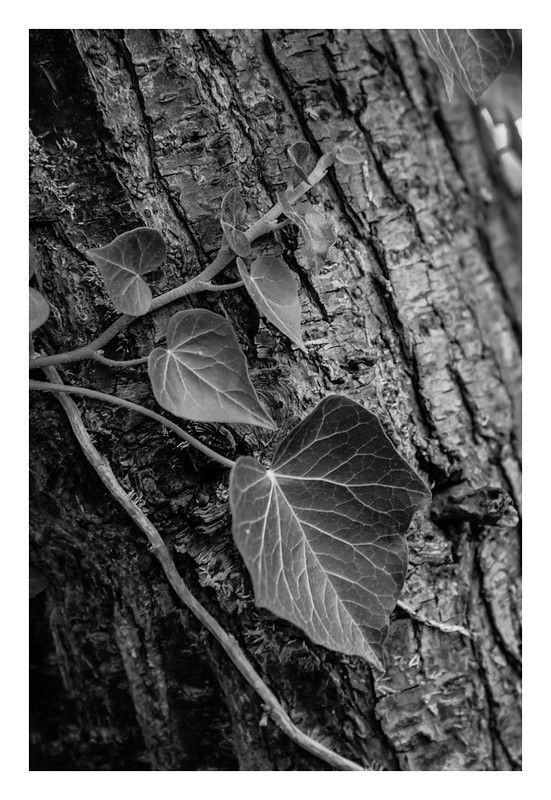
Panasonic Lumix GX7 & Panasonic Lumix 20mm f/1.7 ASPH.
Taken on 12 September 2026

Steel City Snapper photography
35mm, medium format and large format film photography (with the odd bit of digital every now and then…)
Panasonic Lumix GX7 & Panasonic Lumix 20mm f/1.7 ASPH.
Taken on 12 September 2026


Nikon F80 & Nikkor 24-120mm f/4 ED VR on Fujifilm Acros II. Ilfotec DD-X 1+4 9mins @ 20°
Taken 1 August 2026.
As of today I have seven rolls of film waiting to be scanned. All 35mm rolls, all 36 exposures except for a single bulk-rolled short roll that just has 15 shots. So somewhere in the region of 230 pictures yet to scan.
I addition I also have three rolls that have been scanned, but not yet post-processed. Again, all 35mm, but this time two 36 exposure rolls and another short roll, which bumps the total up to around 320 images in total.
I have another 36 exposure roll in one of my cameras with perhaps two or three frames remaining, so when that is finished and developed I’m at nearly 360 photographs.
Usually my dev>scan>process workflow is much quicker, but I’ve been holding back recently, in part because I’ve had a bunch of already processed shots to upload and so wasn’t in a rush, but also because of something I saw in a YouTube video I watched a while back from Sean Tucker. The video is all about how to choose your best images and in part refers back to one of his earlier videos where he interviewed landscape photographer Rachel Talibart who explains her approach to reviewing her images.
She says that, often, after a day of photography, she returns home on a high about the pictures she’s taken and can still be tripping about the experience for some time afterwards. This mood, she says, is not the best for objectively assessing the photographs she’s taken. Because she’s still tripping on the experience, the photos will often be a disappointment and no match for the fresh memories of the experience. She also finds it very difficult to edit the photographs while still on the high.
Looking at the photos straight away distorts her appreciation of the images. She’s often looking for something very specific and can discount the images that don’t meet this preconception. As a result she can miss good pictures. However, if she looks at them later – six months, a year, two years, the good images she might have overlooked initially present themselves much more readily to her now more objective eye.
I’ve recently been looking back through older, mostly digital, images and found this to be the case, finding pictures that I did nothing with that are actually, to me at least, quite good and more than worth revisiting.
So, while I have a glut of film pictures, I’m trying to take a similar approach and waiting to scan and process them. I still have an idea what is on most of the rolls I’ve shot, but many of the individual frames have faded from memory so when I come to scan them they will appear fresh to my eye and, hopefully, I’ll be able to objectively assess them and see which are good.
This obviously comes down to my own subjectivity in terms of what I do and don’t like, but I’m looking forward to see how this technique works. At the very least, the anticipation I feel is making me very much look forward to revisiting the scenes I felt worthy of a picture back when I photographed them.
Ironically, some of the photos I have been uploading recently are more recent ones that have jumped the queue, including this slightly apt picture…

Nikon F80 & Nikkor 24-120mm f/4 ED VR on Fujifilm Acros II. Ilfotec DD-X 1+4 9mins @ 20°
Taken 15 August 2026.
Over the course of the summer Sheffield has been visited by lions. Lots of lions. A whole pride of them. 300 lions, to be acurate.
Thankfully these are not escapees from a nearby zoo, but are part of a sculpture project organised to benefit the local children’s hospital, and the third such project in a decade (the first was The Herd of Sheffield, featuring elephants back in 2016, then we were visited by The Bears of Sheffield in 2021). This time we have The Pride of Yorkshire, featuring the aformentioned Lions.
In each of the three events, all the sculptures are each individually decorated and there are trails to be followed to discover them (all of them, should you be dedicated enough!). When they conclude, all the animals are auctioned off, raising money for the hospital charity. While the elephants and bears are not stood in public places any longer, it’s still quite easy to find many of them dotted around the city in their new adopted homes provided by the auction bidders, so it’s not unusual to see one stood in a shop, or atop the roof of a factory or something.
Here’s one of the lionesses stood in Tudor Square, but there are Lions and cubs to be found too. I’ve not photographed many of them (I had an idea about doing a project, but never got around to it), but another may appear on here at some point…

Nikon F80 & Nikkor 24-120mm f/4 ED VR on Fujifilm Acros II. Ilfotec DD-X 1+4 9mins @ 20°
Taken 15 August 2026.
One of a small cluster of chairs in the open park area at Park Hill Flats. I’ve photographed these chairs at least a couple of times before – there’s something about their stark wiriness and colours (not that you can see that here) that catches my eye each time.
This is the first time I’ve noticed that they’re actually staked to the ground though. I guess they’ve always been that way, and it makes sense given their placement in a public location, but sometimes you look and don’t see sometimes.

Nikon F80 & Nikkor 24-120mm f/4 ED VR on Fujifilm Acros II. Ilfotec DD-X 1+4 9mins @ 20°
Taken 15 August 2026.
At this year’s Chelsea Flower Show, one of the gardens featured a giant wooden sculpture of the goddess, Gaia, or Mother Nature and she’s often known. The sculpture featured flowing willow‑branch hair which was crafted by the aptly named artist, Tom Hare, while her leaf‑crowned face and shoulders were carved from a fallen mature tree by sculptor Tim Wood.
And now the entire artwork has been transported north to Sheffield where it will permanently reside in the middle of the Park Hill Flats complex. So, on a visit to the town centre a few weeks ago, I decided to take a detour and go have a look.
Thanks to the hot dry conditions we’ve endured this summer, some of the surrounding grass was a dry yellow, although Gaia herself was somewhat aptly surrounded by lush green growth. There were quite a few people visiting the sculpture, including some who appeared to be part of a guided tour!


The figure is part wood, and part dry stone wall, with her torso meticulously carved with intricate swirling designs.


Up close, she makes for an interesting, if very large, portrait subject.


I took a whole slew of pictures on both film and digital, but these black and white Acros II shots are my favourites, I think.
I’ve been past her again since this first visit and took more pictures, she’s a subject that will reward the photographer, I think.
Nikon F80 & Nikkor 24-120mm f/4 ED VR on Fujifilm Acros II. Ilfotec DD-X 1+4 9mins @ 20°
Taken 15 August 2026.

Nikon F80 & Nikkor 24-120mm f/4 ED VR on Fujifilm Acros II. Ilfotec DD-X 1+4 9mins @ 20°
Taken 15 August 2026.
This forms part of the Park Hill Flats complex in Sheffield, a 1960s monument to brutalist architecture. The other side of one of these bridges once bore a piece of graffiti that read “I love you will U marry me?” which over time became part of the city’s cultural identity and you could buy mugs, t-shirts, and other memorabilia featuring the slogan. It even has its own Wikipedia page. When the flats were acquired for redevelopment, the developer, Urban Splash kept the graffiti and gave it a neon overlay.
Sadly, despite the hopeful message, it’s quite a sad tale.
Anyway, that’s on the other side of the bridge. This side is graffiti free.

Nikon F80 & Nikkor 24-120mm f/4 ED VR on Fujifilm Acros II. Ilfotec DD-X 1+4 9mins @ 20°
Taken 15 August 2026.
Still posting digital shots it seems, although today I have a good reason – I had to fetch my wife and her sister from the airport and it ended up being a 5-hour round trip!
Will I post the final batch of Madeira pictures tomorrow? I guess you’ll have to wait and see (but I’m not making any promises, lol).

Panasonic Lumix GX7 & Panasonic Lumix 20mm f/1.7 ASPH.
Taken on 12 September 2026

Panasonic Lumix GX7 & Panasonic Lumix 20mm f/1.7 ASPH.
Taken on 12 September 2026

