Film photography · Medium Format · Photography

Magnet fishing

My wife and I went for a walk a few weeks ago and, when it turned out we needed to book to enter our original destination, instead took a walk beside the picturesque section of the Chersterfield Canal that joins Shireoaks and Turnerwood.

On the way up to Turnerwood we passed a man swinging some sort of weight on the end of a cord into the canal and then fishing it back out.

After reaching Turnerwood, we turned around and re-traced our path back along the canal. The man was still there, casting his weight into the water of the canal. My curuosity piqued I asked him what it was he was doing.

It turns out he was “magnet fishing”. This practice involves the use of a powerful neodymium magnet to try and grapple metalic items from the bed of the body of water. Looking it up later I saw reports of people “catching” somewhat less-than-desirable items such as live hand-grenades and unexploded bombs that have lain submerged since the 2nd World War.

At my time of asking the man about it, all he’d found was a 3′ length or rebar though.

Magnet fishing

Yashica Mat 124G & Ilford HP5+.

Taken on 12 July 2020

Film photography · Medium Format · Photography

Artificial flowers. Real shadows.

A shot taken back during full lockdown in April. I’d spotted that this vase of artificial flowers on the windowsill cast a nice shadow on the vertical blinds when one of the lamps was switched on. So, after a few nights of noticing it and thinking there might be a picture to be had, I decided to drag the tripod down into the living room, set up the bronica with a cable release, and make the photograph.

Shadow flowers

Yashica Mat 124G & Fomapan 100. Ilfotec DD-X 1+4 8 mins @ 20°.

Taken on 27 April 2020

Film photography · Medium Format · Photography

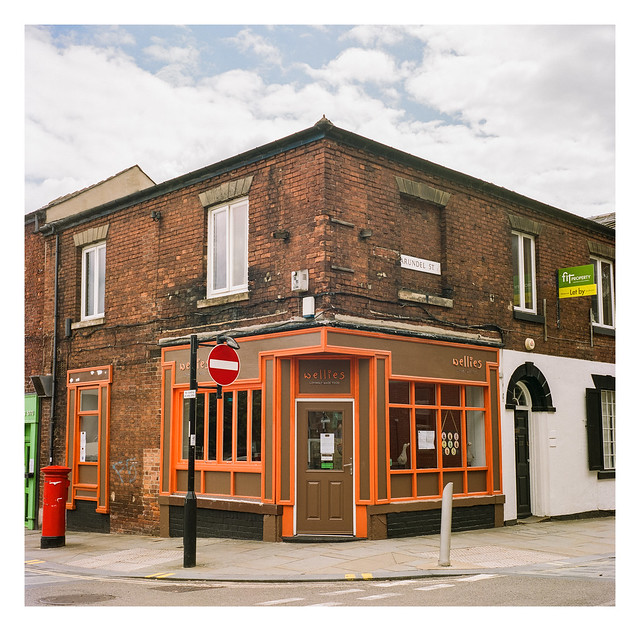
Wellies

On the day I started my street-portraits project, I parked my car on a street close to the city centre. My intent had been to use all twelve frames of the Portra 400 for the photographs of strangers I planned to make. However the first thing I saw was this corner cafe and I made a photo of it before I even came close to asking a person for their picture.

I’m wondering if a “corner shops” project might also be fun to do too. It has benefits of not being as stressful to pursue as asking people for their portraits, plus it has that social history angle of recording structures at a moment in time. I always enjoy looking at photographs of how things used to be and this will be my own small addition to the genre.

Obviously, most photographs I make that have recogniseable locations or contemporary objects in the frame do this to some extent anyway, but most of those are made randomly as a result of my particular eye for subject, not part of a more focussed project.

If I do pursue this, it will be concurrent with the street-portraits project, which I fully intend to complete.

Anyway, here’s the sort of thing I would envisage as part of the project…

Wellies

Yashica Mat 124G & Kodak Portra 400.

Taken on 11 July 2020

Film photography · Medium Format · Photography

One hundred people who I don’t know #1-9

This post contains my first set of portraits for my “One-hundred people who I don’t know” project which I first posted about here.

The aim of the project is to make one-hundred portraits, each subject being a person I don’t know, using the same camera and film for consistency of results (and also to allow me to see how I develop and, hopefully, improve through the course of the project).

The camera chosen is my Yashica Mat 124G TLR, and I will be using Kodak Portra 400 film.

My first outing took place last weekend and I was quite nervous about the endeavour. I’m far from an extrovert person and I was concerned as to how people might react when a stranger asked them if he could make their portrait, but the outing resulted in my asking fourteen people, eleven of whom kindly agreed, which I count as a resounding success!

Of the eleven photos, nine of them turned out successfuully enough to form part of the project. Some of these nine are not perfect – the fault of myself for missing focus or firing the shutter at the wrong time to get the picture I’d envisaged – but not so much that I won’t include them. It may be that I set myself stricter technical standards in future, but for now I’m happy with what I achieved.

The two shots that didn’t make the cut were more noticeably out of focus. Again, my fault, not the subjects. My apologies to both!

So, in chronological order, here we go…

#1 – This was the second person I asked on the day but the first to say yes. I like the backdrop of the photo as it does a good job of isolating the person in the frame. I wish I’d gotten his face-mask a little more in frame – a little detail that places the picture in time.

One-hundred people who I don't know #1

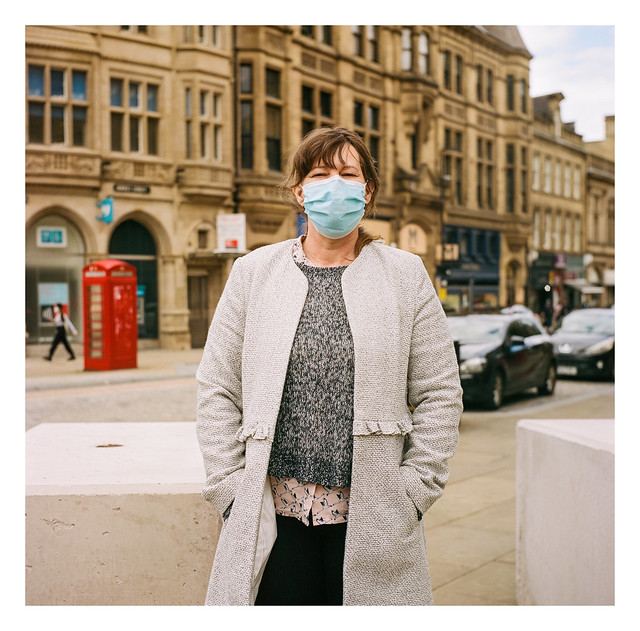
#2 – The third person I asked and the second to agree to take part. She was friendly when asked, replying “Well, you don’t know me!” when I explained my aim of photographing one-hundred strangers. She left her mask in place, which I don’t mind at all. As per my comment on the photo above, it’s a good marker of the times we’re currently going through.
One-hundred people who I don't know #2

#3 – This guy was the sixth person asked, although the fifth person I’d photographed as the previous shot was one of those that didn’t quite work out. Spotting the guy’s cameras, I thought that he might be more inclined to let me photograph him, and I was right. He chatted a little about my camera as he has one the same. He also gave me his business card and I’d intended to send him a copy of his photo but I managed to lose the card somewhere. If you’re reading this, my apologies!

One-hundred people who I don't know #3

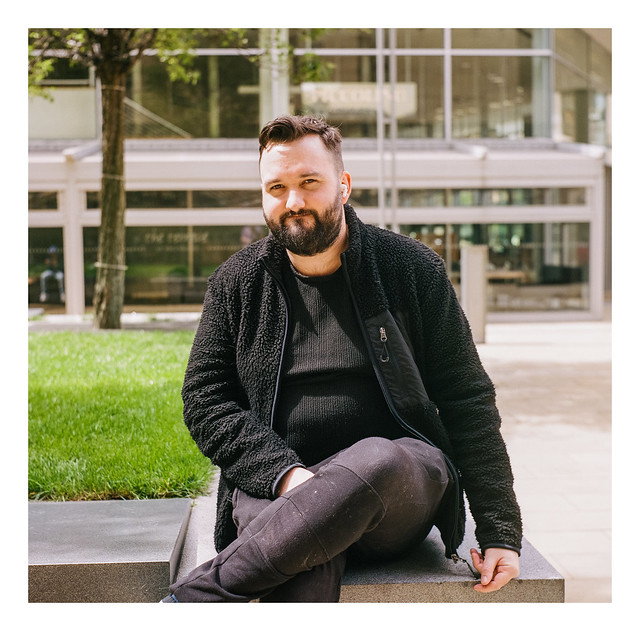
#4 – The seventh person asked (and the first in an unbroken run of six people who all agreed to participate – everyone else I asked on the day in fact). I felt a little guilty as he was listening to music on a pair of ear-buds that I didn’t notice until he removed one when I asked if I could take his picture.
One-hundred people who I don't know #4

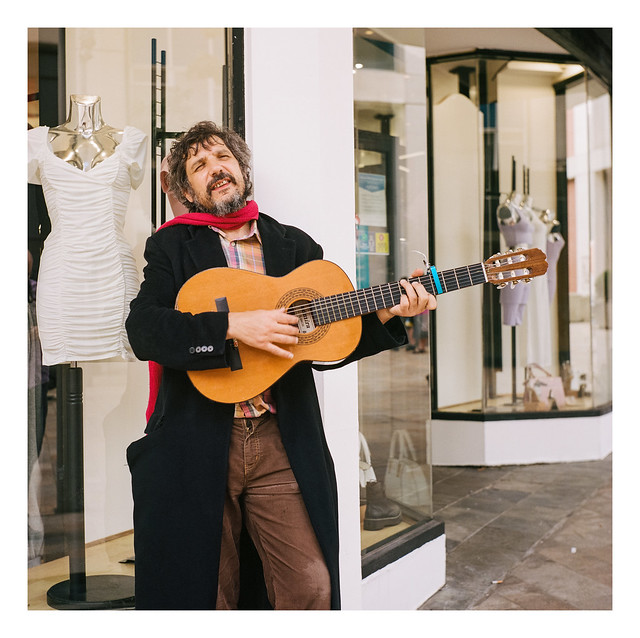
#5 – The first of two street musicians whose portraits I made. I did wonder if these should count for the project – although they were both asked if I could make a picture, and they’re both people I don’t know, the fact that they’re probably photographed by lots of people amde me wonder if this was a bit of a cheat on my part. But, hey, it’s my project so street performers are in (as long as I ask their permission to make a portrait).
One-hundred people who I don't know #5

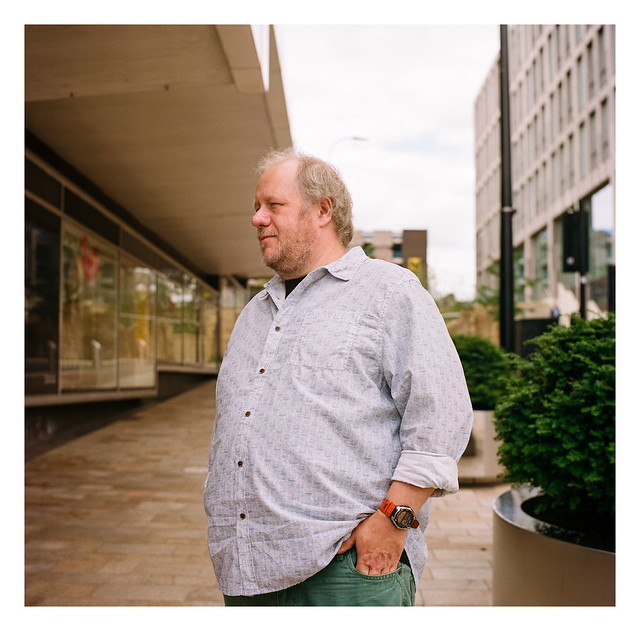
#6 – This chap was stood outside the entrance to a department store and, while I didn’t ask, I wondered if he might have been waiting for his partner to emerge. He allowed me to make the photograh, but presented me with a profile view. I like this shot a lot – it’s one of the few that show a nice fall-off in depth of field, and it also has the sharpest focus on the subject of all the images I made. I like the profile view too.
One-hundred people who I don't know #6

#7 – I spotted this woman carrying the potted plant and instantly thought that she would make for a nice portrait. The plant would provide an added bit of story to the photograph. I wasn’t, however, willing to ask her to stand still with the heavy-looking plant while I made the picture, and thought I would have to miss the opportunity. So I was quite pleased when she stopped to have a breather by perching the plant atop a roadside bollard as it gave me a chance to ask if she’d take part. I wish I’d made the photo when she was looking towards me, but I’m still very happy with the result. She was the only person on the day who asked if I would be publishing the photos anywhere, so I gave her the address of the blog. If you’re reading this, thank you once more. I really appreciate your letting me make the picture.

One-hundred people who I don't know #7

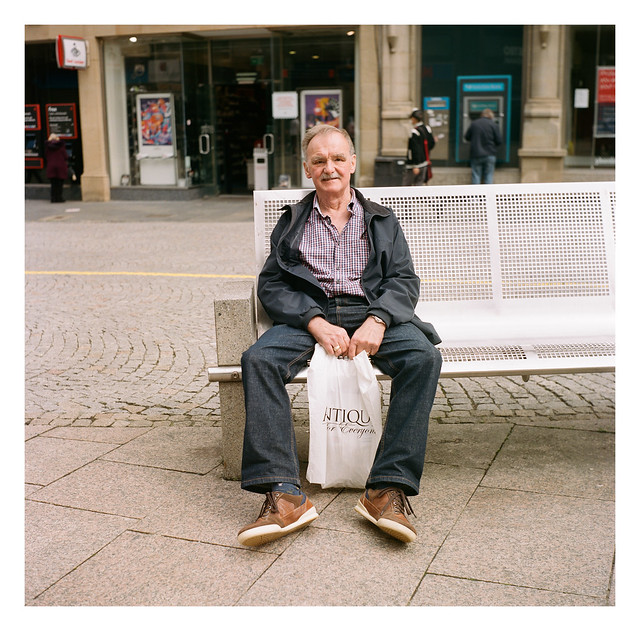
#8 – Another person who I suspect might have been waiting for his other-half to emerge from a nearby shop. I quite like the central positioning on this one. Because of social-distancing rules, it was difficult to get head-and-shoulders type shots using the Yashica Mat’s fixed 80mm lens, and I’ve ended up with a variety of different stlyes. These compositional choices are things that I hope I will become more proficient with over time.
One-hundred people who I don't know #8

#9 – Another favourite from the set, and the second street musician portrait. I like the sense of action in the picture, as well as the framing of the man and his reflection in the door panels behind him. It’s not completely in focus on his face if you zoom right in, but not so much as to be detrimental to the photograph.

One-hundred people who I don't know #9

The two shots where I missed the mark were of a girl running an ice-cream van. She had a beaming smils and I’m disappointed the photo was a little out of focus. The second was the last person I photographed on the day, another photographer who was walking the length of the city-centre with his camera – a Nikon F5 I think.

All things considered, I think I did ok on this initial outing. I have a lot to learn, but at least I now know that many people are happy to let a stranger make their portrait, which was perhaps the biggest hurdle for me to overcome.

More to come as the project continues!

Yashica Mat 124G & Kodak Portra 400.

Taken on 11 July 2020

Film photography · Medium Format · Photography

Further expired Ektachrome photos

A few further shots from the roll of expired Ektachrome I posted about yesterday.

This first shot has had the most tweaking of the ones presented here today and it still has more residual purple tones than the others. I had to take care to not reduce the colour of the foxgloves while removing the tint.

Ferns and foxgloves

The next shot is of the Wilkin Hill Outdoor Centre, or rather the former outdoor centre as it appears to have been abandoned for quite some time. It does appear to have a new roof though, so perhaps it’s under development.

Outdoor Centre

The final two images are of Agden Dike, one of the main water sources that feeds Agden reservoir. The expired Ektachrome has performed remarkably well on the first shot, giving a broad range of tones with only a few issues on the brightest sunlit silver birch trunks in the background.

In the shade by the water

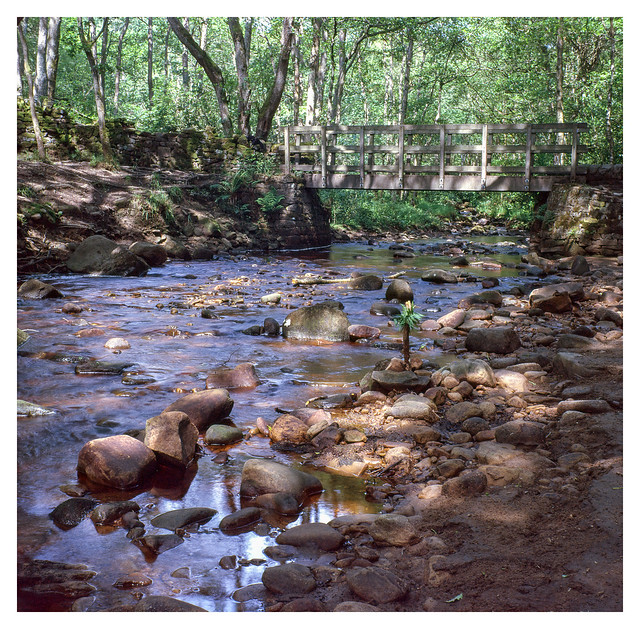
The last photograph here is probably my favourite from this roll. I’m unsure if someone has placed this branch and fern into the river (it looks wedged in by rocks) or if it’s actually a small tree-stump that a fern has colonised. Whatever the case, it looks like a miniature palm tree. I’m pretty happy that I was able to focus accurately with a narrow aperture and up-close with the Zeiss’ uncoupled rangefinder focus. It isn’t a problem on more distant subjects and with the wider apertures I normally choose with this camera, but manually transferring the focus from the rangefinder to the lens in a shot like this takes care, and I’m glad to have gotten it pretty much on the nail.

The world's smallest palm tree

Zeiss Mess-Ikonta 524/16 & Kodak Ektachrome E200S (expired 2003).

Taken on 22 June 2020

Film photography · Medium Format · Photography

Surprisingly nice expired Ektachrome from 2003

A few photos today from my hike around Dale Dyke reservoir that I posted about a few weeks ago. I mentioned in that post about taking the Zeiss Mess-Ikonta 524/16 on the hike along with the Yashica Mat 124G. I’d loaded it with a roll of Ektachrome E200S that had expired back in 2003. I can’t remember where exactly I’d gotten the film from now, but I had no idea as to how it had been stored. I shot the first of the rolls with my Holga back in October last year. That roll had a severe purple cast. I was able to remove it to a large extent but it left nasty purple speckles in the shadow areas. While I would be shooting this second roll in a camera with more control over aperture and shutter speed, I was still not holding out high hopes for the film.

On a walk to a reservoir

I decided to over-expose it a little given it’s age. Normally I follow the 1-stop per 10-years of expiry rule of thumb, but I’ve heard that E6 film works differently to colour negative film in this regard, so I decided to shoot it at 80asa. My mistake here was that I’d forgotten I was shooting a roll of E200S, and not E100, so I was in actual fact over-exposing the roll by more than a full stop. Thankfully, this worked out ok and probably produced better results than my original idea.

Bridge to the dam wall

When I received the developed transparencies there was still a noticeable purple cast when I scanned them, but colour correction in the scanning software, plus some further work in Lightroom managed to remove the bulk of this. There’s still a hint of purple to the results, and the deep shadow areas have a little purple speckling, but it’s barely noticeable when compared to the first roll I shot through the Holga. On the whole I’m really pleased with the results I got and it’s encouraged me to shoot some more of the E6 film I have in the fridge.

The three shots here were hand-held.

Rhododendrons by the reservoir

Zeiss Mess-Ikonta 524/16 & Kodak Ektachrome E200S (expired 2003).

Taken on 22 June 2020

Film photography · Medium Format · Photography

Sun-dappled monochrome woodland

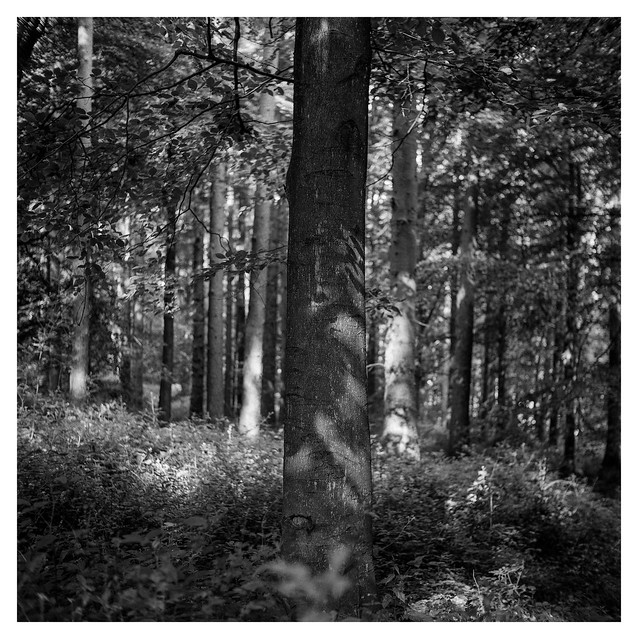
Making black and white photographs in woodland, or any other place featuring large areas of green foliage, can sometimes be tricky. Without well defined subject matter I find tht such scenes can become a mass of mushy grey textures. Differing shades of green that are easily discernible to the eye merge into less defined shades of varying brightness.

So I think a clearly defined subject is important, either seperated by brightness, contrast or texture, or isolated in some way, such as it’s placement in the composition, or by using a shallow depth of field to add separation.

I think the photo today uses a bit of both techniques. The trunk that is the point of focus is isolated here by the light that falls on it (or rather doesn’t) – there’re splashes of sunlight, but overall it is darker than the background where more light is falling. I also opened the aperture to throw the tree into focus while leaving everything else softer.

I’m happy with how the shot turned out – I have a number of similar photos from other outings that didn’t work as nicely!

in the shady forest

Yashica Mat 124G & Fomapan 100. Ilfotec DD-X 1+4 8 mins @ 20°.

Taken on 22 June 2020

Film photography · Medium Format · Photography

Powerlines, foxgloves & ferns

A couple more photos from my Dale Dyke reservoir hike, both featuring one of my regularly shot subjects: power lines.

These were the third and final shots from the roll respectively. I’m really happy with the first shot – the foxgloves add some nice, distinctive foreground interest.

Foxgloves and the transmission of power

I like the composition of the second image, but the foreground ferns are out of focus. I can’t remember if I’d opened the aperture deliberately to get a shallow depth of field, or if it was an accident – it’s not a shot that really benefits from a narrow depth of field if I’m honest.

Cresting the hill

Yashica Mat 124G & Fomapan 100. Ilfotec DD-X 1+4 8 mins @ 20°.

Taken on 22 June 2020

Film photography · Medium Format · Photography

Crossing the Loxley

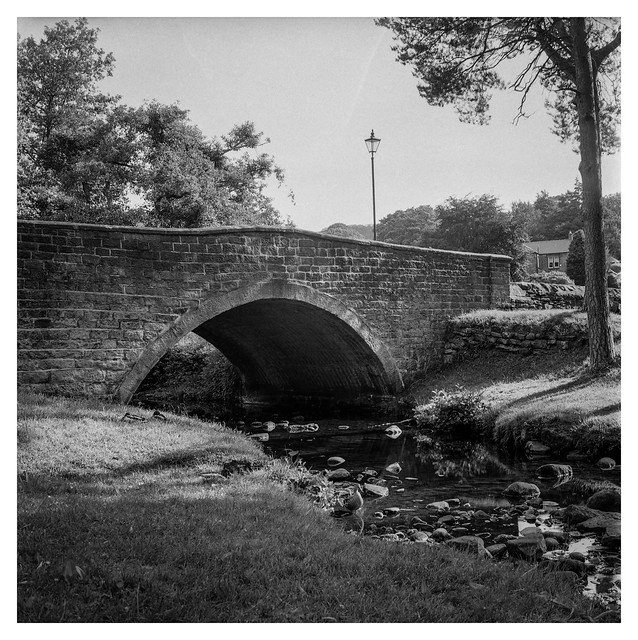
This photograph was the first shot from the roll of Fomapan 100 that I posted about yesterday. The scene looked lovely in the morning sun when I arrived at Low Bradfield around 8am, so I plonked the camera on the tripod, framed up the shot, and fired the shutter. When I returned back to the village a few hours later after my circuitous walk there were quite a few people in this area and the shot would have been more difficult as a result.

There are several ducks in the scene. Can you spot them all? 🙂

Crossing the Loxley

Yashica Mat 124G & Fomapan 100. Ilfotec DD-X 1+4 8 mins @ 20°.

Taken on 22 June 2020

Film photography · Medium Format · Photography

Low Bradfield to Dale Dyke reservoir

I had a day off work last week and decided to go for a hike and make some photographs. I took my Yashica Mat 124G loaded with a roll of Fomapan 100 (plus a roll of HP5+ in case I needed more shots), and the Zeiss Mess-Ikonta 524/16 loaded with a roll of 2003 expired Ektachrome E200. I carried the cameras and other bits in a shoulder bag and the tripod in my hand. There aren’t any of the Zeiss shots included here bacause a) I haven’t had the developed negs back yet and, b) they might be rubbish as I suspect I might have overexposed them all!

I decided to drive to Low Bradfield, a village on the northern outskirts of Sheffield. Above (and below) the village are a series of reservoirs – Strines; Dale Dyke; Agden; and Damflask. My walk took me up the valley to Dale Dyke reservoir (famous because it catastrpophically failed in 1864, killing 244 people in what was known as the Great Sheffield Flood), then across the valley bottom below the dam wall. From there I climbed the northern side of the valley and dropped down to Agden reservoir on the other side, following the eastern edge of the water and descending back to my starting point. The total distance is a little under 8km.

All the photos featured here are from the first half of the walk – from Low Bradfield to Dale Dyke. There are others from this sequence that I’ll probably post in future.

This is the second shot on the roll. It’s on the first footpath I took out of Low Bradfield.

Forming part of the wall

A structure close to the edge of the reservoir, possibly some sort of pumping station or water testing facility.

A place in the trees

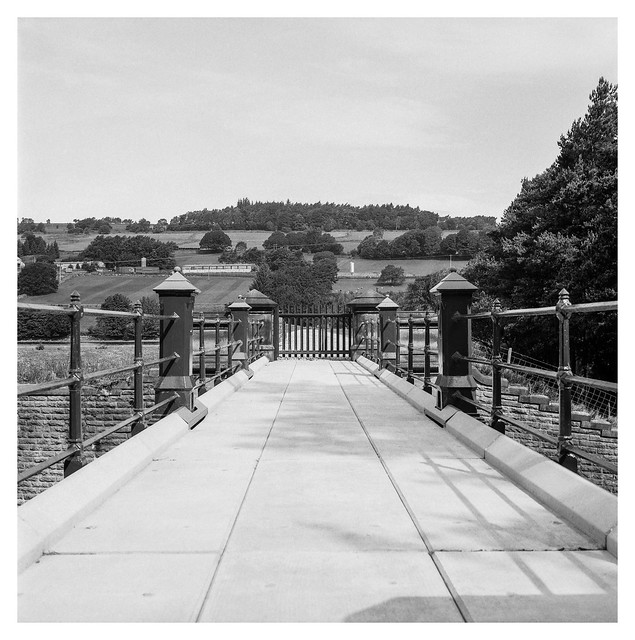
A view across the spillway bridge and the dam wall with the northern side of the valley in the distance. The spillway bridge is a nicely decorated iron affair and I’ve seen some attractive pictures of it. However, as it wasn’t obvious as to how I would find a suitable vantage point, and as the spillway was dry, I didn’t take any photos of it apart from this one.

At the dam wall

A series of stone steps that descend down to the water at the base of the spillway. I used a wider aperture here to narrow the depth of field (most of the other shots – apart from the last – were shot at f/11 – f/16.

Descending through trees

The next  is of the calm waters a little downstream from the base of the dam wall where low hanging branches dip down towards the water. The result wasn’t quite what I envisioned, but there’s something about those leaves at the top of the frame that I find really attractive.

Branches reflected at water's edge

I’m still getting the “dust” problems with the Fomapan 100 that I mentioned previously  here. This roll used water as a stop-bath which, while making some improvement to the situation, hasn’t resolved it completely, so it still took quite some time to clean up these images in Photoshop. I’ve not had issues with lab-developed Fomapan 100, so I’m wondering if it’s something else in my developing process, or perhaps an iffy batch of film?

Yashica Mat 124G & Fomapan 100. Ilfotec DD-X 1+4 8 mins @ 20°.

Taken on 22 June 2020