A few days ago, after I’d broken my ankle, I wondered if I might need to ration out the photos I upload given that I might not be able to go out and make more for a few weeks. As a result I uploaded some photos that I might have otherwise left on my hard drive. One of the photos was the one published here today.
For some bizarre reason, it’s managed to be selcted for Flickr’s Explore selection. I posted about my thoughts on which of my pictures are selected for Explore in this post a few weeks ago. My thoughts on this picture are much the same. I generally post a lot of photos to Flickr and yet it always seems to be the ones that are what I’d consider less sucessfull that seem to be picked to go into Explore. Perhaps it’s just mye eye? Maybe everyone else sees this as some sort of masterpiece of subject, light and composition? I suspect not though, and it’s just that the Flickr Explore algorithm is inscrutable.
As I mentioned in my last, somewhay concise, post, I suffered an injury yesterday. A broken ankle to be precise.
It was the first of five days leave I have from work (or seven including the weekend) and I’d taken a trip to Manchester with my wife and her sister. They were off to see a show while I planned to just wander around the city taking pictures. And all was going to plan for several hours. I visited Real Camera to have a browse (and ended up buying a couple of rolls of expired slide film, because, of course, I really need more film to add to the already packed drawer that I’ve commandeered in the freezer), had some passport photos made in the old-style analogue photo booth in the Fred Aldous store (not for my actual passport, but just because I could. The photos are now stuck on the side of the fridge along with loads on Instap pictures). I treat myself to a nice burger and fries for my lunch and, of course, I took pictures. I had a couple of cameras on me – my Olympus 35 RC loaded with one of my two remaining rolls of Portra 800, and my Canon Z135 compact containing some Ilford HP5+.
After wandering around for a few hours I decided to visit the art gallery an it was when I left the gallery that disaster struck. Just outside the main entrance, down a short flight of steps, there were some benches in the shade of the building. Thinking it would be nice to take the weight off for a few minutes I headed down and, as I stepped down the bottom step my right foot twisted awkwardly beneath me with a distinctive snappining sound.
I had an immediate sickening sense of dread and planted myself straight on the bench to take the weight off my legs. There was no actual pain as such, just an odd, numb tingling sensation, the sort you get if you bang your elbow, so I decided to stand up and see how bad it was. Luckily I was able to bear weight and, after messaging my wife to tell her what had happened and that I was taking an ealier train home, I set off limping back to the railway station. Walking was awkward but not especially painful and I managed to get to the station without issue. Unfortunately the next train was cancelled so I had to wait around for over half-an-hour for the next train, which I rather not have had to do, but I guess that’s life (and my luck).
When I got back to Sheffield I took a taxi from the station to the Accident & Emergency department where I spent around four hours waithing for x-rays and to speak with the nurse about the prognosis. I managed to buy myself an actual analog newspaper from the station before getting the taxi as I suspected I might be in the hospital for a while and my phone battery wouldn’t last out. It was a good decision and I read the paper front-to-back while I waited to be seen by various people.
The x-rays showed I had broken a fragment of bone from the bottom of my fibula. While this is painful, I was told that it would have been worse had the break occurred further up the bone close to where the tibula meets the bones of my foot as it would likley have restricted my mobility more severerly and would take longer to heal. The injury I have should be healed within four-to-six weeks, and I was given a large plastic “walking boot” to wear if I need to go out. Thankfully, there is little to no pain while I’m at rest, and I was able to sleep perfectly well last night. The ankle feels sore while I walk about, but again not too bad, and I can move it around quite freely, so I guess I should count my lucky stars that it wasn’t worse than it is.
I think my main upset is that it’s kinda ruined my days off – I had things planned that I’m now unable to do because, while I need to use the ankle to encourage it to heal, this probably doesn’t stretch to full days out on my feet. I also can’t drive for a while, so I’m at the mercy of the goodwill of others if I want to go somewhere. My planned trips out into the Peak district this week, and to Lincoln Steam Rally the following weekend (the first time it has been on in three years) have fallen by the wayside, so I’m frustrated that the opportunity to photograph heather while it’s in bloom, or see the vintage vehicles at the rally will now have to wait another year. There are worse things in life though, so maybe I’ll just count my blessings and enjoy the next fews days away from work by watching TV, reading books, and playing videogames with the spare time I’ve got. At least I have a good excuse for avoiding chores!
I’ve got four full rolls of 35mm film that I’ve yet to upload (or, in some cases, scan), including the roll of Porta 800 from yesterday that I almost finished in Manchester (but ended up using the last two frames photographing some hospital buildings while waiting for my wife to pick me up). So I should be able to feed the blog until I’m back on my feet at least.
Finally, today’s picture of a chair in a shady spot under a tree looks like just the place for a chap with the busted ankle. Maybe with a cold beverage. If only this were my back garden and not in a churchyard several miles away, eh? 🙂
The church that can be seen behind the wall and trees in this photographs is St. George’s. It is one of a trio of Commisioner’s Churches built in the city under the 1818 Church Building Act. The construction of these churches was funded following parliamentary vote.
St. George’s was consecrated in 1825 and operated for over 150 years before being declared redundant and closing in 1981. After standing unused for a number of years, the church was purchased by the University of Sheffield and now houses a lecture theatre and student accommodation.
I went out with friends to a local pub today. I’ve drunk more than I have for quite some time – not enough to make me roaring drunk, but I certainly have something of a healthy buzz going as I type this. Please don’t hold me accountable for any rubbish I post, or any typos (above and beyond the ones that seemingly always drop into my posts, at least).
I didn’t intend to drink as much as I have (even though it was’t a particularly excessive volume) but, as anyone who’s been to a bar can probably attest, a couple of drinks and your intentions can slip, and I ended up doubling the quantity of alcoholic drinks I planned on limiting myself to. I hope I don’t have to pay for it with a hangover!
Today’s photo is of a pub, or the upper part of it at least. Not the one I’ve visited today though, this is the Red Deer in Sheffield town centre.
Looking back on the words above, they seem to pass muster. Perhaps I can hold my liquor better than I thought. 🙂
These are the same blocks of flats that featured in yesterday’s post, but shot from a different vantage point – this time from the Broad Lane roundabout.
When I first saw the developed negatives I thought that this frame had some sort of damage – and odd, white splotch. It turned out to be the street light. 🙂
This photograph shows Sheffield University Arts Tower on the left with three of the blocks of flats next to Netherthorpe Road (there’s another block not visible in this image). Between the two blocks on the right the tower of St. Vincent’s church can just be seen through the gap.
I’ve been on my first business-focused trip today since spring 2020. I felt oddly anxious about the experience, not because of Covid or anything like that, but because I have not left my home for any work-based reasons in over two years (well, I did need to travel into town to get my faulty laptop fixed last year, but that wasn’t a meeting or anything, and it was only into my local building) and this trip involved taking a train journey to another city.
The day went well though and the biggest issue was the fact that the smart shoes I wore to go with my suit (which, while maybe not quite at the cutting edge of modern fashion any more, thankfully still fits) managed to rip the back of my heels open. This has clearly happened in the past but I’ve blanked it out of my mind until today – I know that it has happened before because there is a partially-used pack of plasters in my laptop bag from where I obviously had to perform field surgery the last time I wore the razor-backed shoes. I sat and mended my feet on a seat outside the station before I even got on the train! There’s nothing quite like a minor, but painful, injury to start the day…
I did manage to fit my 35RC into the laptop bag and, while I didn’t really have much time to take photos, grabbed a few shots on my way to and from the station. Not enough to finish the roll though, so it’ll be a while before I develop those.
Here’s another view of the University Arts Tower with the figure of a walking man neatly framed beneath a foreground tree. I hope his feet weren’t hurting.
I’m feeling quite tired today for some reason and can’t think of much to type for the blog, so I’m going to use that as an excuse for this shorter post. Hope you like the picture of the benches. Despite the title… NOBODY IS ON THE BENCH!!!! 😀
The coming days will see a series of photographs made with my recently acquired Olympus OM-1N (a replacement for my faulty OM-1. You can read about how I came about it here, should you wish).
The camera appeared to be in full working condition, but needed new light seals, so this was its first outing after I’d replaced those. As I didn’t want to chance a roll of something expensive on an untested camera, and as I have no cheap bought-for-£1 Agfa Vista Plus left, I used the cheapest, but fresh, stuff I had to hand – some Agfa APX 100. As far as I’m aware this is just re-branded Kentmere 100 these days (although I think it used to be re-branded Fomapan 100 previously). The last time I shot some of this I developed it with Ilfotec DD-X and got some quite overdeveloped negatives (probably my fault). This time I decided to use some Adox Adonal instead and got better results.
My old OM-1 had been converted to meter properly with a 1.5v cell, but this OM-1N still expects a 1.3v cell. I do have Wein cell that I could use but, again, as the camera was untested I didn’t want to crack open an expensive battery so I used a 1.4v zinc-air battery instead. I’m not sure how much this will have affected the metering but, on the whole, the shots came out quite well exposed with perhaps a little over-exposure present. The good news is that the camera worked perfectly.
Posted here today are three shots from the start of the roll. More to come this week.
This is the first in what I hope to be a series of posts in which I document the results from shooting some of the expired film I have in my stash – and I have quite a bit! However, in order to keep some sort of a leash on this exercise, I will only include film that is at least ten years past its use-by date.
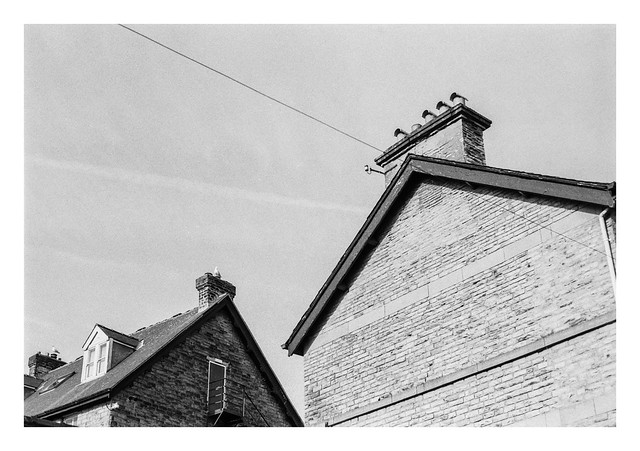
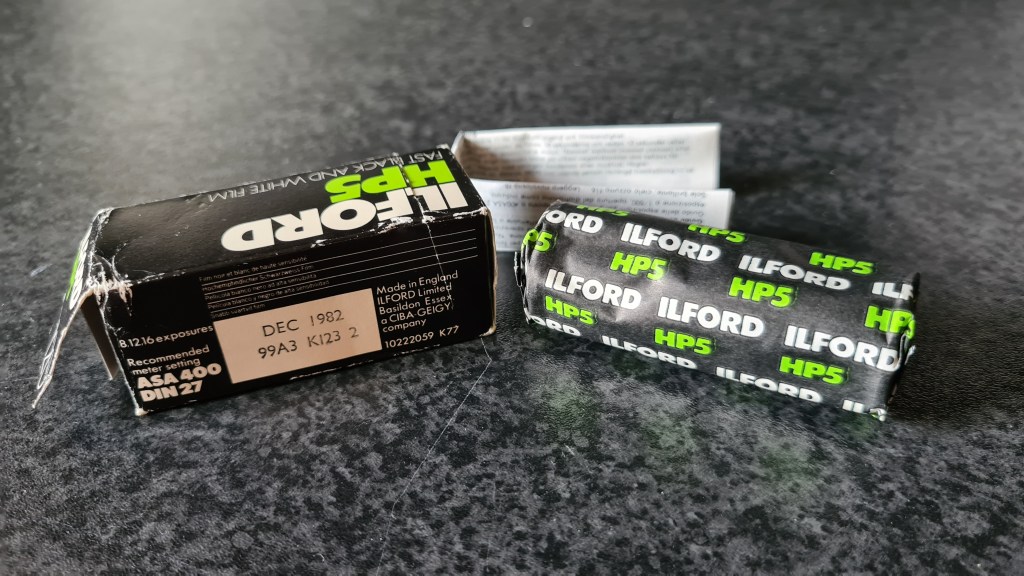
For this first instalment, I’ve decided to send the Delorean back to 1982, back before Ilford added the “Plus” to it’s stocks, back before I’d even entered my teens, and show the results from a roll of HP5 that expired in December 1982.
I chose the HP5 for a couple of reasons. Firstly, I shoot the modern version of the film quite a lot, so was interested to see how they compare (even if it may be an unfair test given the age of this roll) and, secondly, because I have four rolls of this film all from the same year so this first one will serve as a useful test on how it performs before I shoot any more of it. While the person who I got the film from had kept the film frozen, I have no idea of it’s provenance before that.
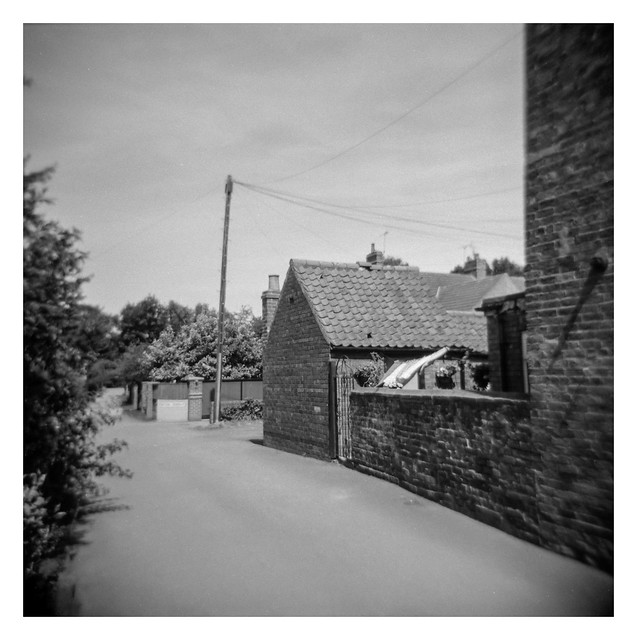
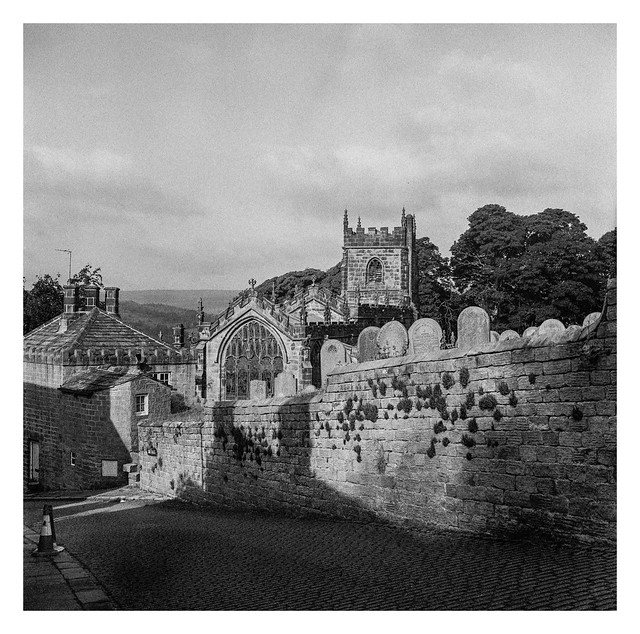
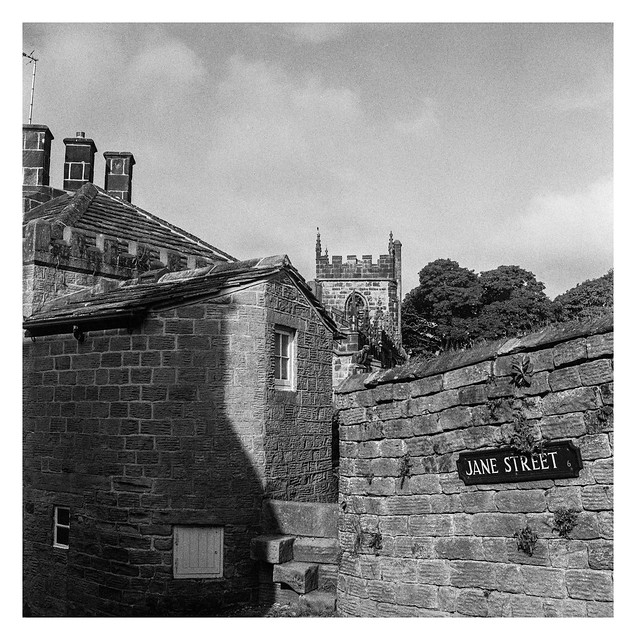
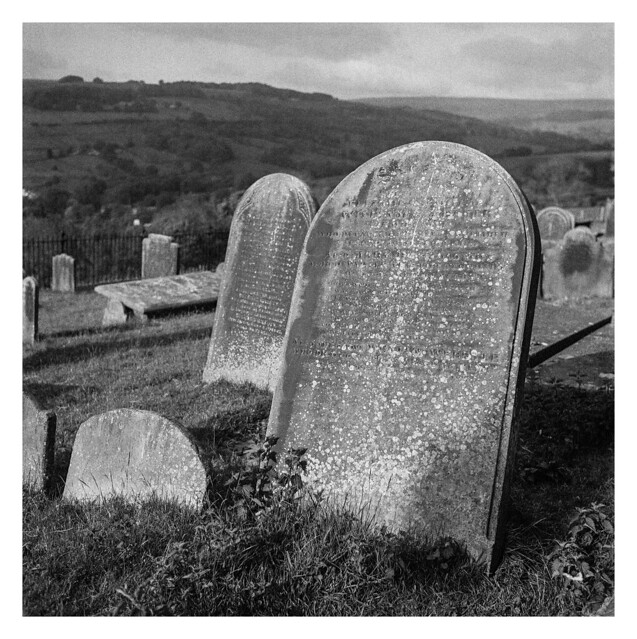
The sensible thing would have been to shoot the film in, around, or at least fairly close to home. That way, should the experiment be a disaster, at least I wouldn’t have wasted too much time on it. But the weather was nice so I decided to head out into the countryside, to High Bradfield over on the other side of the city. It was a risk but, hey, you only live once, right? I also took a second camera loaded with a fresh roll of Ilford FP4+ as well but only took a single shot with it, so the weight of the expedition would rest on the forty year old HP5.
I loaded the film before leaving the house and almost immediately felt some mild panic when the Yashicamat’s film advance crank partially jammed after a few turns. But, after some gentle pressure, it continued to wind the film on to frame #1. Arriving at my destination, I shot five shots at High Bradfield before driving around the surrounding area and photographing anything that caught my eye. Most of the other pictures were taken around Broomhead reservoir further to the north, although none of the reservoir itself. I rated the film at 100asa using my usual half-a-stop of over-exposure per decade of expiry that I use for expired black and white films. All metering was via incident readings from my Sekonic L-308.
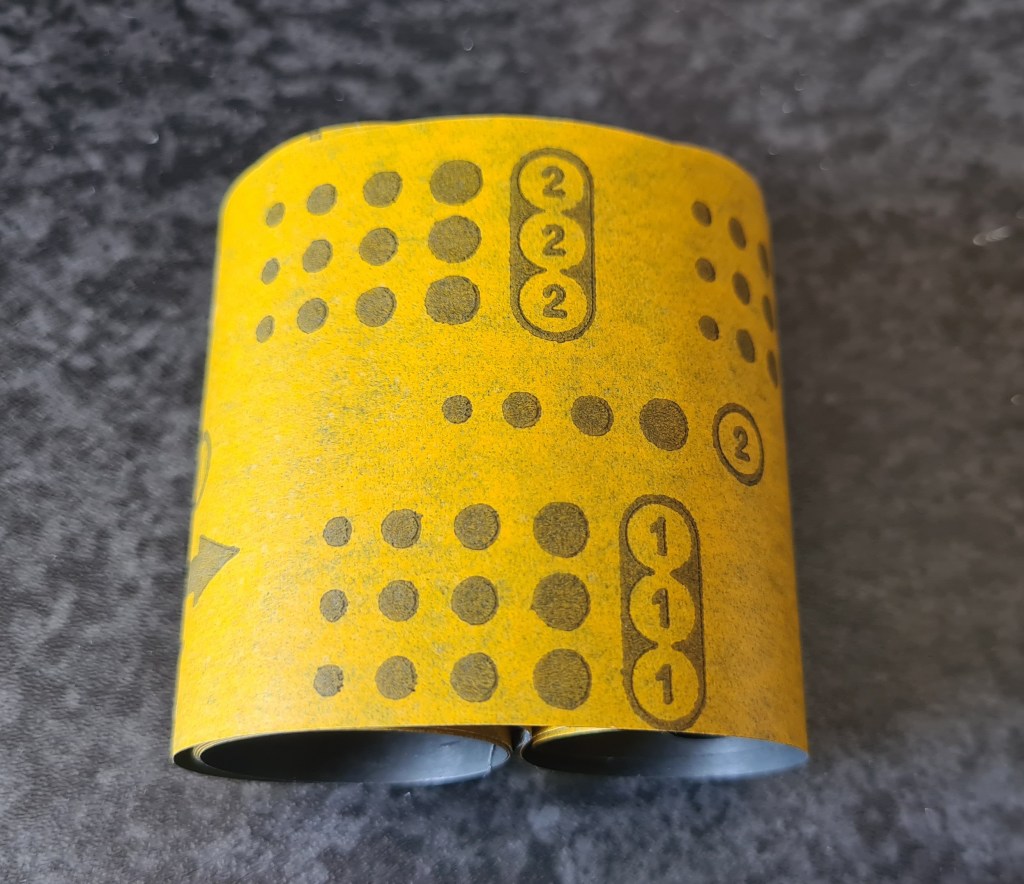
This is what old Ilford backing paper looks like. I’m not sure if the mottling is just a factor of its age.
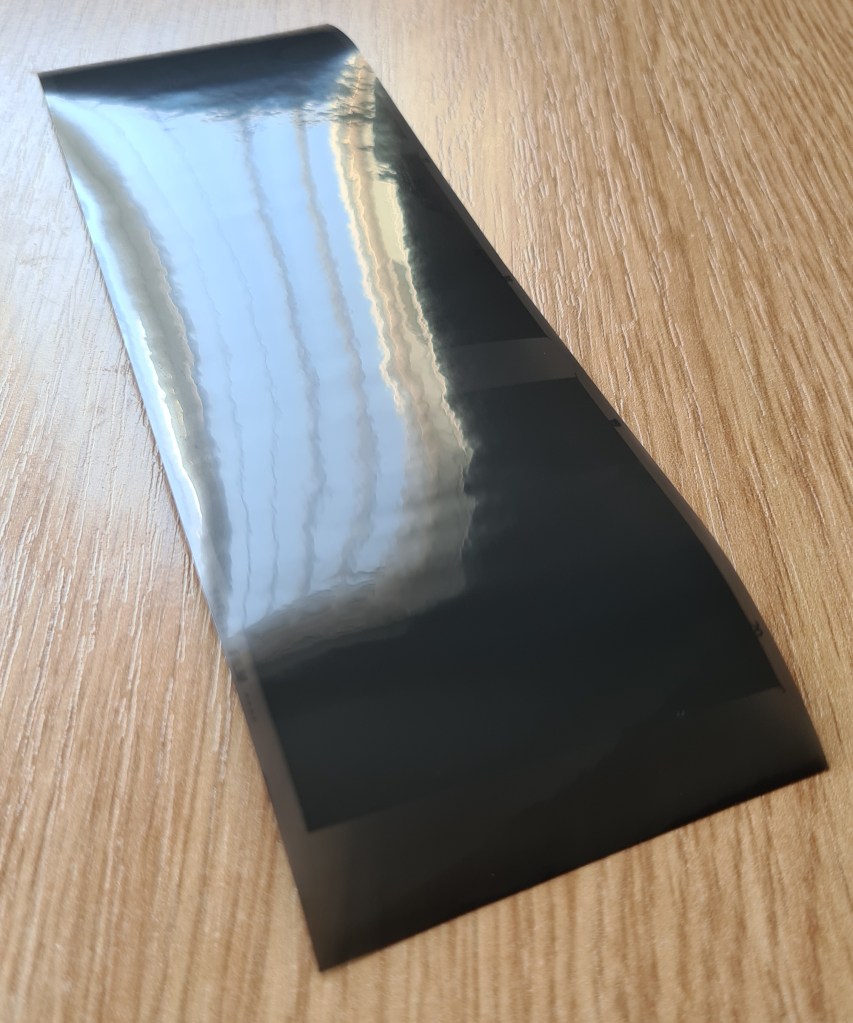
As I went out early, I was home in time to get the film developed and decided to use some Adox Adonal for the job. Ordinarily I use Ilfotec DD-X when developing modern HP5+ as it controls the tones and grain really nicely but, as this was a roll of film decades past its best, I thought the Adonal might be a good choice as I’d read that it can help to reduce fogging where it exists on old films. I used a 1+25 dilution and developed the roll for six minutes, inverting for the first minute, and then for 10 seconds at the top of each remaining minute. After that I used a one-minute stop bath and then fixed for five minutes. I washed the film using the Ilford method and then a final soak in rinse-aid before hanging it to dry for three hours. I was very happy to see easily visible images on the negatives, albeit perhaps slightly thin ones. One thing that I noticed was that the strip of negatives had an unusual, waxy sheen (see the picture below). I’m not sure if this is a factor of the film (perhaps on a different base back then?), it’s age, or even my development (although the chems should all have been in good condition).
It’s perhaps difficult to tell from this picture, but the whole roll of developed negatives had an odd, waxy sheen to them.
So, on to the photographs.
Given the age of the film I’m very happy with the results. While the negatives were a little bit thin, this wasn’t a huge problem and I was able to rectify this for the most part during the scanning phase and in Lightroom (where I also applied my other usual processing and sharpening). The grain is much more apparent than I am used to with modern HP5+ but it’s possible that this is a result of my developing them in Adonal rather than the expired nature of the film – I’ve heard other’s speak about how Rodinal developers can emphasise the grain in HP5+.
I think that I’ll rate the next roll of this HP5 I shoot at 80asa, or maybe even 50asa, and I think I’ll develop the next one in DD-X to see what difference that makes, if any, to the grain.
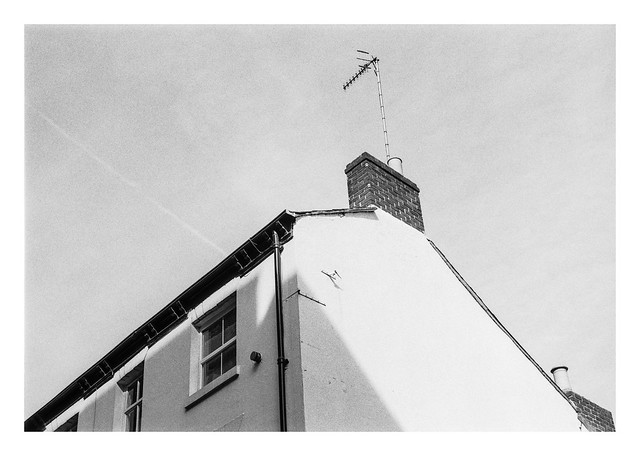
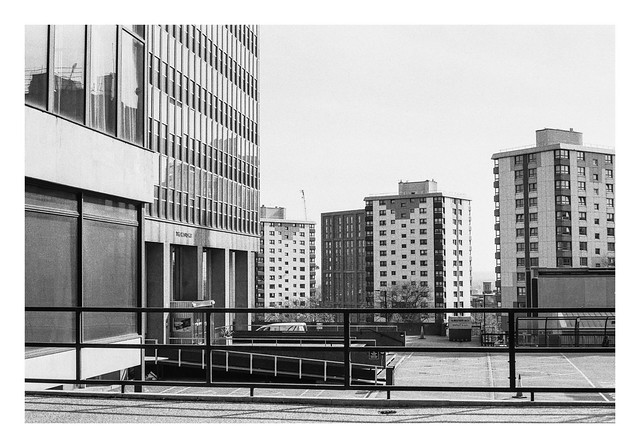
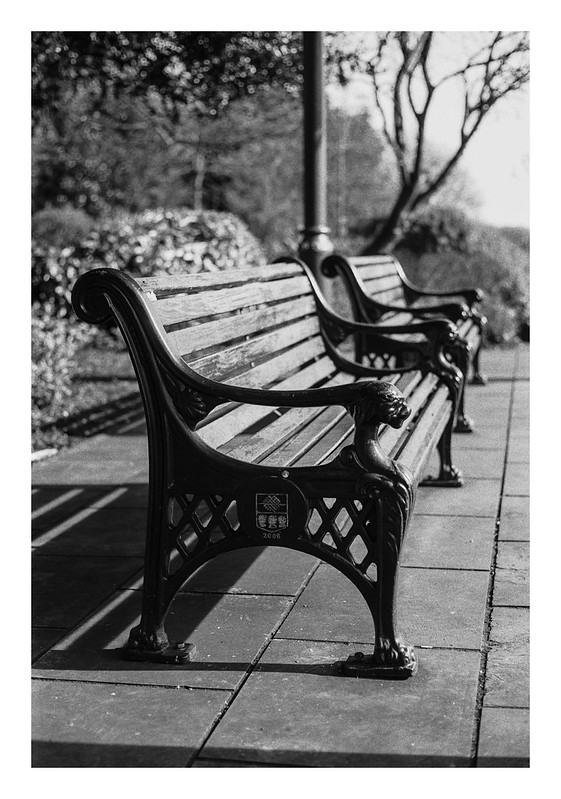
Here are my favourite eight shots from the roll. The other four were all ok technically but I didn’t think they worked as well artistically.











 Steel City Snapper photography