The branches of the leafless tree, which stands on the bank of the main lake at Rother Valley Country Park, reminded me of something. At first I thought the curved, whip-like branches looked like tentacles, but then it struck me that it looks like some sort of vascular structure, like a brain with the tissue missing. Repetition in nature.
I’ve been meaning to write this post for a week or so now and have already posted a few pictures from this roll, but here is the bona-fide “Expiryment”.
This time around, I had a roll of Kodak Elite Chrome 200 which had expired in 2003. It’s not the first.time I’ve shot a roll of this film from this vintage, although I didn’t write anything specific about it at the time apart from how well I thought it had held up.
Given the nice results I got last time, I was fairly confident that I would have a similar experience this time around too. Alas, it wasn’t quite the same and, although the two rolls were the same brand, the same age, and had been stored in the same way since I acquired them, this time I encountered some problems.
My chosen method for shooting slide film is to expose it at box speed, no matter how expired it is. While expired reversal film usually benefits from extra light in the form of exposure, slide film seems to maintain its original narrow exposure latitude and any significant deviation from this will quickly result in blown highlights or crushed shadows. Of course, while the latitude may remain the same, this doesn’t mean that other things haven’t changed, and the dyes can degrade, resulting in colour shifts. This is what had happened with this roll.
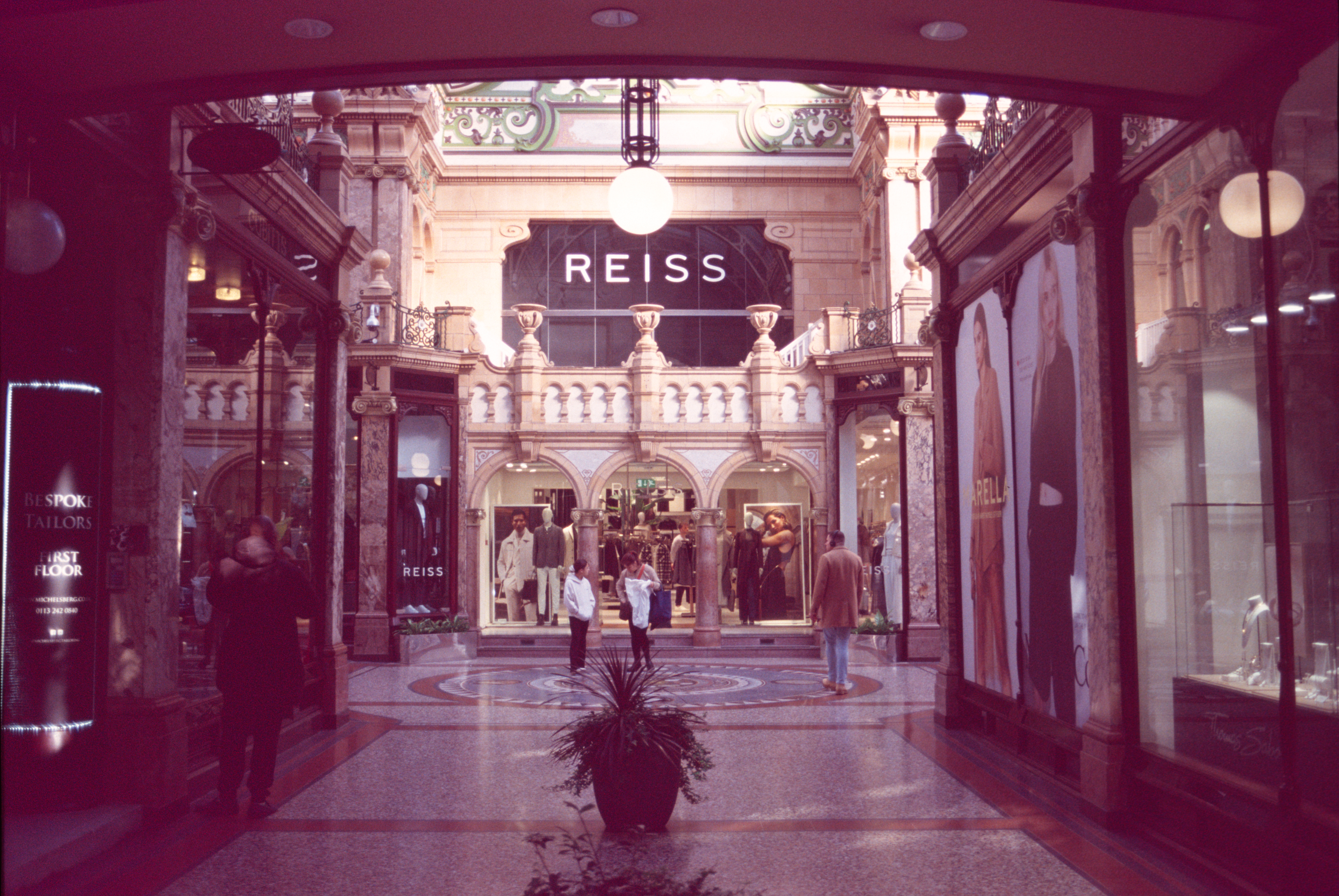
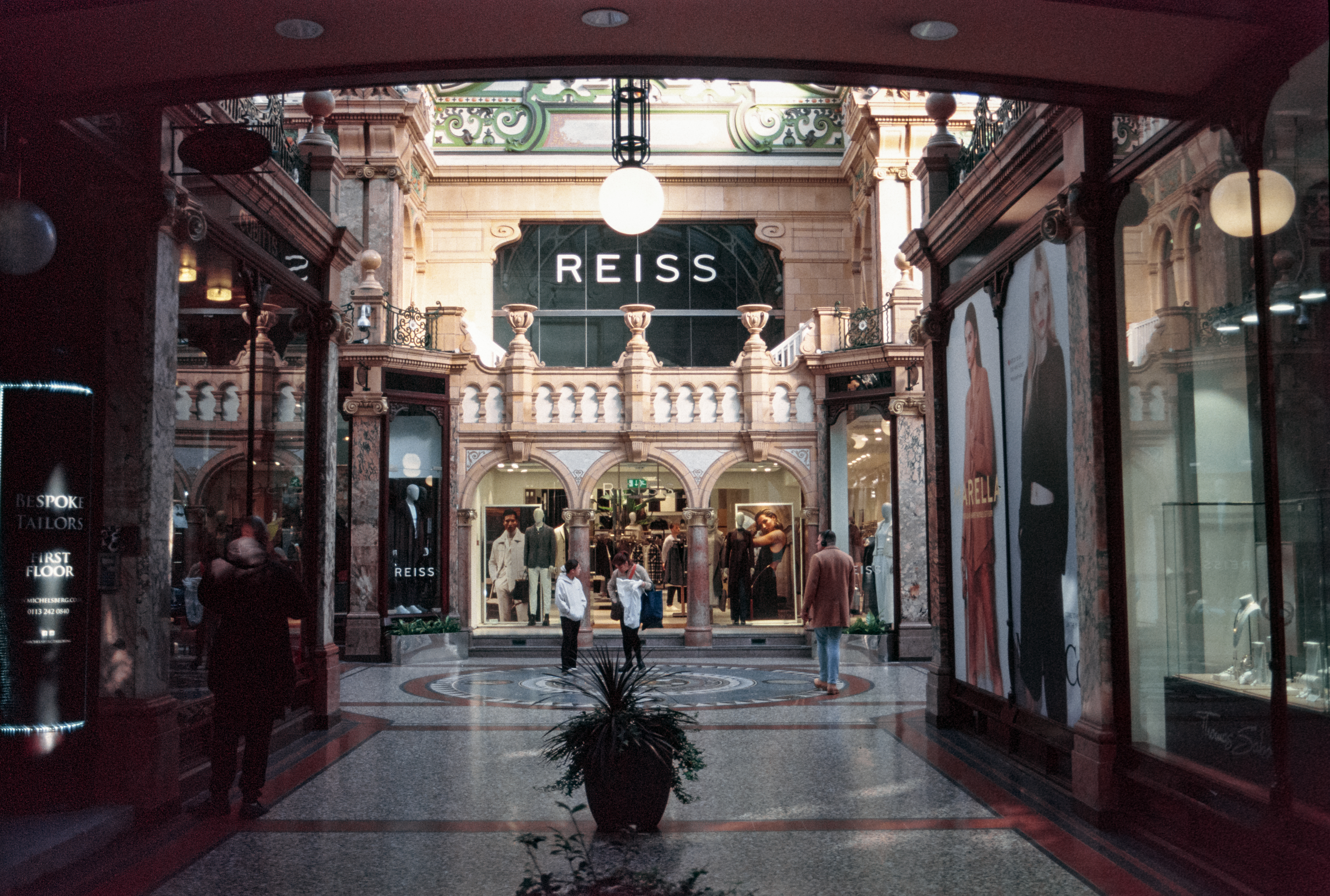
Upon receiving the sheet of positives back from the lab they looked fine on initial inspection (holding them up to the window), but it quickly became apparent that all was not well when I began to scan them. A very noticeable purple cast was visible on the images, particularly where there were underexposed shadows.
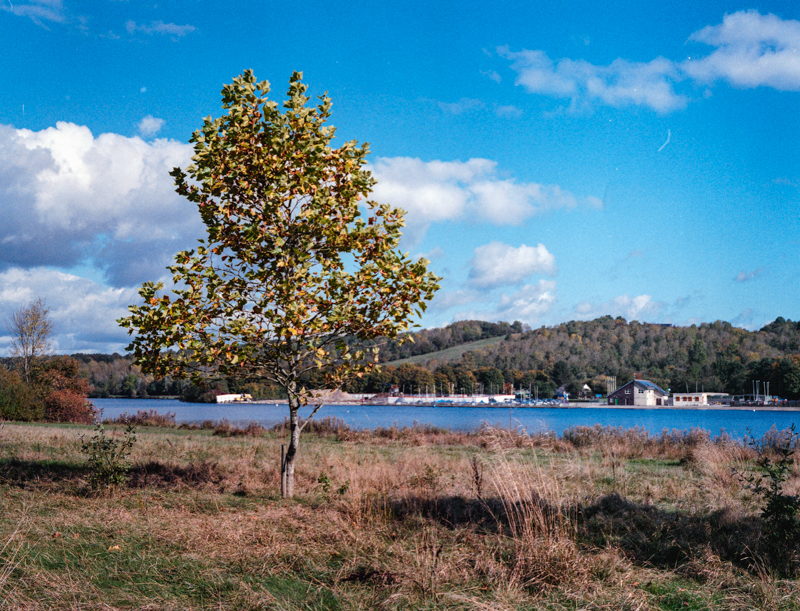
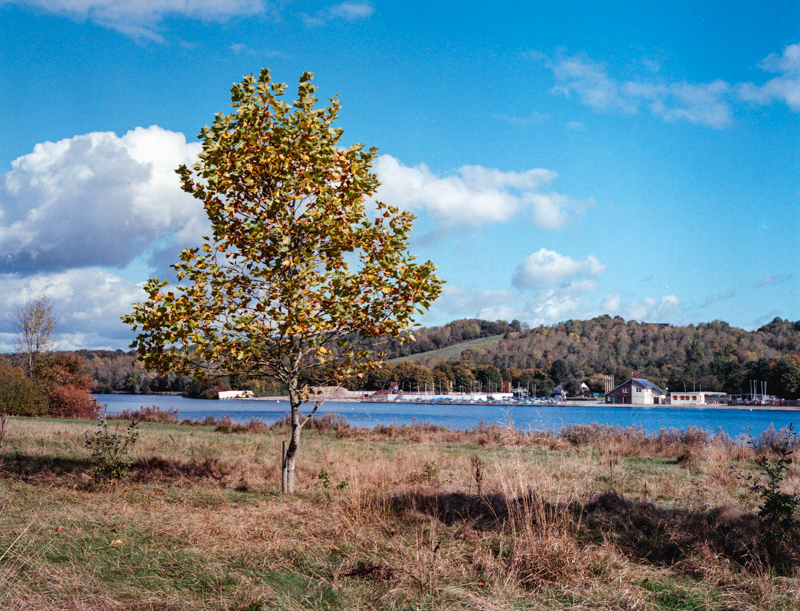
Thankfully, despite the problems with the colour, modern technology is able to come to the rescue, and with some careful editing in Adobe Lightroom (mostly using he colour curves adjustments), I was able to remove the bulk of the purple caste and get relatively pleasing results. The image comparison slider below shows a good example of the before and after states of one of the images.
Some images fared worse than others, but none were a complete write off due to the colour issues – the ones I didn’t upload to Flickr were as a result of other, more mundane problems, such as soft focus or them just being photos I thought were uninteresting.
A selection of other shots from the roll are below, all after post-processing to remove the colour cast.
Overall then, while there was a definite issue present for this roll, it wasn’t insurmountable, and post-processing produced very acceptable results. I wouldn’t want to risk shooting film like this for something important, but for the fun of it, sure, and I still have plenty of expired rolls left (including some more Elite Chrome in both 100asa and 200asa variants). Further Expiryments to come…
Overall outcome: Partial success!
Olympus OM-10 & G.Zuiko 35mm f/2.8 on Kodak Elite Chrome 200 (expired 2004) . Lab developed. Home scanned and converted with Negative Lab Pro.
It’s been a while since the last one of these posts, but with a shorter gap than before – 7 months this time, as opposed to the 17 month gap between the last two Expiriment posts.
This time, the subject was a roll of Kodak Vericolor HC which had expired in 1992. I have no idea of the entire provenance of the film before I got it, although it’s been in my freezer for about three years now.
Kodak describes Vericolor HC as follows:
KODAK VERICOLOR HC
Professional Film
This improved color negative film has greater sharpness and finer grain than KODAK VERICOLOR II Commercial Film, Type S.
This film is ideal for commercial illustration, industrial applications, low-level aerial photography, environmental portraiture, and other applications that call for increased contrast. It may also be used for any copy work that needs increased contrast, and for outdoor portraiture under low-contrast lighting conditions, such as on cloudy days or in deep shade.

FEATURES
•	Extremely fine grain, extremely high sharpness, and high resolving power
•	Built-in dye mask
•	Balanced for exposure by daylight, blue flash, or electronic flash
•	Designed for processing in Process C-41 chemicals

BENEFITS
•	Produces excellent-quality high-contrast prints even with a high degree of enlargement
•	Makes excellent-quality color reproduction possible without supplementary masking
•	Allows exposures from 1/ 10 second to 1/10,000 second without filters
•	Can be processed with KODACOLOR and other KODAK VERICOLOR Films
I took a different approach when shooting this time. Usually I only have a single roll of a particular expired film and tend to take a chance and shoot the whole roll with the same settings, without any bracketing. This going-for-bust approach risks disaster if I misjudge the settings, but the reward is a full set of different images if it works well, rather than a curtailed set of identical compositions taken at different shutter speeds.
This time though, I decided to take the cautious apoproach. The primary reason for this being that I have an entire pro-pack of the film so using one roll as a sacrifice would mean I can shoot the other four knowing what settings will work well. In order to still maximise the number of different compositions, I chose to shoot the roll with my Bronica ETRSi, which gives me 15 shots per roll of 120 film. I decided to shoot each composition at three settings, allowing me five different compositions from the roll.
I didn’t see any point in shooting any of the shots at box speed, so planned on shooting each composition at one, two, and three stops of overexposure. As the film is rated at a box speed of 100asa, I chose to set my light meter to 64asa as a baseline, take a reading for the composition, and then shoot two additional frames with an increase of one stop of exposure for each. That was the plan, at least…
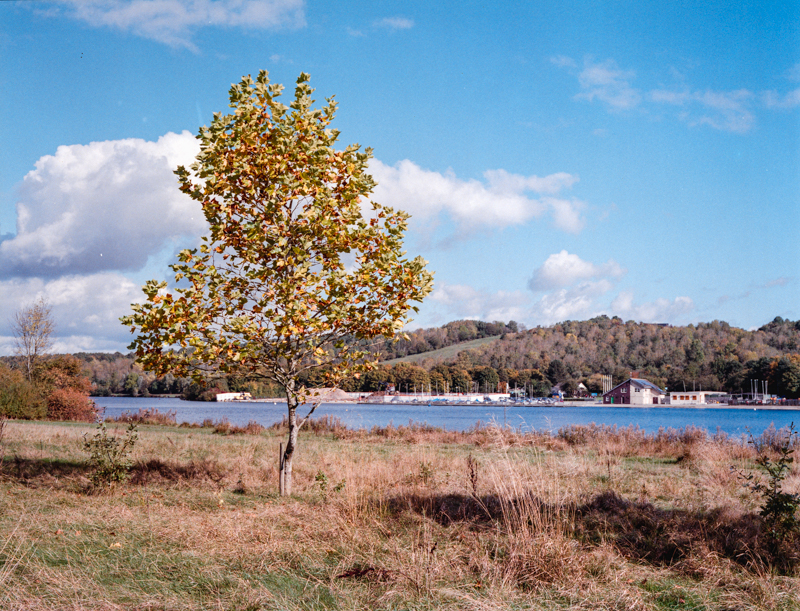
This plan worked ok for the first shot, and the results can be seen below, withe the first image shot at the settings given for 64asa, and the following two images with a stop more exposure over the previous one:
Fot this first shot, the results were all good. The middle image (effectively shot at 32asa) is the one I prefer. The first doesn’t show any major issues with underexposure, although the sky is a bit deeper, and the third, while clearly brighter, is still very acceptable (and I would have been perfectly happy with it if I didn’t have the others to compare it to).
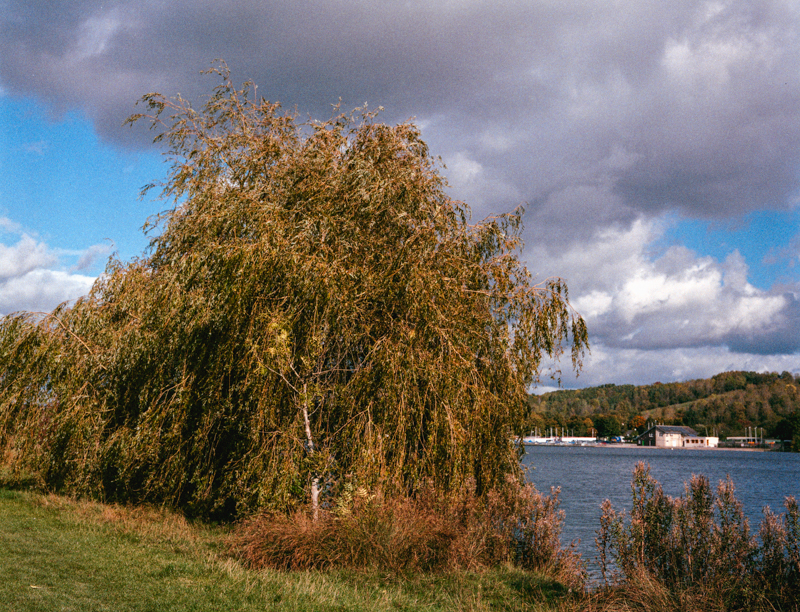
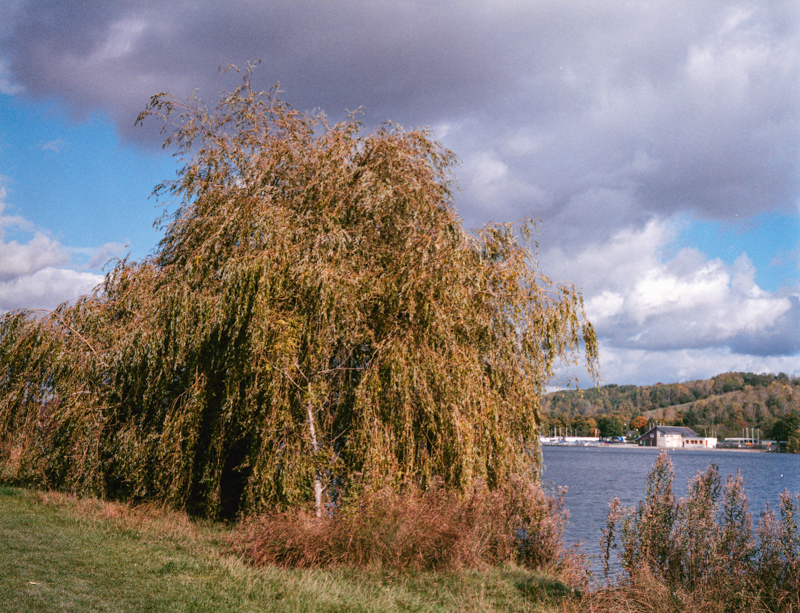
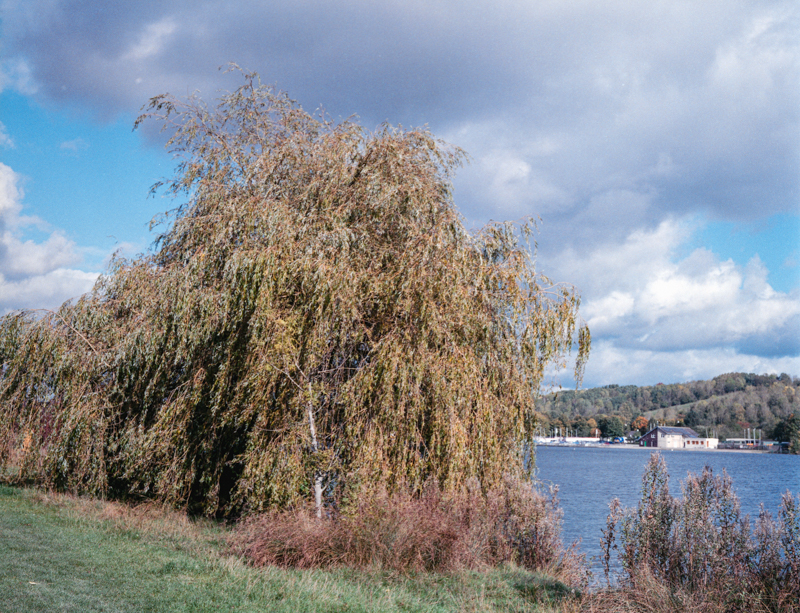
The results were similar for these shots of a willow tree:
Again, the middle image is the best exposed, I think.
The next six shots had an issue – not only did I tamper with the process by changing lenses, I also managed to somehow mess up the metering – shooting each shot at box speed, then one and two stops over for both these compositions. While this was an error, it just means that the best exposed image is now number three, with the fist shot in each sequence being at actual box speed for the film. It clearly shows problems rated at box speed in terms of underexposure.
—
For the final composition I realised my error and got back on track. The middle shot again being the best exposed.
Beyond the issues with underexposure and some small spotty defects in the emulsion, the results are pretty outstanding for a film that expired over thirty years ago. The colours still look very nice too.
I feel confident that, if I meter for 32asa, that I can expect pretty good results from the remaining four rolls I have, although I’ll perhaps overexpose a little more in dim conditions.
Overall outcome: Success!
Expiriment #6 coming soon (I do actually have some more expired film I’ve shot recently, so this might actually be true)…
Bronica ETRS1, Kodak Vericolor HC (expired 1992). Shot bracketed and lab developed for box speed.Home scanned and converted with Negative Lab Pro.
Taken on 11 November 2024
I’ve uploaded the images above directly to my blog, but if you want to see the ones with the best exposure at higher resolution, they can be found here on my Flickr account.
Despite my hopes and promises of doing one of these posts each month, I seem to have failed miserably when it comes to doing so – the last post in this (very occasional!) series was back in November 2022.
I did shoot another roll of expired film last summer but I was unhappy with the results and ended up converting the pictures to black and white. While they looks pretty nice after the conversion, these posts are aimed to be about keeping to the original results from the film used with a minimum of post processing. Converting to monochrome was a step too far.
No such worries with the next roll though, some 120 format Kodak Portra 400NC that expired in 2007. 2007 doesn’t feel like that long ago but it was prior to the global financial crisis and is fast approaching twenty years ago!
Portra 400NC was discontinued by Kodak in 2010, when the current range of Porta films (160, 400, and 800) was introduced. Kodaks description of 400NC was: “Offers fine grain, low contrast, and colors and skin tones that look real and natural in a variety of lighting situations.” There is a brochure online on Kodak’s website which covers the full rang of (as was) Portra films from this period. There’s a strong hint that it was aiming for the wedding photography market…
I don’t photograph weddings and, even if I did, there’s no way I’d risk a seventeen year old expired roll of unknown provenance on such a once-in-a-lifetime event. For the sort of subjects I normally photograph however, I was willing to take the risk.
Despite the limited number of shots, I decided to shoot it with my Fujica GW690 6×9 medium format camera, giving me just eight potential pictures from the roll. The first outing was to my favourite seaside haunt of Mablethorpe. Normally when I visit Mablethorpe I will wander around all day making photographs. However, this year, I took my dad along for a day out, so knew from the outset that I wouldn’t be shooting as much. In the even I only used three frames on this outing, and one of those was a misfire when the camera was in my bag! I’ve since started to avoid winding the film in the GW690 after taking a shot to prevent this expensive mistake from reoccurring. Unfortunately, the Mk I GW690 that I own doesn’t have the shutter button lock that the later models do.
So the first two shots from the roll were of beach chalets / huts that stand along the beach promenade. The weather on the day was bright, but a layer of thin high-level cloud, robbed the light of contrast. Nevertheless, for outdated film the results were pretty good.
The second batch of shots – the remaining five on the roll – were shot one misty morning at Rother Valley Country Park. While I find the park a little uninspiring due to over-familiarity, cold misty morning usually provide some nice pictures, and this occasion bore that out.
The first shot is a little dull perhaps, but the light was nice. It’s just a suburban street I walked on my way to the park. You can just make out the mist hanging over where the lake is in the middle of the shot though. There’s a line of pylons that run between the houses and the park. The towers are out of frame, but the powerlines themselves can be seen.
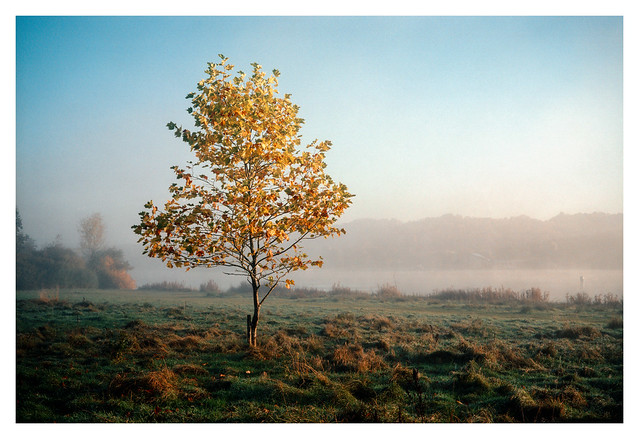
The next shot is one of my favourites from last year, a beautifully autumnal scene of a small maple tree, it’s leaves turning but not yet fallen, nicely separated from the background by the mist. I’m not sure if the colours are true to life, but they look gorgeous, so I’ll take that as a win.
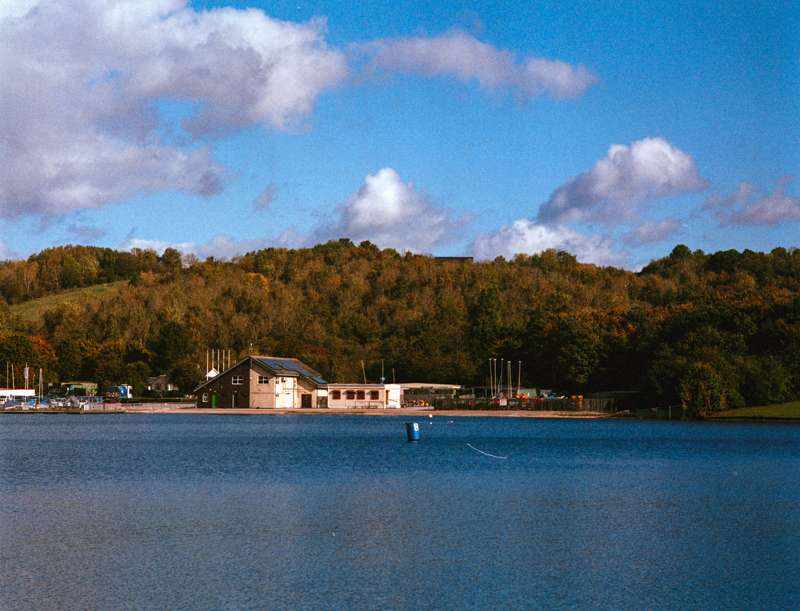
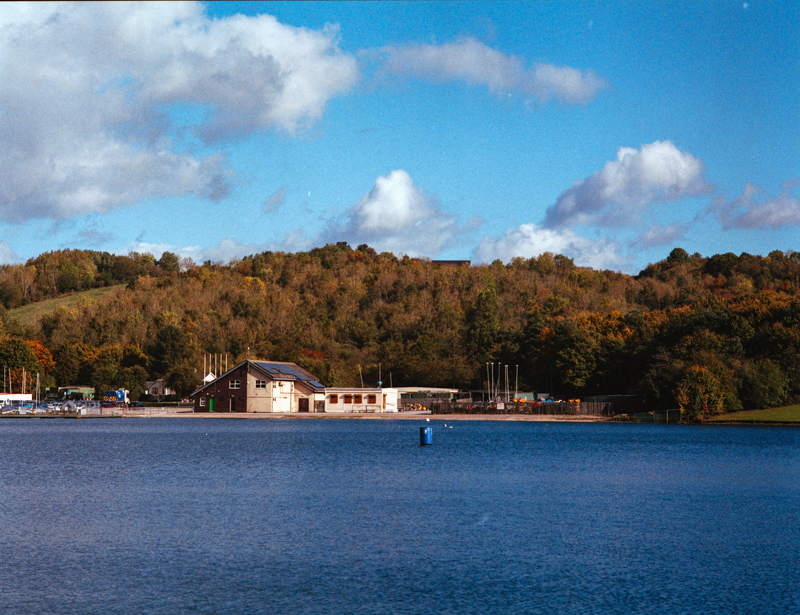
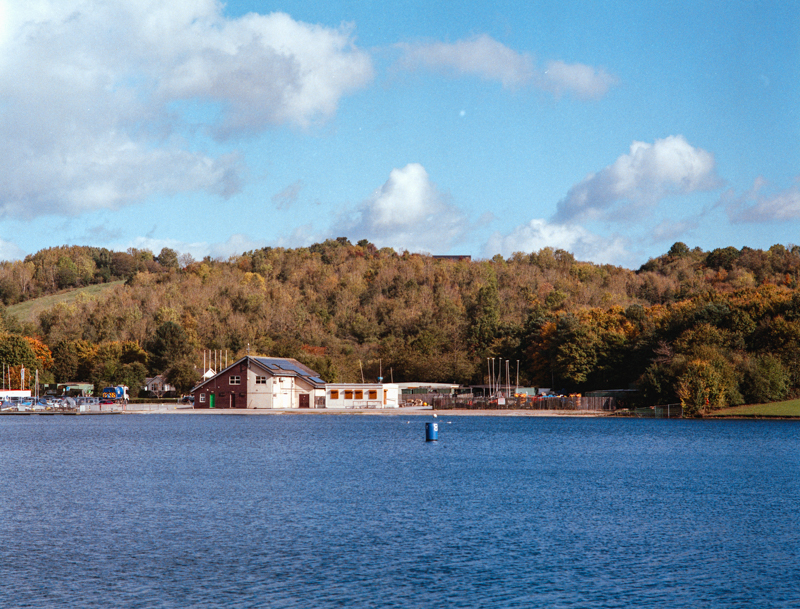
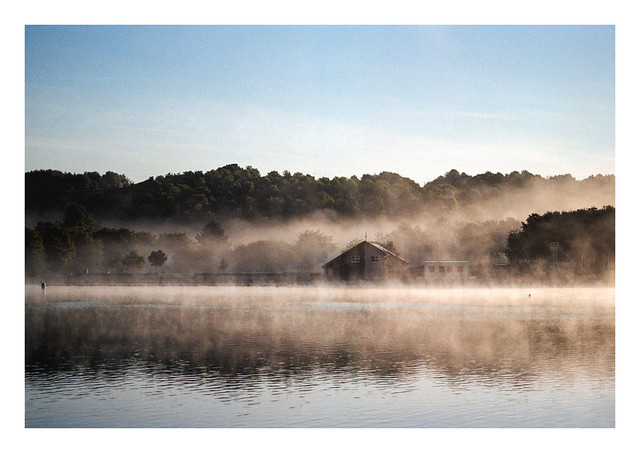
The mist was already burning off under the gaze of the morning sunshine when I took the next picture. A simple landscape scene of the lake with the boating centre on the far bank. There’s still enough mist left to provide some pleasant atmosphere to the photo though.
I took another photo very similar to the one above which had a couple of swans in the frame, but the one above is the best, I think.
The last shot is another lone tree, but this time I shot directly into the light. It’s not as good as the other tree picture, but I do like the way the tufts of dew and cobweb covered grass are illuminated at the bottom of the frame. The lens of the GW690 shows no signs of flare, even in this challenging scene.
So, apart from a wasted shot, this was another expired film success. When I shoot old colour film I’m not really expecting accurate colours, just pleasing ones, and this delivered on that.
Overall outcome: Success!
Expiriment #5 coming soon (Yeah, I know…)…
Fujica GW690, Kodak Portra 400NC (expired 2007). Shot at 160asa and lab developed for box speed.Home scanned and converted with Negative Lab Pro.
Rother Valley Country Park lies within walking distance of my home. It can be quite photogenic but familiarity has bred, if not contempt, then a certain boredom towards it’s possibilities. Like most man made lakes and reservoirs (the lake used to be an open cast coal mine) there’s a certain artificial feel to the place. I guess that over time this will lessen and the place will feel more an more part of a natural landscape (although it’s now been over forty years since the park first opened).
Despite my lack of inspiration, it’s still a great place to go if the conditions are good, especially mist or ice, as it gives it a distinct atmosphere and look that isn’t present at other times.
The two shots published here were taken on a frosty morning in late November last year just as the sun was rising, and I stood stepping between feet to keep warm while I waited for the sun to rise and start to cast light on the scenery. It was worth my time though, I think.
The second shot has been cropped. The top of the frame featured the lines of the cable-powered waterski circuit that occupies this end of the lake.
Canon Sure Shot Z135 & Kodak Gold. Lab developed. Home scanned and converted using Negative Lab Pro.
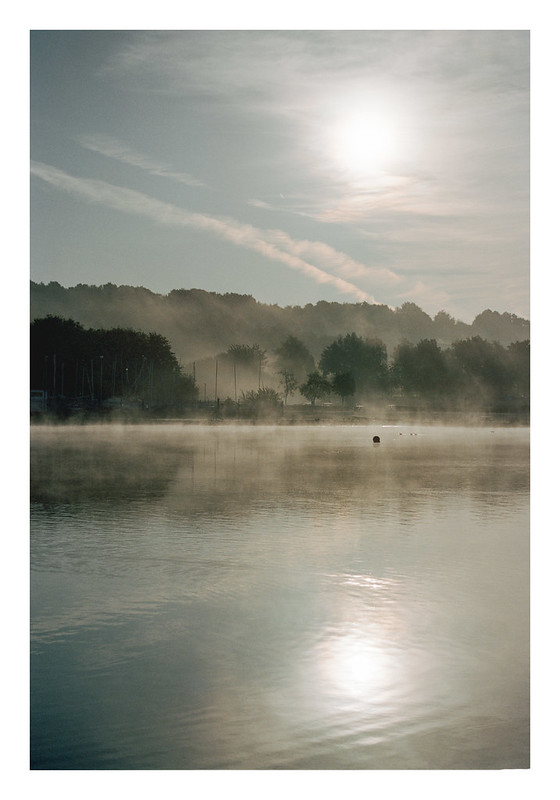
A few weeks ago I decided to walk to the nearby country park and was greeted by the never-disappointing sight of early morning mist on the surface of the lake.
Nikon F80, Nikkor 28-80mm f/3.5-5.6 D & Kodak Portra 160. Lab developed, home scanned, & converted with Negative Lab Pro.
In 1975 an exhibition named New Topographics: Photographs of a Man-Altered Landscape was held in the International Museum of Photography in New York City. It featured works by a number of photographers – the Americans Robert Adams, Lewis Baltz, Joe Deal, Frank Gohlke, Nicholas Nixon, John Schott, Stephen Shore, and Henry Wessel, Jr., and the German couple Bernd and Hilla Becher. Each photographer exhibited 10 photographs.
New Topographics presented a different way of photographing landscapes, eschewing the traditional natural environments and instead presenting images of scenes with a clear human footprint, such as industry, suburbia, gas stations, parking lots and the like.
While I only came across the term in recent years, and at no point set out to be a “new topographer”, it’s clear that many of my photographs fall into the style. I’ve no doubt found influence in the works of photographers who were in turn influenced by the works of the artists presented in the original exhibition, although of the ten, I only have photobooks by Stephen Shore (though there are undoubtedly works by the others collected in other books in my collection).
It’s a style that doesn’t appeal to all. For many, the subjects of such photographs are ruinous blots on the landscape, detracting and imposing on the traditional bucolic scenes more often considered as landscape photography. But I have a place in my heart for both.
Grass fields and blue lakes Overlooked by new homes It was once a mine
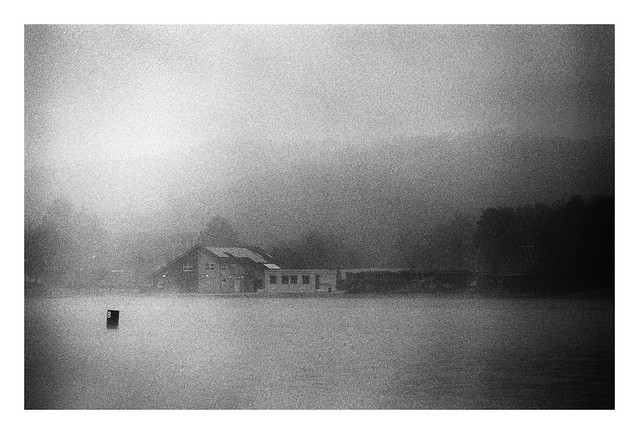
A bit of a mystery about today’s photo, which depicts a foggy morning at Rother Valley Country Park. The puzzle is in regards to the graininess of the image. It was shot on Ilford HP5+ rated and develoed for 800asa. I’ve shot HP5+ pushed a stop before (and pushed by much more in fact) and not encountered the amount of grain that is present in this shot (and a few other misty, low-contrast scenes made on the same roll of film). Even more curious is the fact that it’s only a handful of frames affected – most of the images show smooth and unobtrusive grain.
My thoughts are that it could be the way the scanner handles this type of scene (or perhaps my settings). I tried scanning the picture with both Silverfast and Vuescan and received similar results from both. It would be interesting to see if the grain is present on the negative itself, but I don’t have a loupe to use and haven’t bothered trying to use my digital camera and macro lens.
Despite the unexpected and unplanned look of the image, the grain gives it a very pleasing atmosphere, so I’m not disappointed by the result.
Golf ball sized film grain Appearing out of the fog It’s a mystery
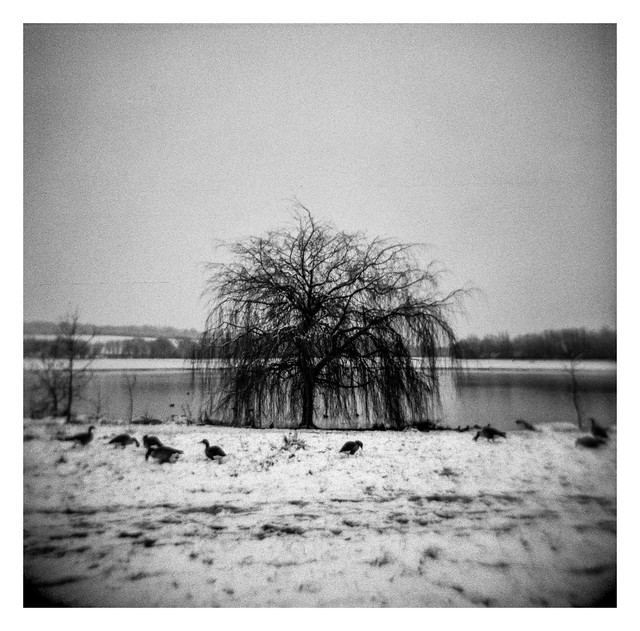
The final snowy Holga shot today, unless I make more We have had a snow warning for the coming weekend…
This water-side willow tree has featured a number of times previously in the blog. It (and a couple of other trees) tends to make a nice point of interest on this section of the lakeside, which is otherwise a little bland.
The ground here, despite it looking nice and snow-covered in the photo, gets very waterlogged, and I had icy mud pouring across the toes of my boots as I walked. Good job they’re waterproof! The geese were a little wary of my presence, and quite a few of them skedaddled out of the scene before I made the picture, but I still got enough of them in the frame, I think.
A snowy lakeside Geese forage in the wet earth My boots are soaked through
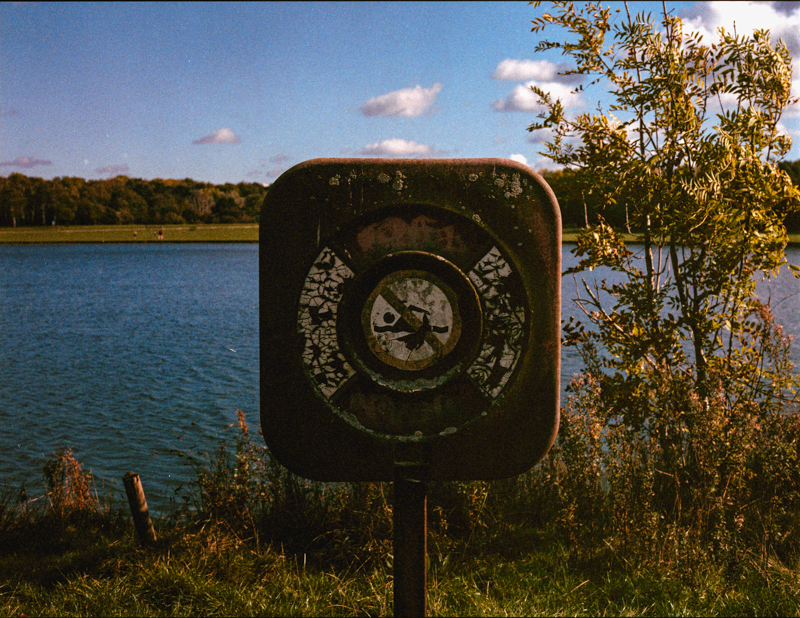
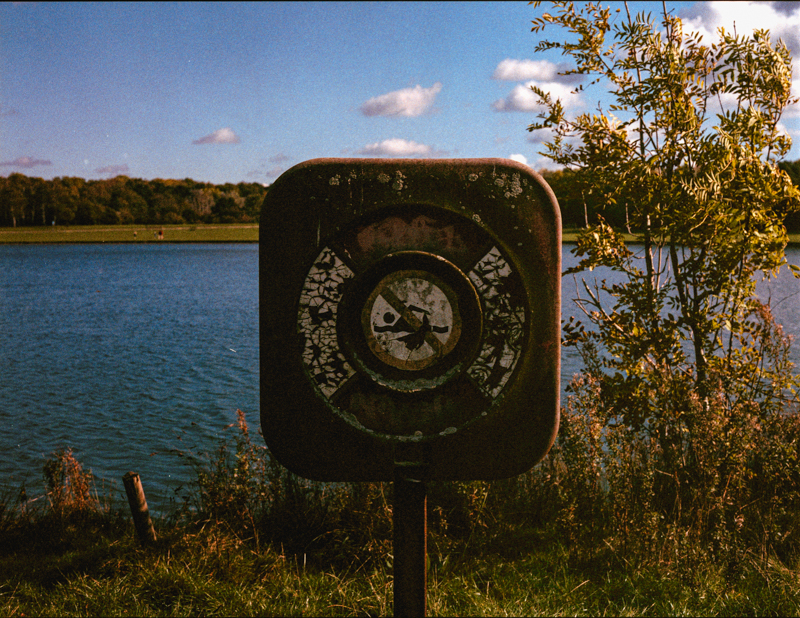
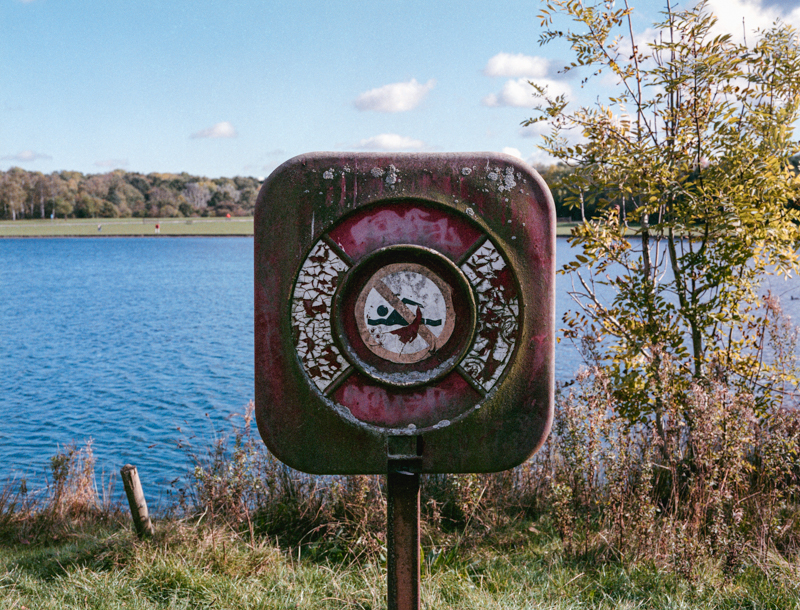
Dotter around the shore of the lakes at Rother Valley Country Park are these life ring holders. They all show environmental wear with cracked paint and algae growth. I expect that they are regularly checked to ensure that they’re fit for purpose, but they have a definite patina’d look about them now.
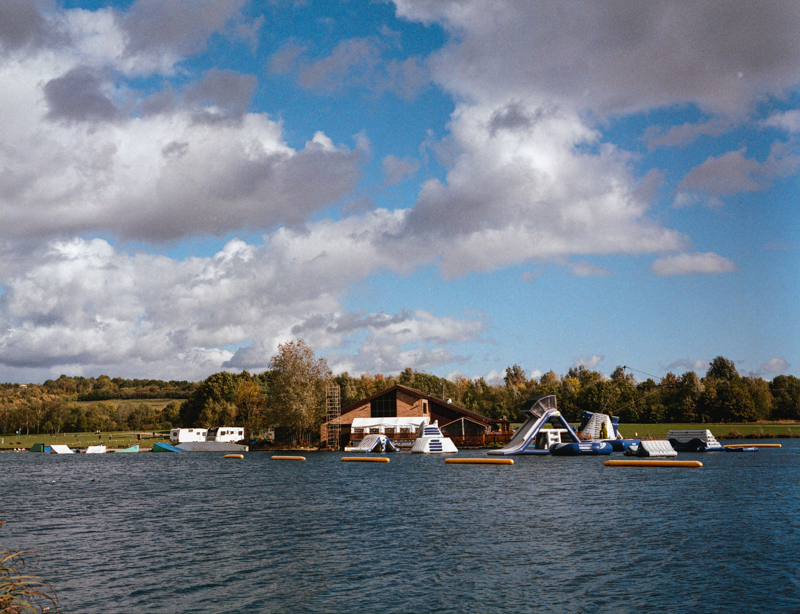
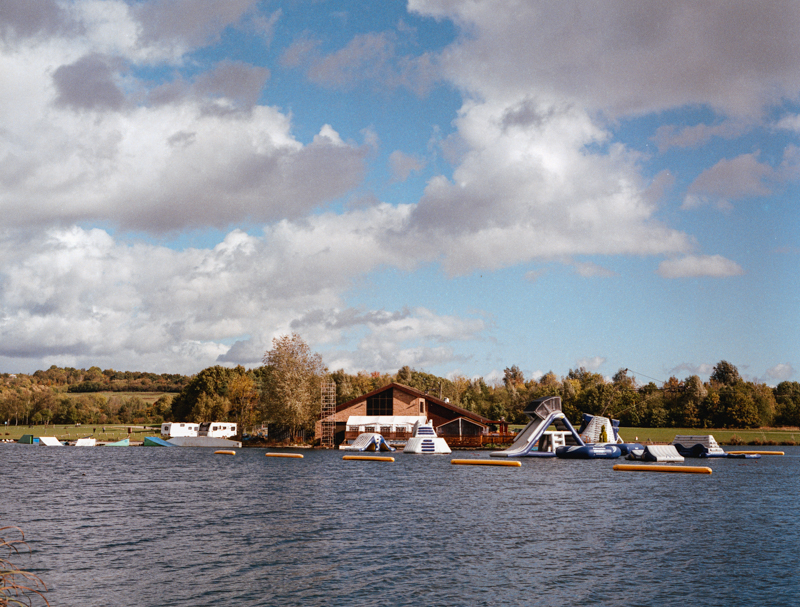
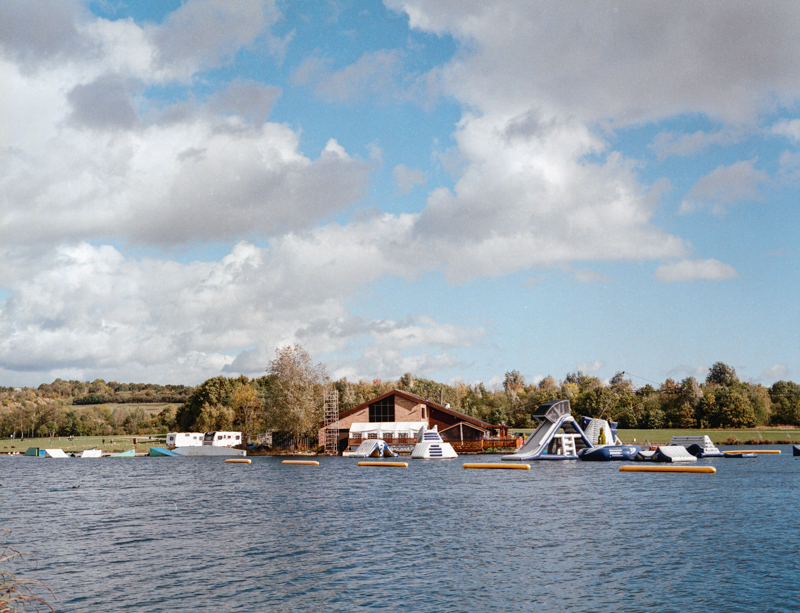
Although the lens on this compact camera doesn’t feel as sharp as some others I use, it still has a nice took to it. There’s a painterly feel to some of the images it’s made and I like the way it has rendered the waterski cafe on the opposite side of the lake, along with the caravan and (way back on the top of the hill) a white-sided building.
Fuji DL-270 Zoom Super & Kodak Colorplus. Grain2Pixel conversion.













 Steel City Snapper photography