Photographing these Lifeguards cabins has become a bit of an ad-hoc project, a little like taking pictures of giant plastic ice-cream cones. Whenever I see one, I take a picture. Maybe I’ll collect them together in a zine or something one day.
Olympus OM-10 & G-Zuiko Auto-W 35mm f/2.8 on Ilford Type 517. Ilfotec DD-X 1+4 14.5mins @ 20°
Withernsea Pier stands in the seaside town of Withernsea on the coast of the East Riding of Yorkshire. I say “stands”, but that’s only partially true these days…
The pier was built between 1875 and 1877 to draw tourists following the arrival of the railway from nearby Hull. Reaching almost twelve hundred feet into the North Sea, it was intended for both leisure and also as a landing point for ships and fishing boats. The pier featured a distinctive castellated entrance modeled on Conwy Castle in Wales, and a fee of one penny was charged for visitors to walk out over the sea.
Although popular, the pier was beset by problems. Storms and collisions with boats damaged the structure, gradually reducing its length until a vessel – the Henry Parr – struck it in 1893, leaving only a short section attached to the towers. The remnants of the pier were removed in 1903, but the entrance towers still stand today, marking where it once reached out over the waters.
Plans to construct a new, shorter pier were explored in more recent times, but the project was declared unviable and abandoned in 2023.
The last few shots from the roll of Fomapan 400 I shot wandering around Wentworth village while my wife looked in the shops at the garden centre.
I’d taken my Olympus OM-2n, which I hadn’t used for some time – a couple of years maybe – mostly because on the last set of results I got from it I though there might have been signs of a light leak. Given I have a couple of other working Olympus OM-series cameras, I wasn’t in a great rush to investigate. Now that I have a bulk-loader however, it’s easy to spin off a short roll of film for testing purposes, so I decided to see if there really was an issue and loaded a 15-exposure roll to see what I got.
It seems that my concerns about light leaks might have been unfounded as there were no noticeable signs of any on the resulting negatives. I’m glad about this as I really do like the OM-2n, and will probably start to use it more as a result.
Following yesterday’s post about the new Holy Trinity church at Wentworth, here’s a picture of the old church and it’s graveyard.
The Old Holy Trinity Church is a now-redundant Anglican church that stands in partial ruin beside the church. It’s also a Grade II* listed building. The church’s tower dates from the 14th or 15th century, while the rest of the building was rebuilt in 1684 for William Wentworth, 2nd Earl of Strafford.
When the new church was built much of the old church’s nave was dismantled leaving a just the medieval tower, the remaining structure of the nave, and a chancel with a chapel.
While the old church is fully visible from the main road through the village, it cannot be seen from afar like its spire-topped replacement.
Holy Trinity Church, Wentworth, is a Grade II* listed Anglican parish church. It was designed by the architect John Loughborough Pearson in a Gothic Revival style and was built between 1872 and 1876 and consecrated on 31 July 1877 by the Archbishop of York. The church was commissioned by William Wentworth-Fitzwilliam, 6th Earl Fitzwilliam, as a memorial to his parents.
The spire of the church is tall and can be seen from far afield and, when I see if from further away I think it has a slightly unnerving look to it. It reminds me of something from an old ghost story or horror tale, perhaps by MR James, HP Lovecraft, or someone of that ilk. The sort of place the protagonist might visit for research purposes and then end up uncovering something they really didn’t want to.
It’s nothing of the sort in reality, of course, but a lifetime of reading supernatural fiction means my mind can’t help but imagine…
I did go inside the church and took several photos but, without faster film, a tripod, or steadier hands than mine, I just ended up with camera shake on all of them. The church replaced another, earlier building, but not on the same precise site and the remains of old Holy Trinity Church still stand a short distance from the new one. A picture of that to come tomorrow.
As the weather had forecast fog and mist this morning, I set my alarm to get up in time to catch it. As there was very little near home, I decided to head out into the Peak District and visit Padley Gorge.
There was plenty of fog and mist on the journey there, and plenty during the walk from the car to the location, but when I got into the gorge the mist was pretty much non-existent. I guess some microclimate effect was in force because the mist was still visible when I looked up towards the road.
Some fog an mist would have come in handy not only to add atmosphere to my pictures, but also to hide some of the other photographers. And, boy, were there a lot of them. I’ve never seen the place so busy with other people with cameras. Pretty much every direction I looked would reveal someone with a camera, a tripod, or both – often wearing a vivid red waterproof jacket too!
I can’t really complain as I was there doing exactly the same thing, but it did mean that care was required to avoid getting one (or more!) of them into my shots.
While I had my XA3 in the bag, the morning ended up being a digital-only affair, shooting with my Nikon D810 – the camera I bought for scanning my film negatives, but also with the bonus of being a good camera for other uses too, despite it being released 14 years ago. I don’t think I did the best job with it, if I’m honest – I need more practice with it – but I was able to get a few pictures I’m happy with, including the ones in this post.
When I was a child I, like countless other children in the UK, read and owned a considerable number of Ladybird Books.
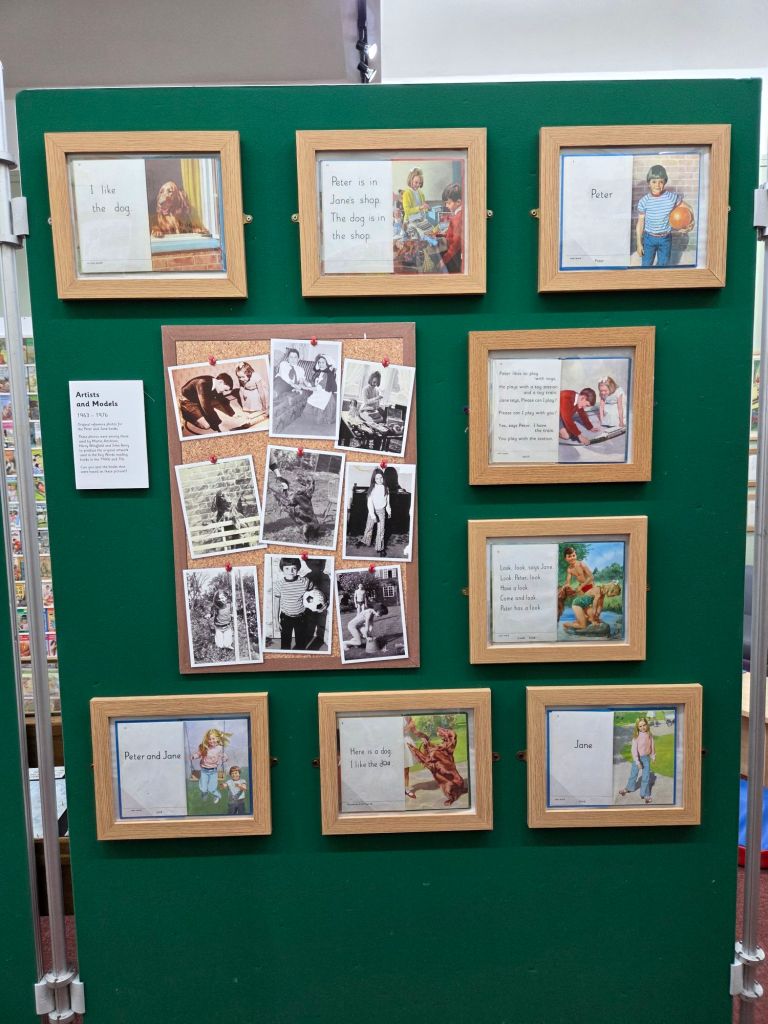
Ladybird Books was one of the best-known publishers of children’s books in Britain. They produced affordable, pocket-sized books that introduced whole generations of young readers to a wide range of subject matter, including original and well-known stories, history, science, nature and the world in general. Their aim was to make learning accessible, enjoyable and visually engaging, whether through reading schemes such as Peter and Jane or through their extensive range of non-fiction books.
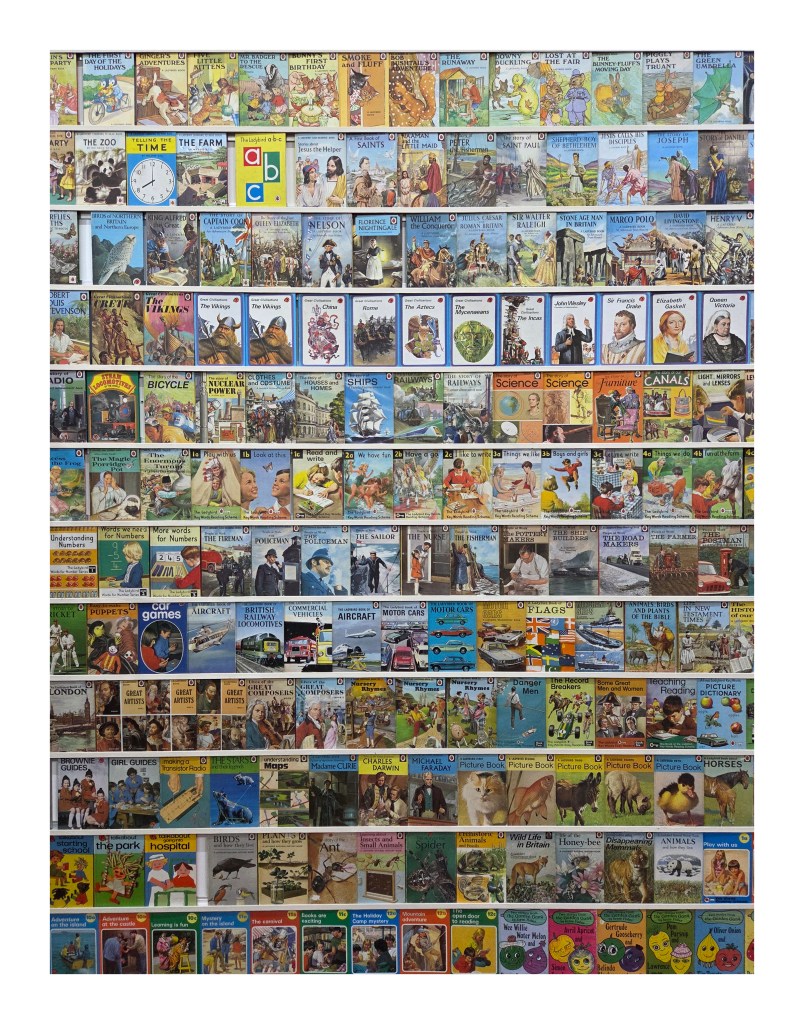
A selection of just some of the Ladybird books on display at the Wonderful World of the Ladybird Artists exhibition
Ladybird used some of Britain’s finest illustrators to produce the artwork for the books, which were packed with images full of detail, accuracy and warmth. They might show a medieval castle, a steam locomotive, a fairytale character, or simply an ordinary family kitchen, but the illustrations had a realism and beauty that made the subject matter extremely engaging and memorable, and they remain one of the defining features of the Ladybird Books series.
About ten years ago there was a documentary (The Ladybird Books Story: The Bugs that Got Britain Reading) produced and broadcast by BBC4 in the UK about the books and their legacy. The programme featured, amongst others, a lady by the name of Helen Day, who runs the wonderful Ladybird Fly Away Home website and has been a collector of not just the Ladybird books themselves, but also the history of the publisher and the writers and artists who made the books what they were.
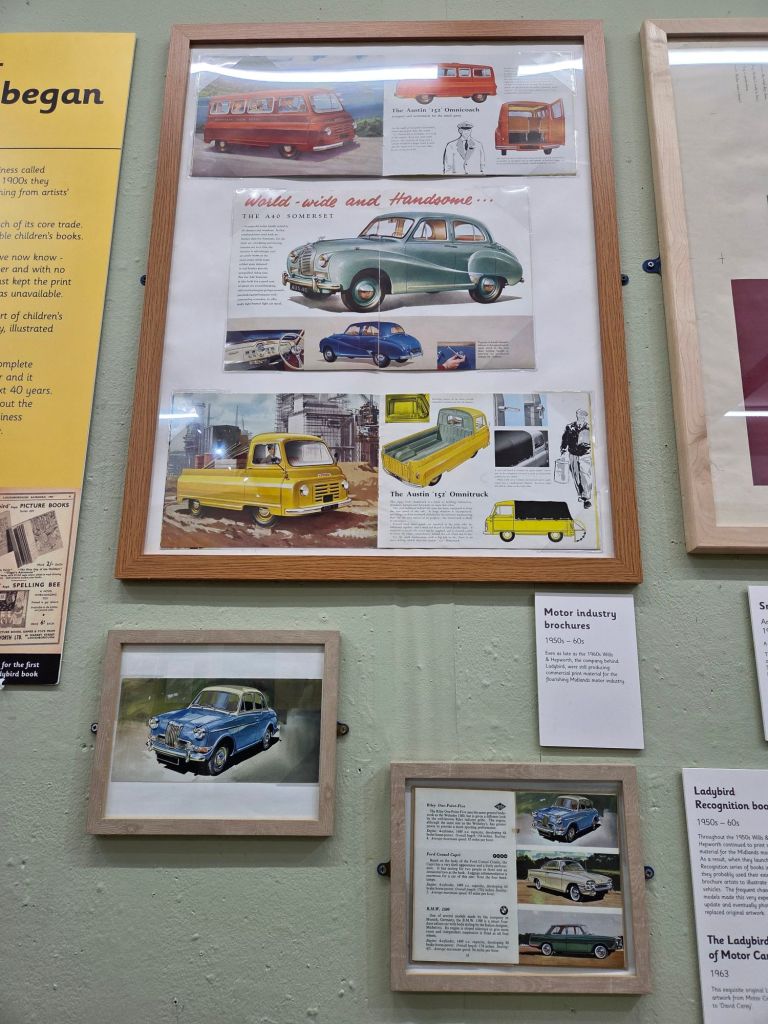
In 2018 she was asked to produce an exhibition on the books, and The Wonderful World of the Ladybird Artists has been touring the country since then. It has been at Mansfield museum, which is less than an hour from me for the past few months, and I’ve been meaning to get along to it for a while (especially as it is only there until November). I finally got the opportunity to do so this past weekend.
The exhibition was a delight, full of fascinating information, and packed full of artwork, historical artifacts related to Ladybird Books, plus a huge number of the books themselves, including a reading corner with a range of title to brows and enjoy. The exhibition isn’t huge but I found it interesting enough to devour everything there and enjoyed a good couple of hours of happy nostalgia.
I don’t have any of my original Ladybird books (unless there are some squirreled away at my dad’s house still) but I do have a small collection that I have picked up in the past couple of decades – including some of the titles I originally owned, plus a bunch of others. They’re still an absolute delight to look at and the artwork is gorgeous, enriched by the fact it depicts a world as it was fifty years ago and beyond. I’m not someone who thinks everything was better in the “good old days” – I think most things were worse – but some things are to be treasured. Ladybird Books are one of them.
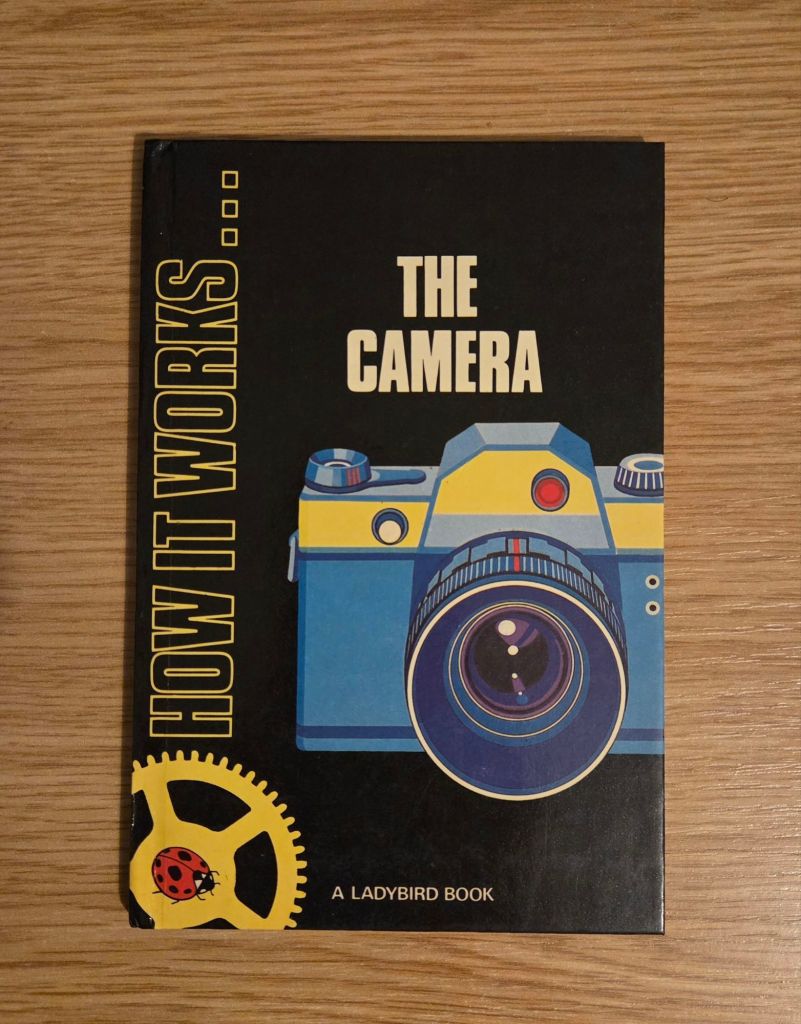
One of the Ladybird books I have in my current collection. I feel this 1970-published title is apt for the blog!