35mm · Film photography · Photography

An apple a day keeps the doctor away

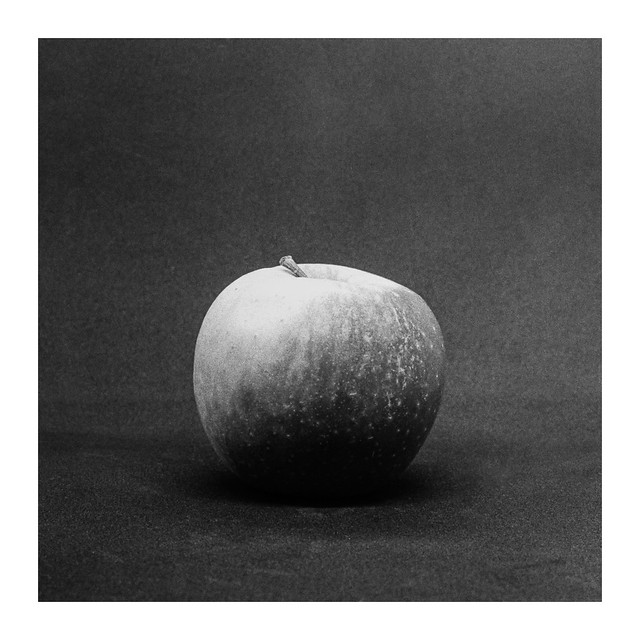
So here’re two photos of an apple from my debut home-developed roll of HP5+.

A few weeks ago, and before the current lock-down was thought of, I bought a small home-studio setup from Amazon. It’s a fairly basic thing: essentially a collapsable plastic cube with one side open. It has a couple of strips of adjustable-brightness LEDs (powered by USB) and a set of different coloured foam inserts that can be hooked to the inside back of the cube to provide neutral backdrops. The whole thing collapses down into a neat package that can be easily stored.

It’s big enough to hold small items (such as an apple!), but not much use for anything larger. Despite that, it’s a useful thing for small still-life shots or macro – something that is of definite value now that our outdoor movements are restricted.

Both today’s images (plus the shots of the onions I featured in yesterday’s post about home developing) were shot with this setup. I used my Minolta SRT 101b and 50mm f/1.7 MD Rokkor lens. Even at closest focus some of the walls of the cube were in frame, so these shots have been cropped to remove those areas.

I’d hoped to have a second attempt at home developing this weekend, but the film I’ve shot is 120 format and the negative sleeves I’ve ordered haven’t arrived yet. Unless I manage to finish another roll of 35mm B&W before the weekend is out (something that, pre-lock-down would have posed no problem whatsoever) then I might have to defer those plans until next weekend instead. I do have a partially shot roll of Delta 400 in my Sure Shot Telemax though, so if I take that out with me if I get a chance for a walk, then maybe I’ll get enough shots to finish it off. I don’t want to just take pictures for the sake of it though.

Apple #1

Apple #2

Minolta SRT 101b, MD Rokkor 50mm f/1.7 & Ilford HP5+. Ilfotec DD-X, 9 minutes at 20Β° .

Taken on 30 March 2020

35mm · Film photography · Photography

Nerves, mistakes and perseverance – Developing black and white film at home for the first time

Since I got back into shooting film a few years ago, the thought of developing my own photos at home has crossed my mind on more than one occasion. I’ve usually pushed these thoughts to one side though, partly because I’m happy with the service and results I get from my local lab, and partly because of concerns that I would ruin rolls of otherwise nice photographs with my oaf-like clumsiness.

However, things have now changed. My local lab is currently closed due to the coronavirus lock-down (although the lab I use for colour stuff is still open for mail-order processing) which means I would either need to sit on any rolls of black and white film I manage to shoot during the pandemic (likely to be reduced from normal due to the limits on where I can roam) until they re-open or, to take the plunge and try to self-develop my film at home.

A bridge to trip-trap across

Because I don’t know how long the lockdown is likely to last (at least 8 weeks is my current estimate though), and because I like to try and keep a flow of fresh images coming for this blog, I decided to give home developing a go.

While it should prove cost effective in the longer term, because I’ve had to buy most of the chems and equipment to get me started, it’s been a significant investment – I could have had a dozen or more rolls lab processed at least for the outlay – so I’m keen to make it work.

Branching out

I decided to go for Ilford chemicals for my first foray: stop-bath; fixer; wetting agent; and developer – I chose Ilfotec DD-X. The DD-X was quite low-cost for the bottle and I was keen to keep my initial outlad down as much as possible. DD-X is supposed to be a very good developer, but it’s probably not the most economical to use – while the 1l bottle was much cheaper than something like Kodak HC-110, it will also develop far fewer rolls.

Once I’d acquired all the equipment and chemicals, it was then just a case of finishing off a roll of film. As my movements are much restricted due to the UK lockdown, most of the photos on the roll are from around the house, or pictures I’ve been able to take while out for a walk to get to exercise and fresh air.

No petting or feeding the chairs

I decided that it would be a good idea to practice things as much as possible before having a go with my “live” roll of film, so I used a roll of Agfa Vista Plus that I use to test cameras sometimes. The roll has been exposed to light when a camera back was opened at some point, so it could be safely sacrificed.

My first tests were in daylight, extracting the film onto the spiral from the canister itself (without removing the cap and taking the film out altogether). After understanding the process, I then attempted it again inside the changing bag. This was trickier and a few attempts failed, but after a while I was successful. Then, given that the roll of film I would be developing for real had had it’s leader completely retracted into the cannister (I tried to retrieve it, but without success), I had a further attempt inside the changing bag, this time opening the cannister with a can opener and loading it onto the spirals while loose. This was trickier as my efforts again failed on the first two attempts, by which time the film had become a twisty un-spooled mess inside the bag. I forced myself to perservere though as, when it came to my proper roll of film, removing my arms from the changing bag wouldn’t be an option. After a while I loaded it ok. Practising in this way was valuable experience and I’m really glad I did it.
I'm afraid I can't do that

The next day, it was time to do it for real. I double and triple-checked that I had everything I needed and then carefully placed everything into the changing bag: The developing tank, lid and spiral; the film; a pair of scissors to cut off the leader and chamfer the corners; and a small bottle opener to crack open the film cannister.

I soon ran into a problem when I found that the bottle opener was failing to open the cannister. In my test I’d used a larger bottle-opener (a corkscrew), but had though the smaller one would be easier to handle in the changing bag. Now I was in a situation where the cannister was still sealed, but might be in a condition that made it no longer light tight. In order to prevent any light-leaks, I placed the still closed cannister in the bottom of the developing tank and fitted the light-tight funnel. This allowed me to safely remove my arms and go and get the corkscrew. Because the corkscrew has a pointy end that might conceivably piece the changing bag if I wasn’t careful, I taped the sharp bit up with some masking tape before putting it in the changing bag. Once that was done I was able to take the film cannister back out of the tank and this time remove the cap successfully.

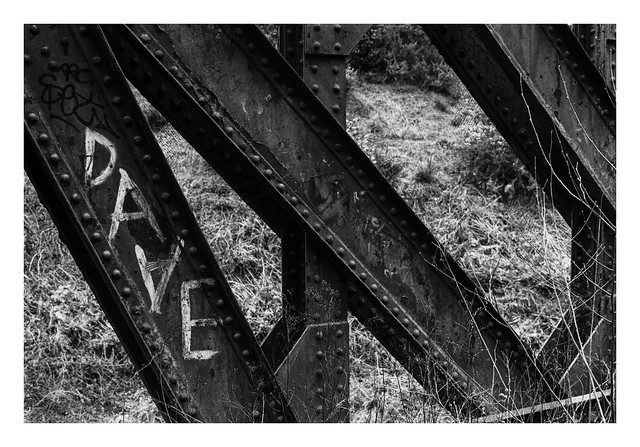
Rivets

The next job was to cut off the leader and chamfer the edges to allow easier attachment to the spiral. Making a neat cut across the film and then taking off small triangles from each corner is tricky when you can’t see what you’re doing and I was a little concerned about taking a piece of my finger-tip off in the process! Thankfully this didn’t happen though and I was now ready to attach the film to the spiral.

Attaching the film was straightforward and I began winding it on. And winding. And winding. And wind… Something had gone amiss. I now had to take the spiral apart in the bag, take off the section of film already wound on, and start again. As with my ealier practice runs, the film was now forming into a big coiled heap in the bag, making this more difficult than before.

The hidden bridge

The same thing happened again on the second attempt, winding on for a while but then stopping, requiring the spiral to be opened and the film removed once more. Thankfully, the third attempt worked ok, which was a big relief. The only issue was right at the end of the roll where the film popped out of the tracks, but I was able to gently re-afix with my thumbs it and, after cutting off the reel, winding it the rest of the way onto the spiral. I then inserted the centre column onto the reel and placed everything into the tank and fitted the lid, making everything light-tight. I was certainly glad that this part was done!

Now the film was safely in the tank I decided to take a break before starting the actual developing process. Plus I wanted to give everyone a chance to use the bathroom before I barred them from entry when it was time to dry the negatives when they were ready.

02A

I got everything that I needed for the developing out on the work-surface in the utility room, neatly arranged in a logical order. I filled two clean 2 litre milk bottles with water at the correct temperature, thinking it would be easier to keep it at 20 degrees in easily accessible bottles rather than mixing it from the hot and cold taps. I used this water to mix up my developer, stop-bath, and fixer and arranged their jugs in a left-to-right order. Also to hand was a clean cloth to mop up any spillages and my phone with the Massive Dev Chart app open and ready. I decided to go with the timings recommended by the app (although these are different to those given on the Ilford HP5+ data sheet – MDC states a full minute of agitation, followed by 10 seconds at the start of each minute thereafter, whereas Ilford states 10 seconds at the start of each minute). Everything in place, it was now time to begin…

I poured in the stop-bath first!

Yep, that’s right. I fell at the first hurdle. I put this down to nerves. Kick myself! Doh! Massive facepalm!!! etc.

Cursing my stupidity I quickly poured the stop-bath back out. While my experience is limited, I was fairly confident that stop-bath wouldn’t have too detrimental an effect on undeveloped film. Thankfully I had loads of water in the two bottles I’d filled earlier, so I rinsed the film in the tank several times until I was confident that I’d washed away the stop-bath. Then, after making a fresh batch of stop-bath, I started again.

Flood debris

This time I poured in the developer first! Clicking start on the MDC app, I began the agitation cycle. I’d decided to wear a pair of plastic gloves during the whole process to avoid getting chems on my skin and, while I’m not sure if it was water or something else on the sides of the tank after the previous mishap, it was quite wet so I was glad to be wearing them. I think I might have been a little too vigourous on the first few inversions, sloshing the tank about a little too much before catching myself and adopting more of a tumbling method throughout the rest of the sequence. After nine minutes I poured out the developer and added the stop-bath (again!), then the fixer for the final stage.

I used Ilford’s method for washing the negatives: 5 inversions, then empty the tank; 10 inversions, then empty, 20 inversions, then empty (although I also added 15 and 25 inversions stages for good measure). After this I opened the tank, added some fresh water and a few drops of wetting agent before carrying the tank back to the bathroom to hang the film to dry. At this stage I stil didn’t know if things had worked (or if my stop-bath mishap might have ruined things somehow), so now came the moment of truth as I took out the spiral and saw the results for the first time.

Under current

I had negatives!

And they looked to be ok! Being slightly paranoid about getting dust stuck all over the wet negatives, I quickly hung them up inside the shower cubicle, closed the door, and left them to dry for a few hours (although I did crack the door ajar to show off the product of my endeavours to my somewhat uninterested wife and kids). πŸ™‚

When I came to take them down later I was able to get my first proper look at the results. The negatives looked perhaps slightly dense, but nothing over-the-top and had, to my slight dismay, a water mark on many of the frames where it looked like a drip of water had flowed down them during drying. My mistake here was that I didn’t shake off any excess water when I hung them up. Something to remember next time. The negatives had a slight curl, though nothing extreme, and this actually aided me when cutting them into strips for filing. The curl meant they lay on their edge on the desk, so I could cut them without scratching the surface (or attracting any stray dust).
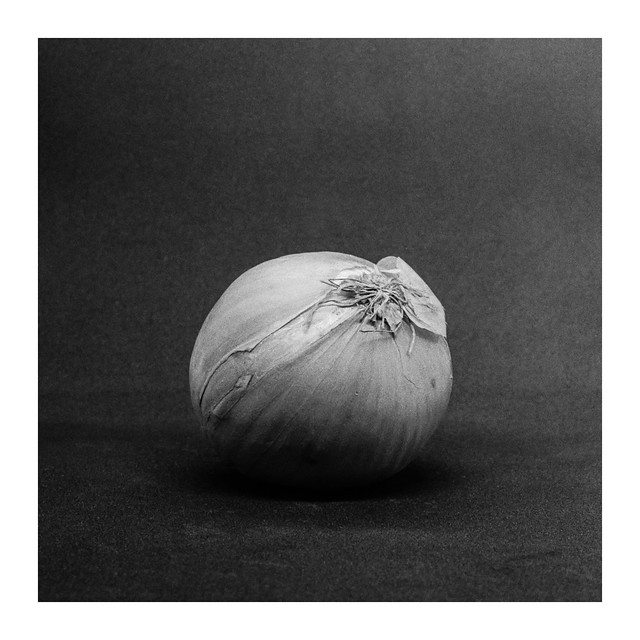
Onion #1

Onion #2

Onion #3

The next step was to scan some frames on my Plustek and see how they looked. I was worried that the drying marks might show on the scans, but was relieved to find that it was only really visible on a single frame – one with a large area of otherwise blank sky – and even that would be easy to remove in Photoshop should I want to. While I didn’t want the drying marks, and will take steps to try and avoid them in future, on this occasion they didn’t really cause any issues.

The resulting scans look pretty nice. I’ve had to tweak them a little to get them how I like them – the roll has come out a little bright, something I think is probably down to my agitation technique during development rather than the metering, but nothing too severe and easily fixed during the scanning and post-processing stage. The grain on the negatives is pretty subdued too, possibly moreso than those I get back from my local lab (which are processed in Xtol), which is nice – I really don’t mind grain, but some of these photos are especially sharp-looking as a result (though some of that is down to the Rokkor 50mm f/1.7 lens, which I’ve found to be an excellent performer).

On the whole, while it would be hard to say I enjoyed the slightly stressful experience of developing film for the first time, I was very pleased with the results. I think the stress levels will be much lower next time I do this though and am looking forward to my next attempt.

If you’ve not developed your own film before and are thinking of giving it a try, then go for it. If I can manage it (and recover from mistakes to boot) then anyone can!

The photos in this post are all from the roll I developed (the ones I’ve uploaded to Flickr so far, at least). As I’ve been limited in where I can go due to the current lock-down caused by the coronavirus pandemic, these were all grabbed while out for a walk to take some exercise or in my home, so maybe don’t go looking for any prize-winners. πŸ™‚

Minolta SRT 101b, MD Rokkor 50mm f/1.7 & Ilford HP5+. Ilfotec DD-X, 9 minutes at 20Β° .

All photos taken in late March / Early April 2020

 

35mm · Film photography · Photography

Carmouflage

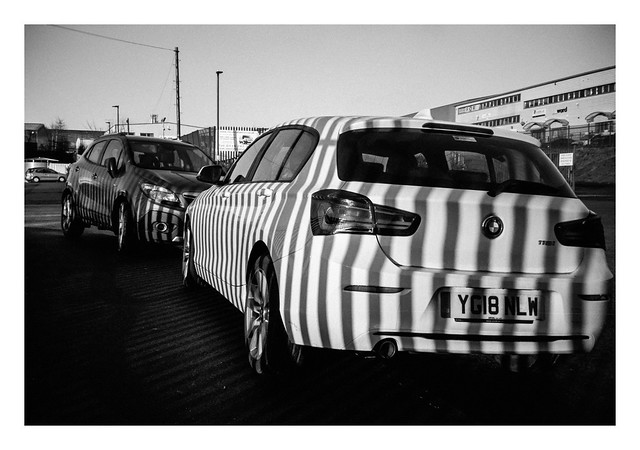
Another scene that I’ll probably not see again for a while, both because the year has progressed and the light won’t fall on these cars through this fence for another several months (at least not in the same way, and possibly at a time of day when the cars are not there), but mainly at present because there aren’t any cars parked on this street anymore due to the pandemic.

It’s a road I walk up when dropping my films to be scanned at my local lab, but that’s closed too for the time being and, as I’ve bought my own home-developing equipment, I might not be using them as frequently when they do re-open (something I’m torn about – while me home developing my film is cost effective, I don’t want to deprive the lab of any business. It’s a valuable place to have on my doorstep and their service is great).

While it isn’t the foremost concern by far, I do worry a little as to the impact this pandemic will have on film photography. While is was going from strenth-to-strength before all this happened, I do wonder how a potential pandemic-triggered recession might affect it. If money is short, will people still want to spend so much on film and processing costs? I hope so, but it’s a concern nonetheless.

FILM - Carmouflage

Pentax Espio 140M & Ilford HP5+.

Taken on 19 February 2020

35mm · Film photography · Photography

An empty dress

This translucent mesh dress is an exhibit in The Hepworth gallery. As with yesterday’s photo, I didn’t take note of the artist of the name of the piece unfortunately.

It did make me think that there are going to be an awful lot of unfilled dresses in clothing stores around the world right now. I’m not sure of the lock-down restrictions in other countries but, here in the UK, non-essential shops are now closed, including clothing stores. The only places selling clothes at present (online excepted) are supermarkets that happen to have clothing sections.

Given the fast-moving pace of fashion, by the time the lock-down is lifted most of the clothes currently sat unpurchased in stores due to the coronavirus will be either out of fashion, or out of season, likely prompting huge sales when the shops re-open as they attempt to clear stock for new autumn lines (assuming the lock-down is at least partially lifted by then) and to try to recoup some of their investment.

Also, while most shops are cleaned frequently, I wonder just how much dust will have settled by the time they need to prepare to open to the pubic again. A situation like this gives rise to so many things that I never really gave thought to before – even things as everyday and mundane as vacuuming a store each night.

Empty

Minolta SRT 101b, Rokkor 50mm f/1.7 & Ilford HP5+ (@800).

Taken on 14 March 2020

35mm · Film photography · Photography

Some sort of thingumajig

It’ll be another short(er) post today I’m afraid. I had a long day at work and then decided to scan some more of my home-devved negatives. Now I’m tired and don’t want to type anything too lengthy. I did make a start on my home-developing blog-post this lunchtime though, so that will be posted sometime this week and (in terms of length, at least) will more than make up for this short post!

The UK COVID-19 daily death toll fell again for the third day in a row today. That’s obviously good news, but I’m somewhat wary of the figures. I think I’ll be much more relieved when it’s continued to fall for at least a week. While I’m hoping for the best, the things I’ve read from trustworthy sources all seem to indicate that we’re not yet at the peak of things and that it will be some time before the lock-down has a noticable impact on the figures. As I say though, I hope these sources are wrong.

Today’s phot is of a small sculpture in The Hepworth gallery. I neglected to make a note of the name of the piece of the artist who created it. For that I apologise.

Apple of my eye

Minolta SRT 101b, Rokkor 50mm f/1.7 & Ilford HP5+ (@800).

Taken on 14 March 2020

35mm · Film photography · Photography

Tiring developments

Today’s post will be shorter than those from the last week or so, mostly because I’ve had a busy day and want to kick back and put my feet up for a bit. When I say busy, it’s not that I’ve been doing any heavy lifting or anything, but today was my first attempt at developing lack and white film at home, and it’s been kinda mentally tiring as I’ve tried to get everything right and not mess the whole thing up.

The good news is that I have some negatives that (from first glance) look ok. They’re currently hung in the shower drying (there’s an irony in that statement, surely…) so the proof will be when I come to scan them.

I’ll post the results and an account of my experience in a forthcoming post, but suffice to say that not everything went to plan…

Until next time, here’s someone admiring a nude in The Hepworth.

FILM - In front of a nude

Minolta SRT 101b, Rokkor 50mm f/1.7 & Ilford HP5+ (@800).

Taken on 14 March 2020

35mm · Film photography · Photography

Distraction

Despite the lock-down, today has been quite a full day so far.

After breakfast, I decided to take a walk – as I’m not at work today I decided on a longer outing so I could get a bit more of a workout (insomuch as brisk walking counts as “working out”). I chose a route that took me through the industrial estate before cutting back across to the Trans-Pennine Trail and then back home. As usual, I took a camera in case I saw any shots I could get while out. One of the things I photographed was a notice affixed to one of the businesses stating that visitors should ring the bell and wait to be admitted due to the coronavirus pandemic. I’ve been taking photographs of coronavirus related sights that I see when out and might post about them when I have a few developed, but want to capture them for a record of the times whatever the case.

Taking the photo today led to a car pulling up beside me and the two men inside asking what I was doing. They’d seen me taking the photo and I think they were suspicious that I might have been casing the building for nefarious purposes or something. When I explained why I’d taken the shot they seemed satisfied and drove off. The 1975 35mm film SLR I was using to take the photo was probably not an efficient tool for mischief even if I had been inclined that way. πŸ™‚

When I got to the Trans-Pennine Trail it was busier with people jogging, cycling and walking dogs. Certainly not crowded in any sense of the term, and it was easy to keep a wide berth from others, but I think I’ll avoid it in future at weekends (unless I go out especially early). I took a few photos while walking and finished the roll in the camera, so tomorrow might be the day I have my first attempt at home developing. Eek!

Once back home, the rest of the morning was taken up by washing the cars and then giving the garden a once-over. The grass is now cut (and so begins another summer of regular mowing duties…), the weeds pulled, and some general tidying-up. There’s quite a lot of garden waste left over and, given the normal outlets for disposal are closed, I will probably have to burn it later in the garden incinerator.

The result of this is that I’ve mostly been distracted from whatever today’s news is regarding the pandemic. I’m happy to keep it that way if I’m honest. Plenty of time to catch up on that stuff later.

Today’s photo is of someone else apparently distracted…

Distraction

Minolta SRT 101b, Rokkor 50mm f/1.7 & Ilford HP5+ (@800).

Taken on 14 March 2020

Film photography · Medium Format · Photography

Single file traffic

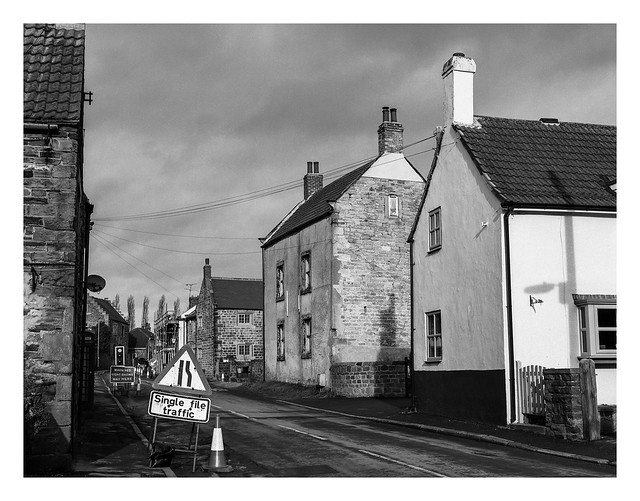
The road-sign depicted in today’s photo feels pretty apt at present. As the news of the coronavirus pandemic hit and became widespread last month there was an upsurge in panic buying in the shops. Some of these things seemed logical – hand-sanitiser, for instance, is a useful substance to help keep you safe from inadvertently contracted viruses on your hands. Soap and water is similarly effective, but I guess not as convenient for carrying in your pocket or in your car. Paracetamol was another item that soon found itself in short supply and, again has a logical basis for being so – namely it’s use in reducing temperature during a fever. And while I can undestand the benefits of having dried pasta given it’s long shelf-life, the quantities that some people were buying was over-the-top – unless your family eats pasta every meal of every day, you don’t need that much.

Other items seemed less logical (or at least to a degree). The number one thing here was toilet-paper. I’m not quite sure where this particular panic originated, but I first saw it mentioned by my nephew. He lives in Australia and he posted an image of empty shelves where the toilet-paper once sat in the supermarket. Before long the phenomena had reached the UK and spread around the world – panic buying of toilet-paper seemingly has a faster and more effective transmission rate than the COVID-19 virus! While I can understand how no-one wants to be left short of toilet-paper, again the volumes that some individuals were buying were ridiculous, some people buying dozens of rolls at a time. It’s not even as though a primary symptom of the virus is diarrhea or anything, in which case I might have understood.

The result of this panic buying was that stocks that should have met the needs of all instead became scarce, with some unable to source any at all. It even began to generate black-market activities (reports of stores being broken into and their stocks of toilet-paper stolen), and price-gouging as unscrupulous traders hiked the cost of in-demand items.

The result here in the UK has been a complete change in the way that people have been allowed to shop, firstly by stores limiting the quantitiy of items shoppers have been allowed to purchase, but also, because of the lock-down, implementing strict people-control measures to limit the number of shoppers in stores at any one time. This has led to large queues in the car-parks outside supermarkets as people wait for their turn to enter. In some parts of the country these have been boisterous (and, significantly, meant lots of people lining up in close proximity). Thankfully, in the stores close to us, the queuing has been orderly and well spaced and these measures have resulted in better access to produce as well as a losening of the restrictions on quantities (though some items are still excepted).

We’reΒ  into spring, and will be coming up to summer soon, so queuing outside is probably not that much of a hardship. That said, here in the UK the weather can be somewhat “changeable” to say the least, so it will be interesting to see how people fare in queues if the weather takes a turn for the worst.

FILM - Village roadworks

Bronica ETRSi, Zenzanon 75mm f/2.8 & Kodak Tmax 400.

Taken on 29 January 2020

35mm · Film photography · Photography

People and shadows in a gallery

It’s now been a week-and-a-half since the COVID-19 lock-down measures were put into place here in the UK. So far, things are ok – as a full-time home-based worker, I’m used to not leaving the house to commute to work, and social-distancing from my colleagues is the normal state of things anyway apart from when we have face-to-face meetings (which are all stopped now in any case). As a result, the lock-down measures are not inducing any sort of cabin-fever at this stage.

I must confess however, that I’m missing being able to go out where I want. I’m taking walks most days to get some exercise and fresh air, but even places that would be just a short drive away are starting to feel like slightly exotic destinations. The thoughts of driving out into the countryside (or even just into the city centre) are tantalizing given the “so near, yet so far” forced remoteness of even relatively mundane destinations. I’m estimating that the current lock-down will last through to the end of May at the earliest, so a good eight more weeks of this yet.

Still, things could be worse – returning home from my walk this lunchtime one of our neigbours, who has two young children, was out on his drive cleaning the paving. I said “Hi” (from a safe distance) and enquired as to how they were all doing. “I’m sick to death of watching Frozen” was one of his responses…

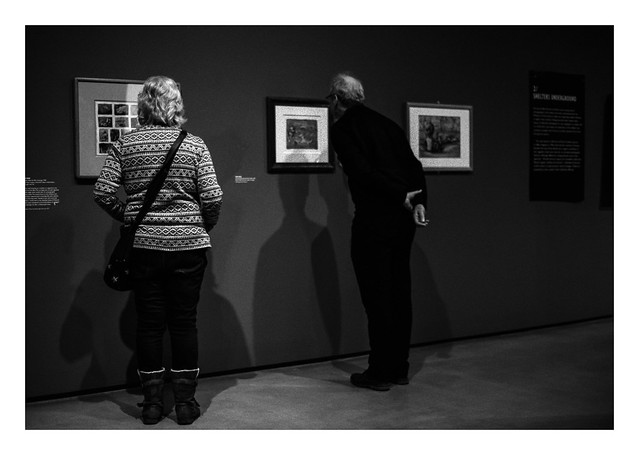
Another photo from The Hepworth today. I didn’t have high hopes when I took this picture as it was very dimly lit in this part of the gallery (to protect the prints and other artwork on display), so I had to shoot it wide open at f/1.7 at 1/30sec. I was expecting camera shake, but it’s nice and sharp, even if the shallow depth-of-field has rendered the man slightly out of focus.

Gallery shadows

Minolta SRT 101b, Rokkor 50mm f/1.7 & Ilford HP5+ (@800).

Taken on 14 March 2020

35mm · Film photography · Photography

Back to black (and white)

After a week or two of posting colour images, today marks a return to black and white. I still have a number of colour images from the two recently shot rolls that I haven’t posted here though, so maybe they’ll get an airing if I feel a splash of colour is required.

Today’s image is of the stairwell in The Hepworth gallery in Wakefield. I visited the gallery back in the middle of the month before social distancing rules were introduced, and then enforced by the nationwide lock-down. The gallery, along with other such venues around the country, has now closed until further notice, so I was lucky to get to attend when I did.

The reason for my visit was an exhibition about the relationship between the photographer Bill Brandt, and the artist and sculptor Henry Moore, who had met during the second world war when they were both documenting the plight of people sheltering from air-raids in London’s Underground stations. Their relationship continued with an interest in a number of shared themes throughout their careers, including the human body, the landscape, industry and others.

While I was predominantly interested in Brandt’s photography over Moore’s artworks, the latter’s sculptures are wonderful to see in person and made for a number of interesting photographic opportunities, some of which I’ll be posting over the coming days.

For now though, here’s a more mundane subject, but one which I think has made for a nicely satisfying picture – namely the mid-level landing in the gallery’s stairwell. I liked the shapes, textures, tones and symmetry (although it’s not really symmetrical).

Hepworth stairwell

Minolta SRT 101b, Rokkor 50mm f/1.7 & Ilford HP5+ (@800).

Taken on 14 March 2020