I visited the village of Ashford-on-the-Water last month. It’s a quaint little place full of picturesque cottages, and old church, and attractive scenes where the River Wye flows through. This was the first time I’ve visited the place since a school trip back when I was probably about ten years old (on a residential week at the nearby Thornbridge Hall).
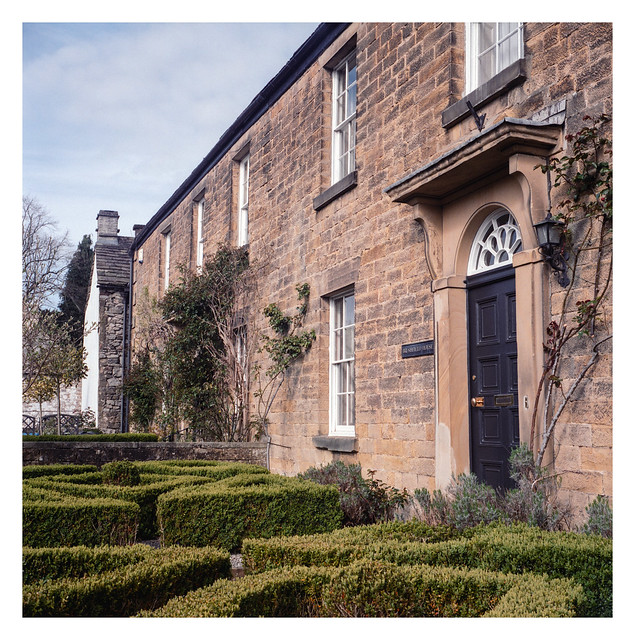
This house caught my attention with it’s maze-like pattern of miniature hedges in the front garden.
Yashicamat 124G & Fujifilm Pro 400H. Lab developed. Home scanned and converted with Negative Lab Pro.
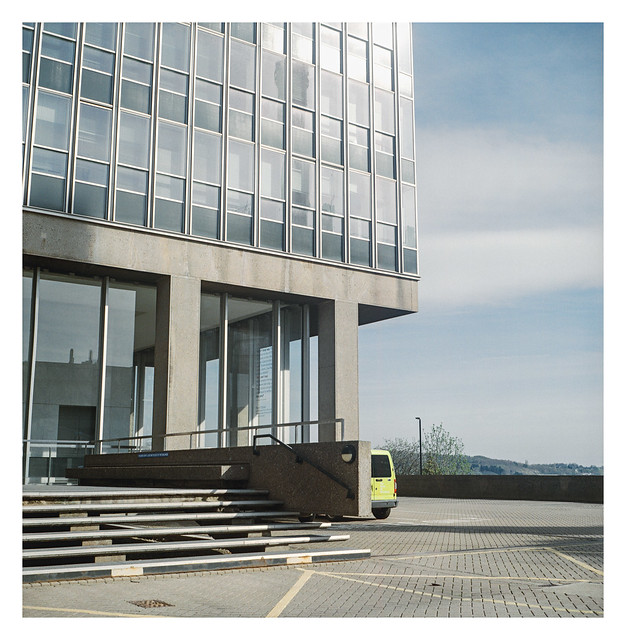
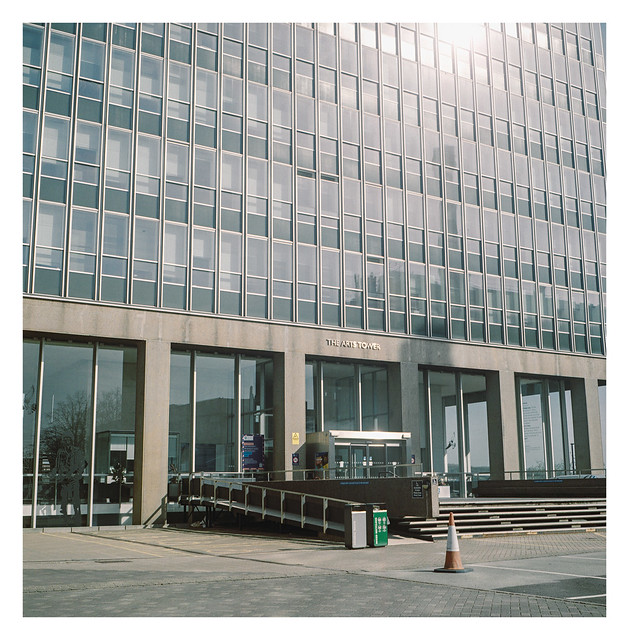
One of the more noticable structures in Sheffield is the university Arts Tower. While it is not very tall when compared with towers in other cities (it’s not even the tallest building in Sheffield) at a mere twenty stories, the fact that it sits partway up the hillside beside Western Bank means that it is visible from far afield. It should be noted that far afield in this case is probably still not that far – Sheffield is a hilly city (said to be built on seven hills, like Rome) so the best views of the Arts Tower are from the north east where it can be seen from further down the flatter area around the Don valley. It can be seen peeking over the top of hills from various locations as well though.
The building opened in 1965 and housed the Departments of Landscape, Modern Languages, Philosophy, Biblical Studies, and Architecture. There were eighteen arts departments located in the tower originally although, as the university and student body has grown, some of these have moved to new locations.
One of the most well known features of the building is the paternoster lift system, with many a tale being told of people going right over the top of the looping elevator system. Most of these are from people unaware of how a paternoster works and under the assumption that the unfortunate passengers would be somehow flipped upside-down as the lift reached its apex. They do make for better stories though. 🙂
It being such a focal point in Sheffield’s skyline, I’ve taken a good number of pictures of the tower which can be found here.
Yashicamat 124G & Lomography Color Negative 100. Lab developed. Home scanned and converted with Negative Lab Pro.
This is the first in what I hope to be a series of posts in which I document the results from shooting some of the expired film I have in my stash – and I have quite a bit! However, in order to keep some sort of a leash on this exercise, I will only include film that is at least ten years past its use-by date.
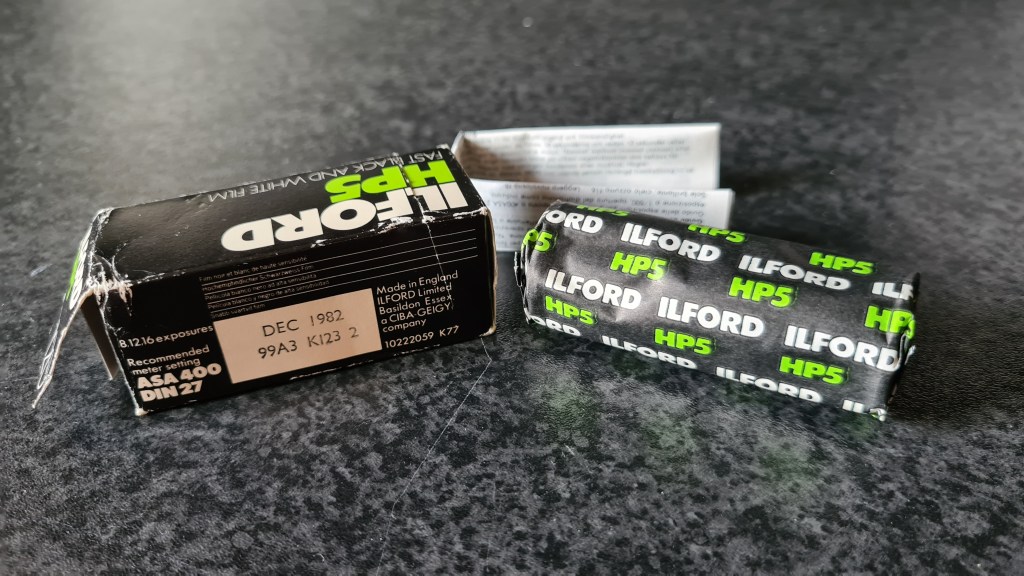
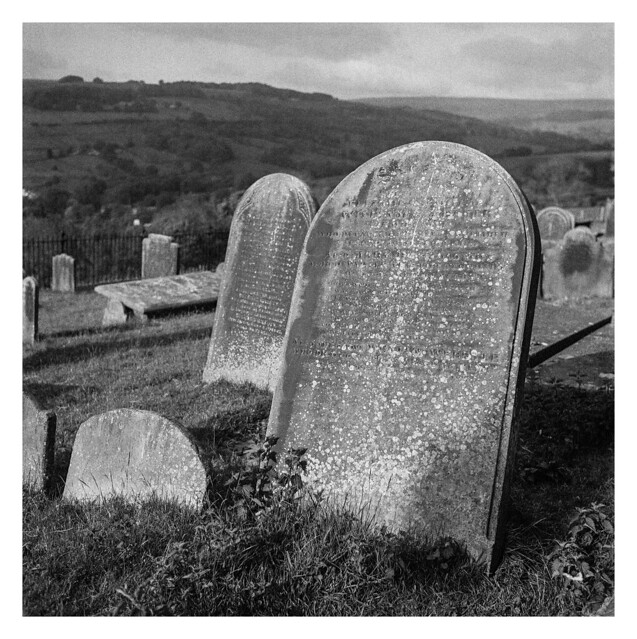
For this first instalment, I’ve decided to send the Delorean back to 1982, back before Ilford added the “Plus” to it’s stocks, back before I’d even entered my teens, and show the results from a roll of HP5 that expired in December 1982.
I chose the HP5 for a couple of reasons. Firstly, I shoot the modern version of the film quite a lot, so was interested to see how they compare (even if it may be an unfair test given the age of this roll) and, secondly, because I have four rolls of this film all from the same year so this first one will serve as a useful test on how it performs before I shoot any more of it. While the person who I got the film from had kept the film frozen, I have no idea of it’s provenance before that.
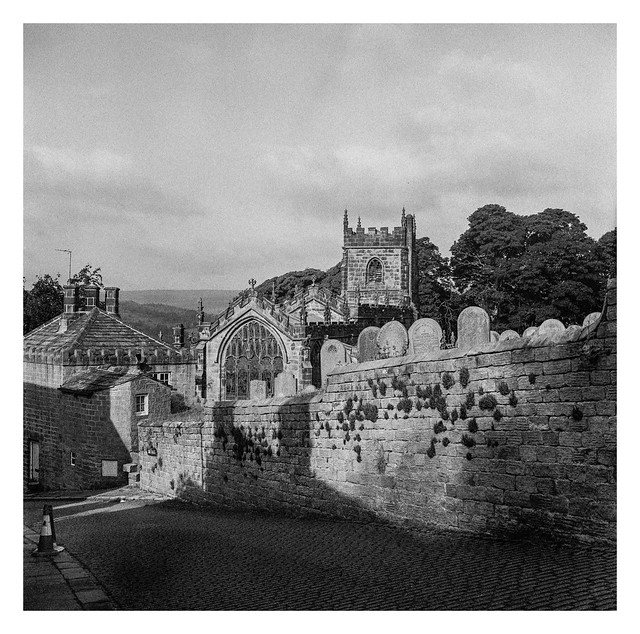
The sensible thing would have been to shoot the film in, around, or at least fairly close to home. That way, should the experiment be a disaster, at least I wouldn’t have wasted too much time on it. But the weather was nice so I decided to head out into the countryside, to High Bradfield over on the other side of the city. It was a risk but, hey, you only live once, right? I also took a second camera loaded with a fresh roll of Ilford FP4+ as well but only took a single shot with it, so the weight of the expedition would rest on the forty year old HP5.
I loaded the film before leaving the house and almost immediately felt some mild panic when the Yashicamat’s film advance crank partially jammed after a few turns. But, after some gentle pressure, it continued to wind the film on to frame #1. Arriving at my destination, I shot five shots at High Bradfield before driving around the surrounding area and photographing anything that caught my eye. Most of the other pictures were taken around Broomhead reservoir further to the north, although none of the reservoir itself. I rated the film at 100asa using my usual half-a-stop of over-exposure per decade of expiry that I use for expired black and white films. All metering was via incident readings from my Sekonic L-308.
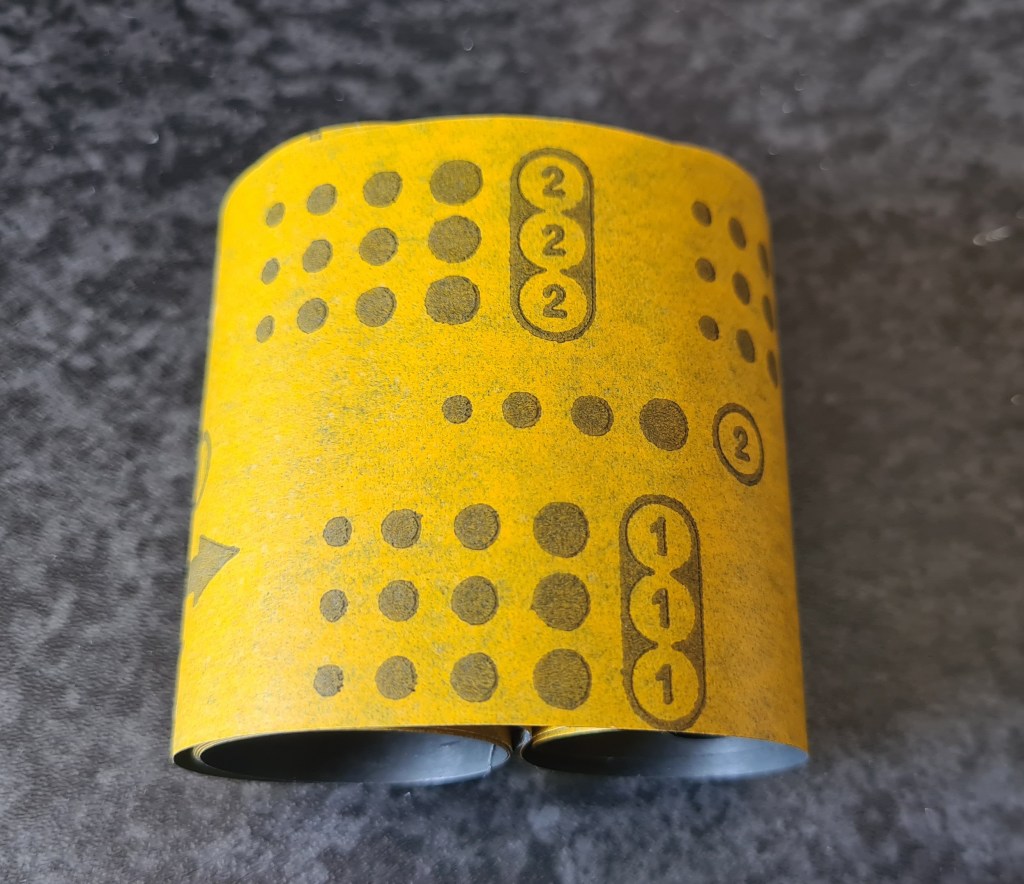
This is what old Ilford backing paper looks like. I’m not sure if the mottling is just a factor of its age.
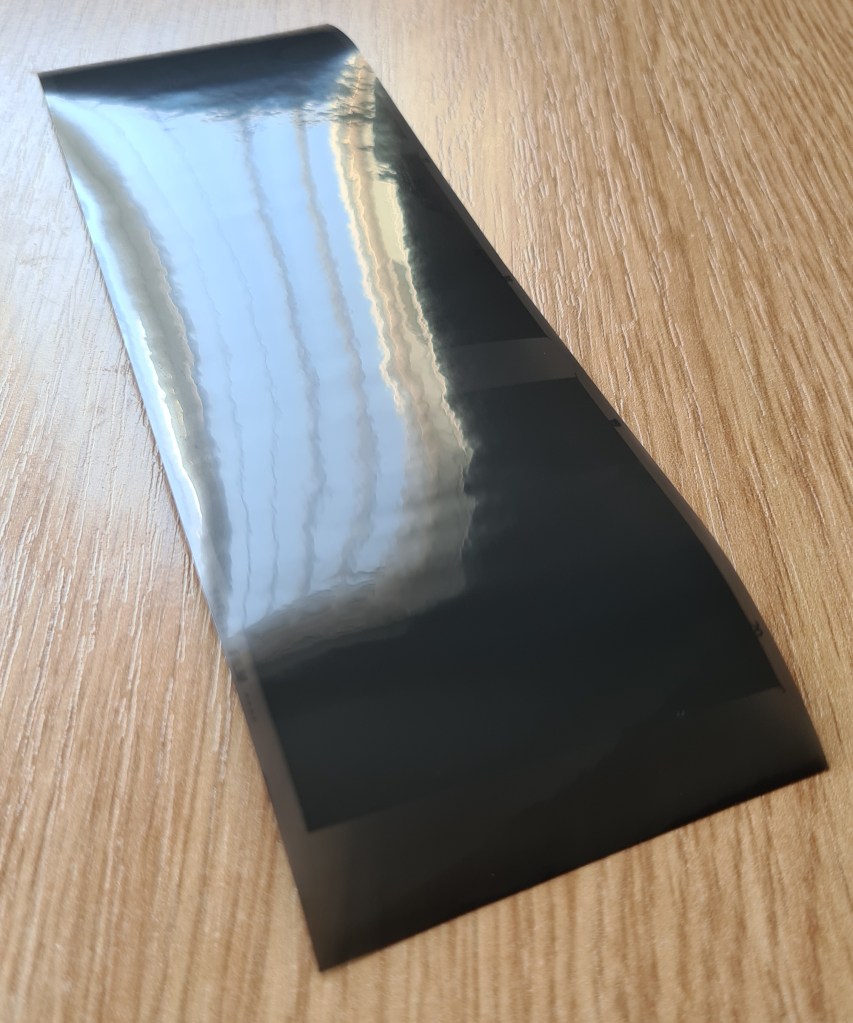
As I went out early, I was home in time to get the film developed and decided to use some Adox Adonal for the job. Ordinarily I use Ilfotec DD-X when developing modern HP5+ as it controls the tones and grain really nicely but, as this was a roll of film decades past its best, I thought the Adonal might be a good choice as I’d read that it can help to reduce fogging where it exists on old films. I used a 1+25 dilution and developed the roll for six minutes, inverting for the first minute, and then for 10 seconds at the top of each remaining minute. After that I used a one-minute stop bath and then fixed for five minutes. I washed the film using the Ilford method and then a final soak in rinse-aid before hanging it to dry for three hours. I was very happy to see easily visible images on the negatives, albeit perhaps slightly thin ones. One thing that I noticed was that the strip of negatives had an unusual, waxy sheen (see the picture below). I’m not sure if this is a factor of the film (perhaps on a different base back then?), it’s age, or even my development (although the chems should all have been in good condition).
It’s perhaps difficult to tell from this picture, but the whole roll of developed negatives had an odd, waxy sheen to them.
So, on to the photographs.
Given the age of the film I’m very happy with the results. While the negatives were a little bit thin, this wasn’t a huge problem and I was able to rectify this for the most part during the scanning phase and in Lightroom (where I also applied my other usual processing and sharpening). The grain is much more apparent than I am used to with modern HP5+ but it’s possible that this is a result of my developing them in Adonal rather than the expired nature of the film – I’ve heard other’s speak about how Rodinal developers can emphasise the grain in HP5+.
I think that I’ll rate the next roll of this HP5 I shoot at 80asa, or maybe even 50asa, and I think I’ll develop the next one in DD-X to see what difference that makes, if any, to the grain.
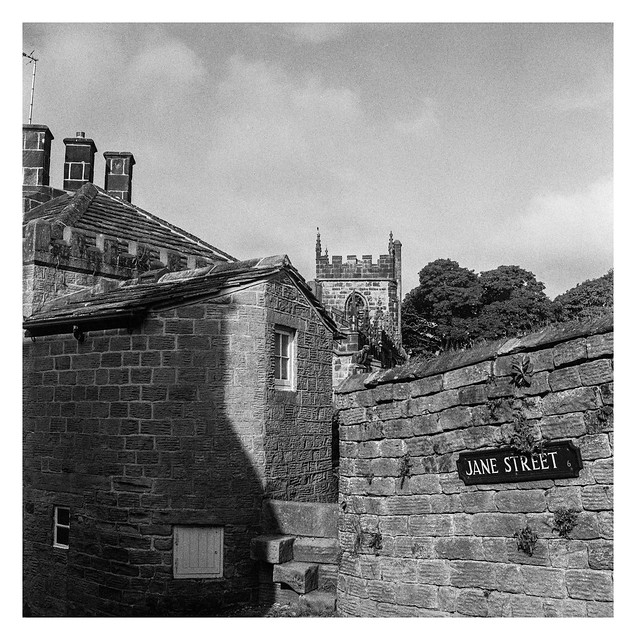
Here are my favourite eight shots from the roll. The other four were all ok technically but I didn’t think they worked as well artistically.
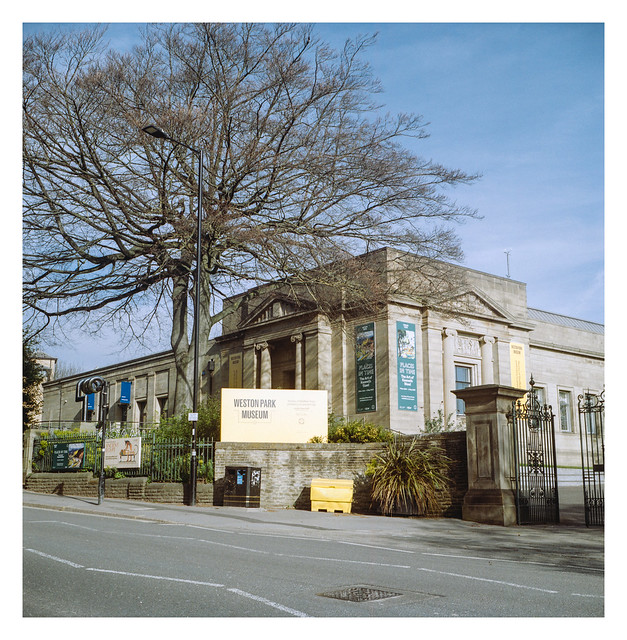
Weston Park was the first municipal park in the city of Sheffield and formed from the grounds of Weston Hall. The hall itself would become Weston Park Museum incorporating the Mappin Art Gallery. The museum opened in 1875 and was extended thirteen years later.
The museum contains permanent exhibits on the local archeology, natural history, art, and social history, as well as regular temporary exhibitions.
The building was severely damaged by a bomb during the Second World War and the art gallery remained closed to the pubic in a damaged state until 1965.
As I type this, it’s a lovely evening outside. Just the other day, on the journey home from our coach trip, I commented to my wife on how nice the early evening light was and that I should really make a better effort to take advantage of it through the longer days of the summer. However, no matter how nice it looks, the effort required to get myself up and out after a day at work means I rarely do so. I must try harder! I am planning on heading out tomorrow to shoot one of the rolls of expired film I posted about last week though, so the photography itch will be scratched, albeit with no guarantee of successful images.
Yashicamat 124G & Lomography Color Negative 100. Lab developed. Home scanned and converted with Negative Lab Pro.
I suffered a wet knee for the sake of getting today’s blog picture, but think it was worth the discomfort and the soft focus on the forground grass along with the faint glimmer of dew give a nice sense of depth to the image. I had some expectation that the photo might be marred by camera shake as I had to hold it slightly off the ground to get the composition I wanted and felt like I wasn’t holding it completely steady, but it turned out nice and sharp. TLR’s – the flippy screens of their day!
Yashicamat 124G & Lomography Color Negative 100. Lab developed. Home scanned and converted with Negative Lab Pro.
I liked the look of this scooter parked outside this shop, especially with the helmet and standard lamp visible in the window. I’m less happy at the fact that I caught my reflection in the glass though. I’ll occasionally go for a self-portrait but, on the whole, I usually do whatever I can to avoid being caught in reflections when taking a photograph.
Yashicamat 124G & Kodak Gold 200. Lab developed. Home scanned and converted with Negative Lab Pro.
I suspect, like many people, I was pleasantly surprised when Kodak recently revealed the re-introduction of it’s Kodak Gold emulsion in 120 format. I’d long wished that Kodak or Fuji might relaese one of their consumer emulsions in this format, so was glad to hear of its imminent release. I was also pleased to see that it would retail for less than it’s other colour films although, given the skyrocketing cost of C41 at present, it still sells for more than Ektar did not so long ago. Nevertheless, I decided to treat myself to a pack of five rolls.
My pack of film arrived in the mail at the start of the month and, last weekend, on a sunny spring morning, I decided to go out and see what I might photograph on a roll of it. I didn’t want to go on a big day out, so decided to head to the botanical gardens in Sheffield with the intent of maybe getting some pictures of the plants in the glasshouse.
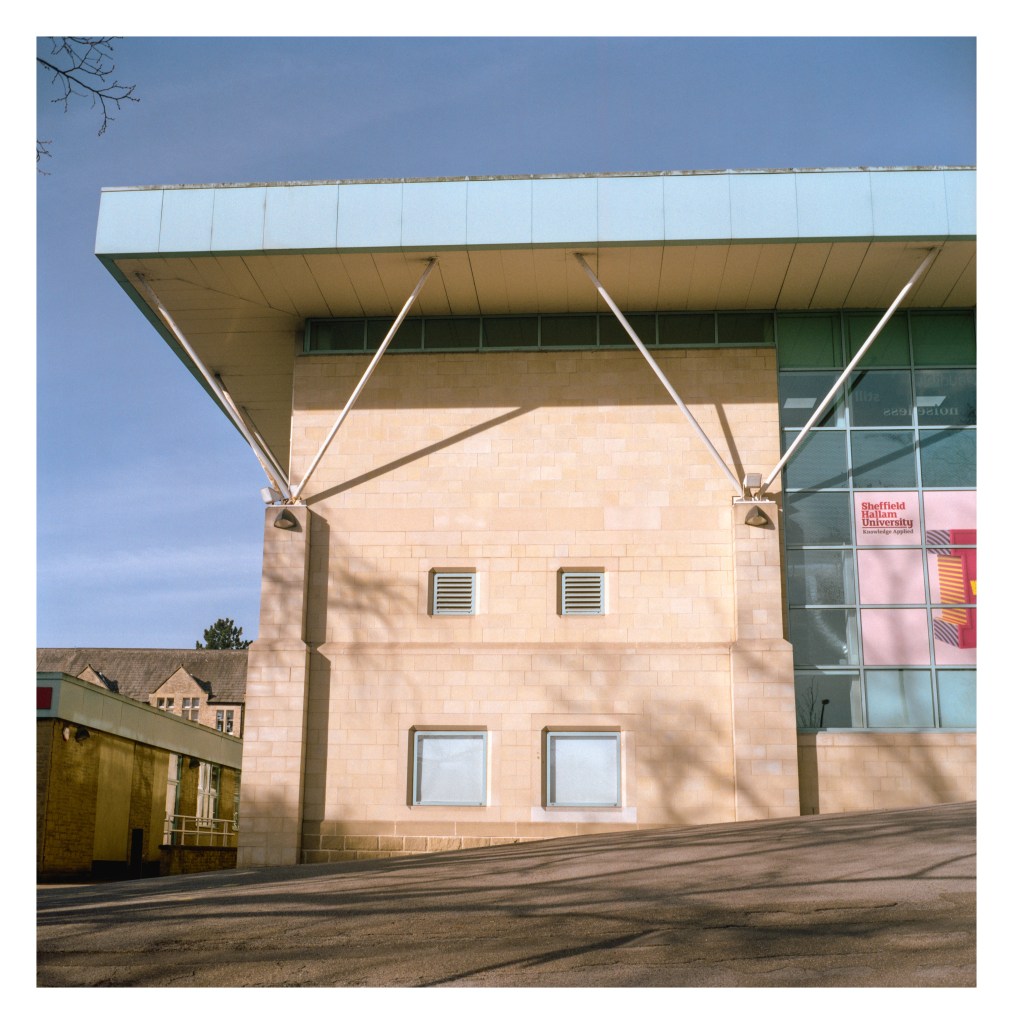
After arriving I took a picture of one of the university buildings on the street where I parked my car. It’s not the best picture, but the colours caught my eye.
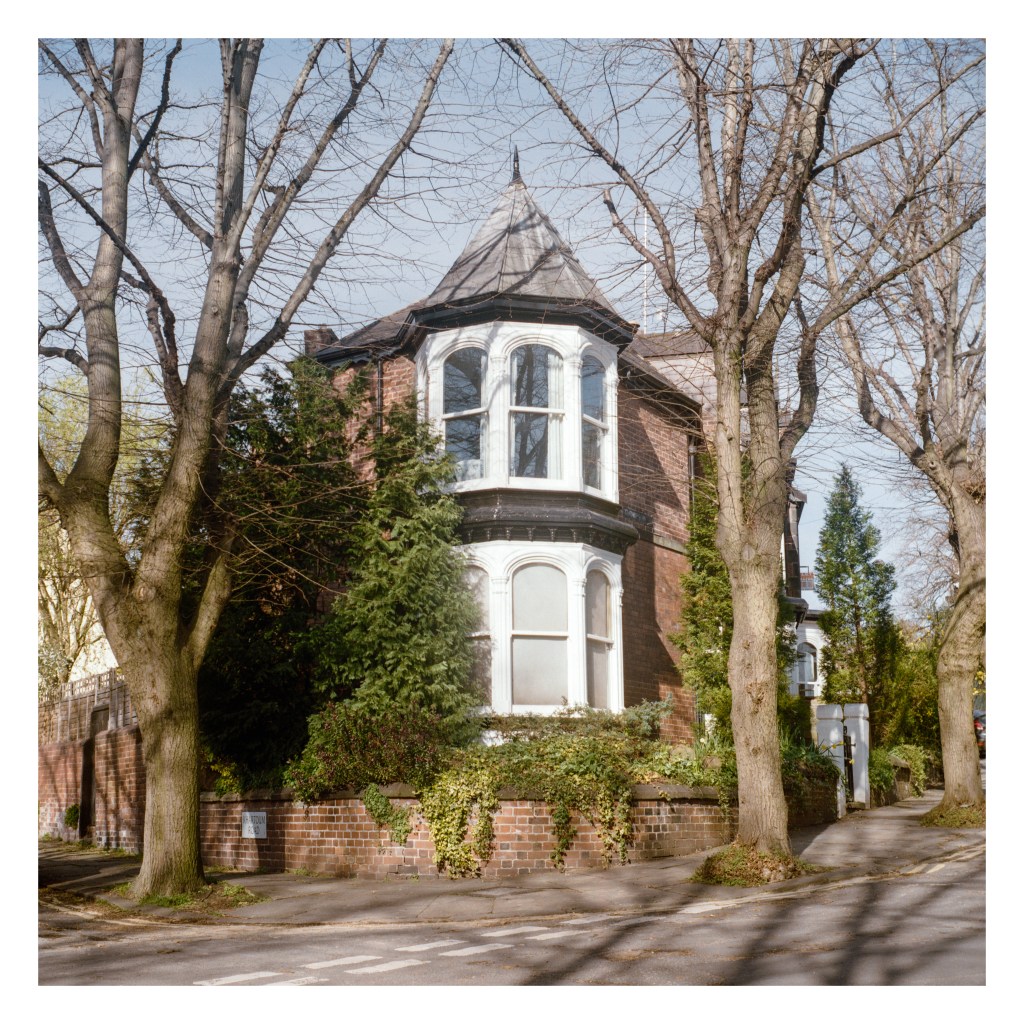
The next image was of a house with a cuppola near the entrance to the botanical gardens. This shot I’m really happy with. I like how the cuppola is framed nicely with the tree branches, and also the conifer is similarly framed on the right of the image. Plus the light was great.
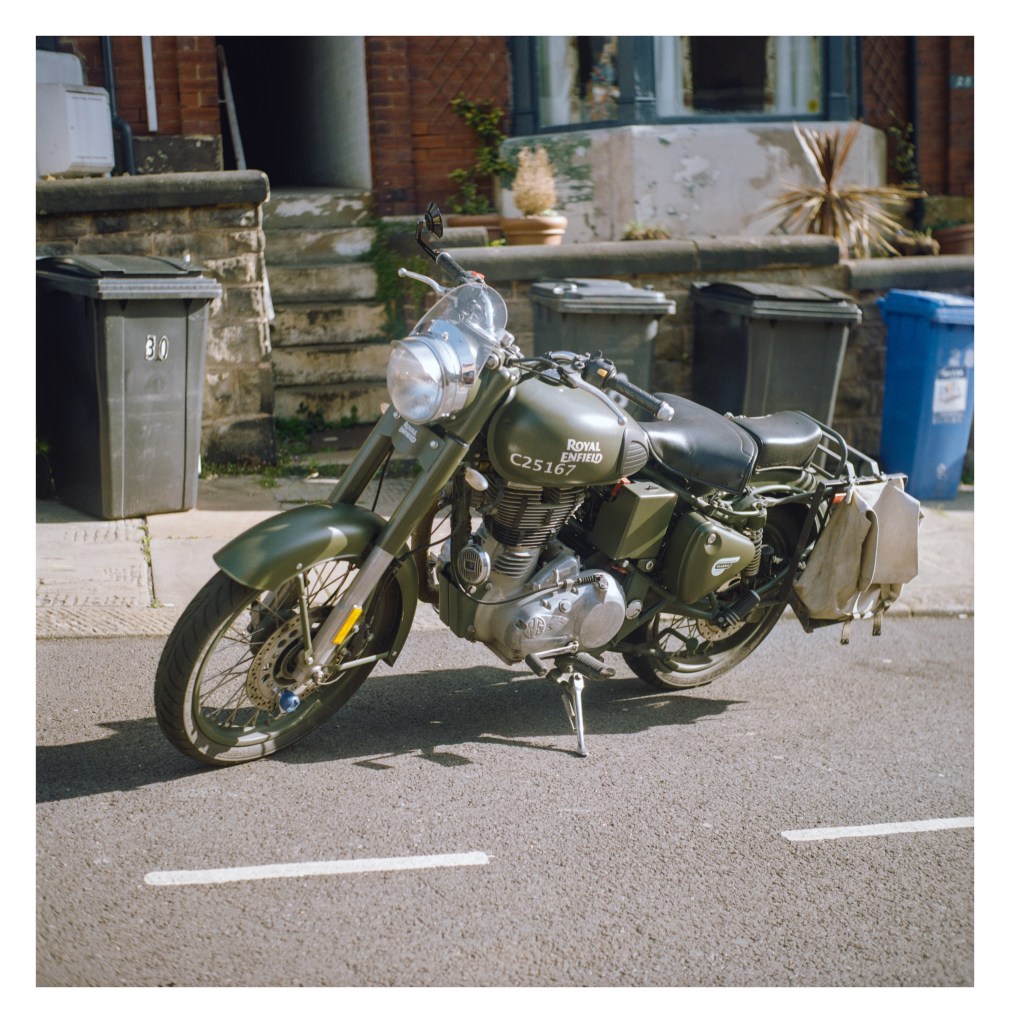
It was at this point that I discovered that the gardens don’t open until 10am, so I had some time to kill (it was only around 9:20am when I got there). So I decided to walk up the street beside the park and then head over towards Endcliffe Park instead. On this street I noticed a vintage motorcycle and got another photo. I’d have liked to open up the aperture to get more separation of the bike from the background but, even with relatively slow 200asa film, the light was too bright and as the Yashicamat has a maximum shutter speed of 1/500sec, I had to stop it down further to avoid overexposure. It’s a pity about the bins, but what can you do?
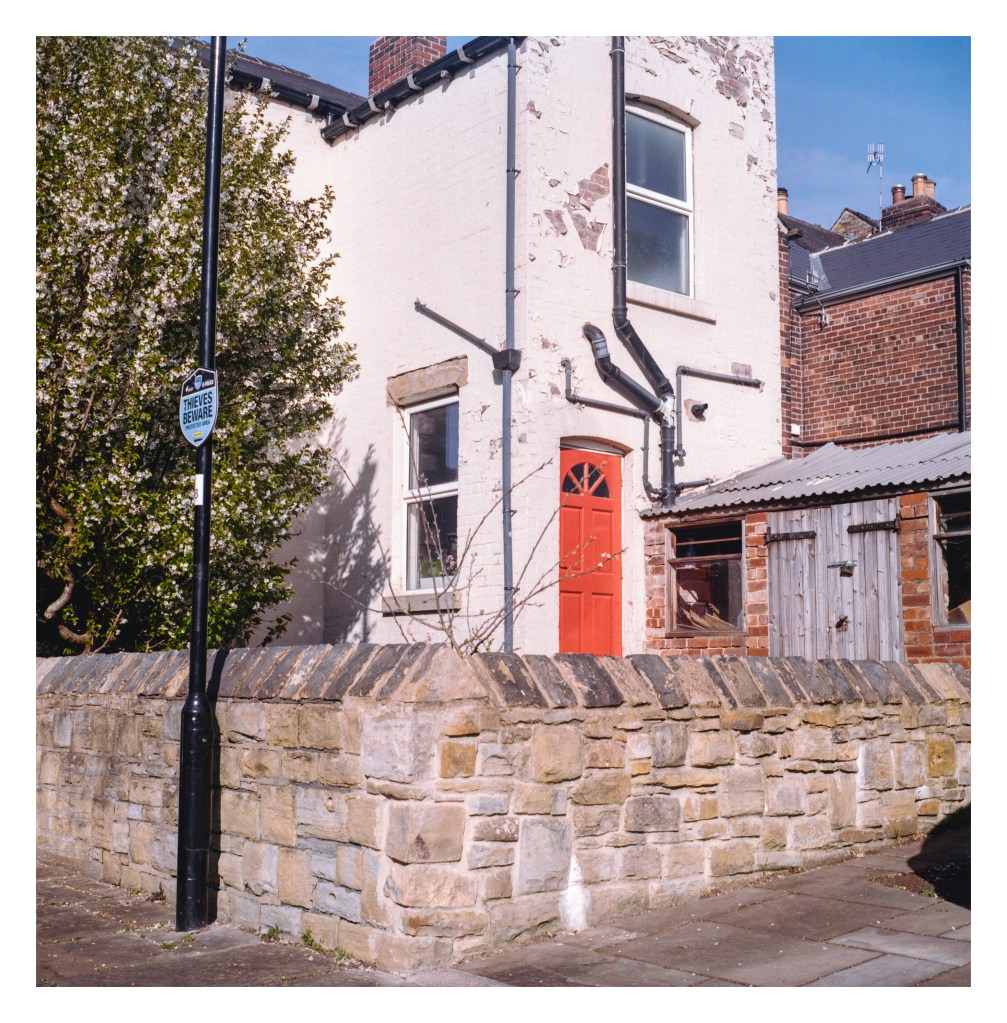
Just up the road from the bike was this house with a brightly painted door that I liked the look of.
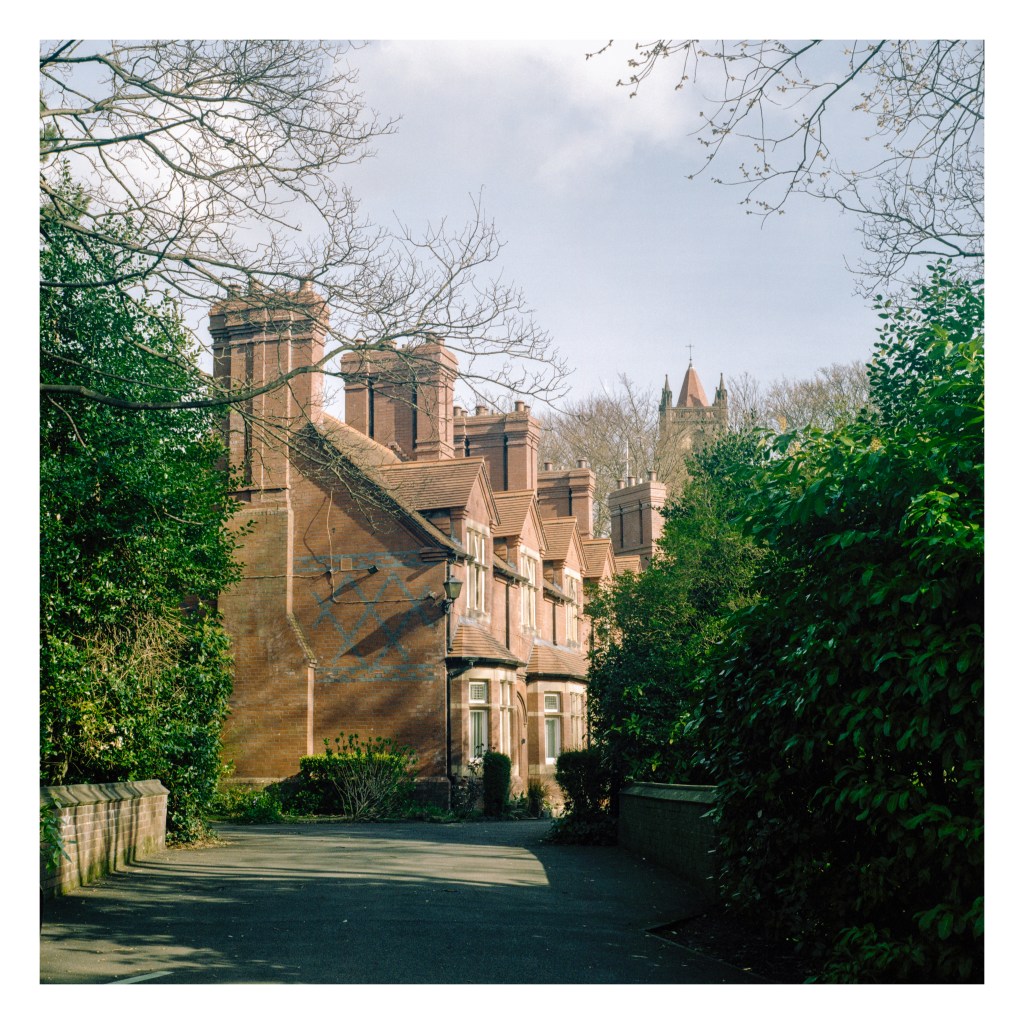
Close to Hunter’s Bar roundabout, just below Endcliffe Park, is a row of attractive old houses largely hidden from view by large shrubs, but I was able to get a nice angle on them. Again, the light was lovely, and I like the church tower that peeks up behind them in the background.
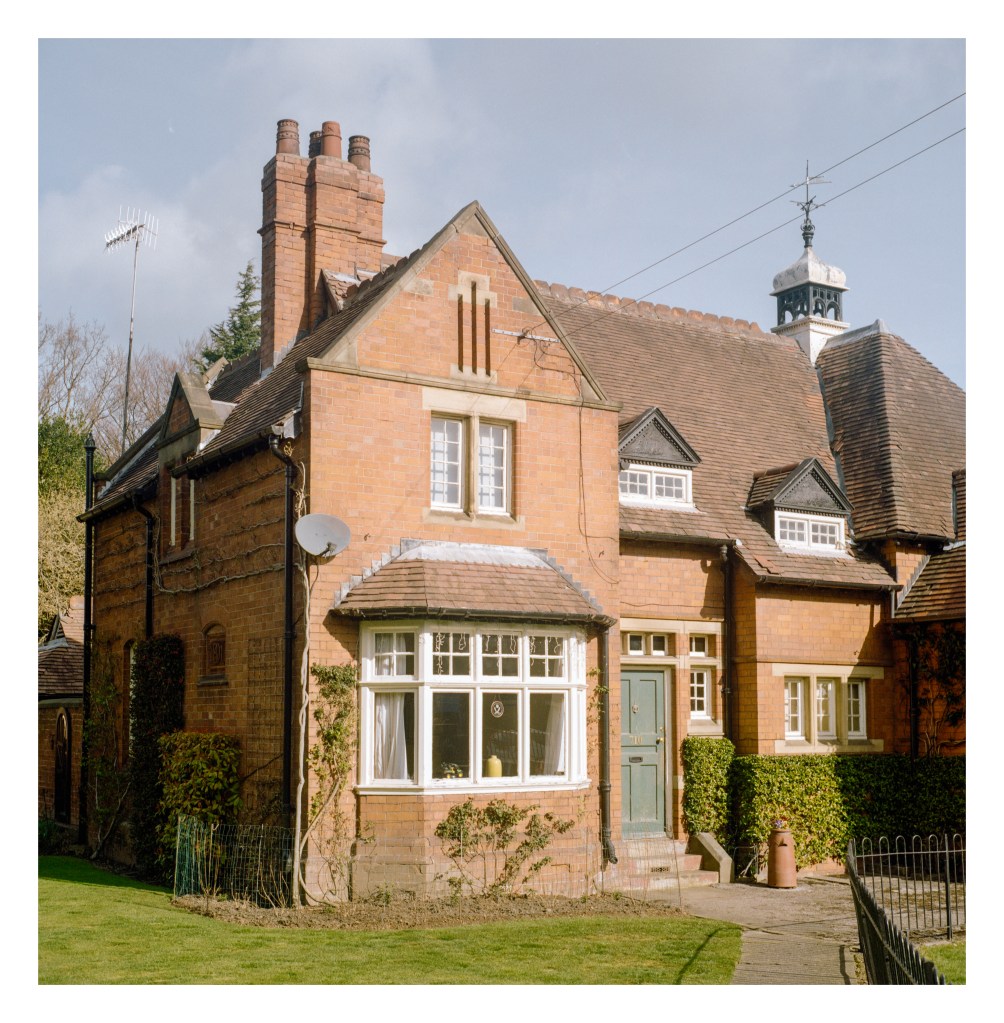
Just inside the park is this lovely house. It’s the arts-and-crafts style park pavilion and lodge building, dating to 1891. The building has Grade II listing status.
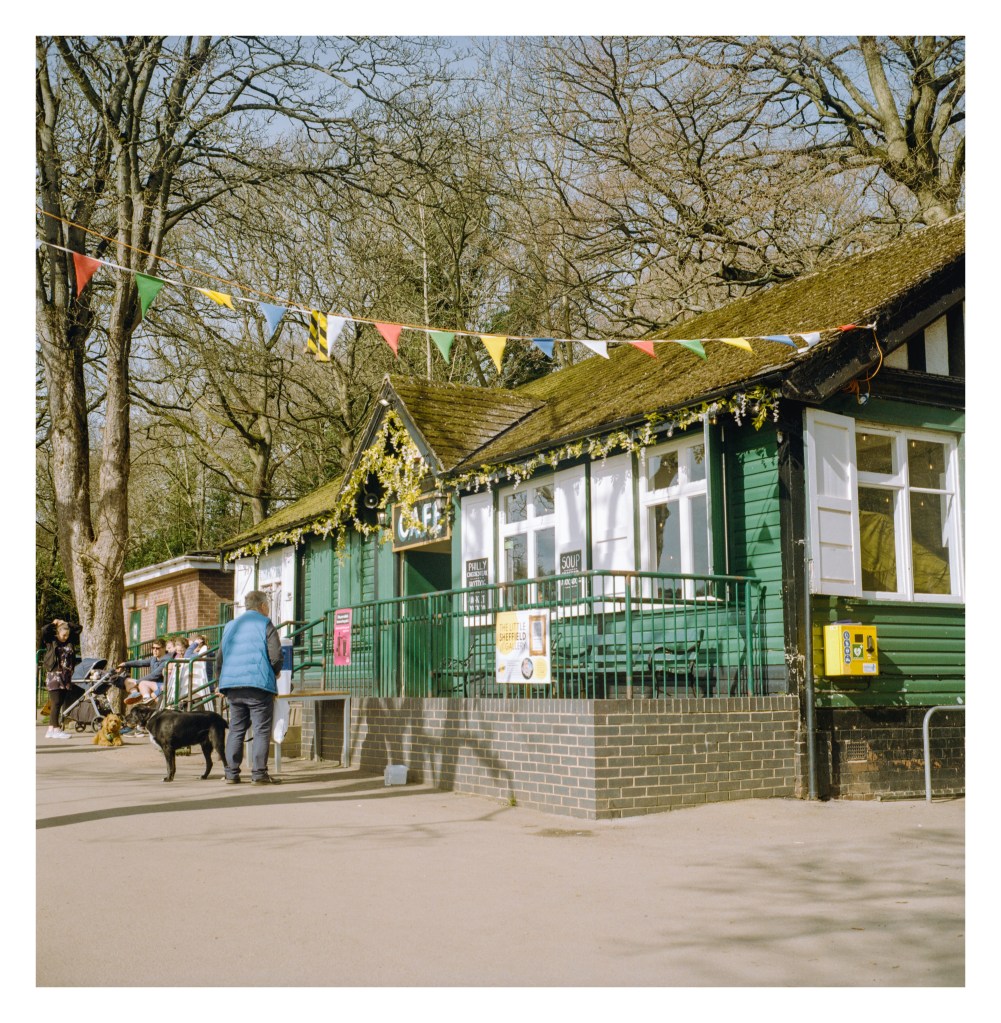
I took a walk up Rustlings Road which runs beside the park – making several photos along the way with my XA3 that I had tucked away in my jacket pocket – before then wandering back through the park itself along the footpath. There are a couple of millponds here – evidence of the area’s industrial past – where I remember catching small fish in a net on a day out with my nan back when I was little. The ponds are filled with water from Porter Brook which runs down the valley before joining the River Sheaf in the city centre close to the railway station. Near the bottom of the park, where the large playing field is, sits a cafe. It was very busy on this sunny morning with many people sitting outside in the seating area across the path.
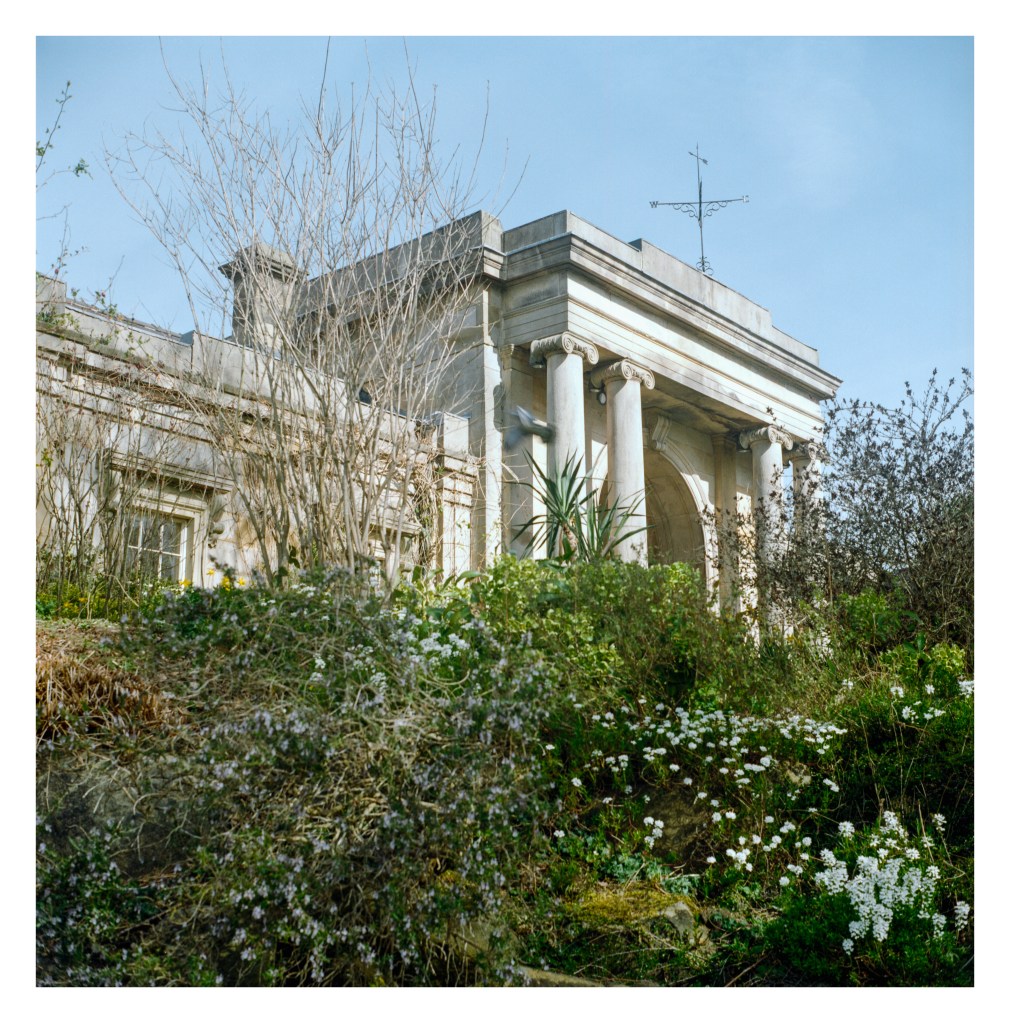
And finally, after leaving the park and walking up Brocco Bank, I finally arrived at my original intended destination – the botanical gardens. By this time I only had a single frame of the Kodak Gold remaining to be shot, and I made this picture of the gatehouse.
All the pictures were scanned on my Epson V550 flatbed using Vuescan to create RAW DNG files. These were then converted to positives with Negative Lab Pro. I’m still getting the hang of NLP, but I’ve got a group of settings that seem to be producing quite nice results for Kodak Gold (although I do still tweak them further in Lightroom afterwards).
I’m happy with the results I got from this first roll of Gold in 120 format and look forward to shooting more of it.
Yashicamat 124G & Kodak Gold 200. Lab developed. Home scanned and converted with Negative Lab Pro.
A while back – last year I think, although it could have been 2020 – I got in touch with the film manufacturer Fomapan. I’d had some issues with a batch of Fomapan 100 that I’d bought which was resulting in a lot of small white speckles on the scanned negatives. This wasn’t dust, but some problem with the film that was becoming apparent when it was developed. A bit of reasearch online produced a number of other reports of the same probleM, some with the same batch number as the rolls I had, so I got in touch with the company to ask if they could do anything to help.
They provided some instructions on how the issue with the problem batch might be addressed, and confirmed that there had been an issue with some rolls of the film that had been produced. Unfortunately, I didn’t have any luck after following the special instructions and the next roll still showed the same speckles, albeit slightly lessened. In addition, Fomapan also sent me a few rolls of film to recompense me for my troubles, some Fomapan 400, and also a roll of Retropan 320.
I’d never shot Retropan before so was curious as to what it might produce. Unfortunately, thanks to the pandemic and various lockdowns, the film languished in the freezer for quite some time, awaiting its day in the sun. That day came a few weeks ago when I took a trip to Leeds for the day with my wife and her sister. They hit the shops while I went off to make photos (and also visit the Royal Armouries museum). I burdened myself with choice on the day, having three film cameras, plus my little Ricoh digital compact. The film cameras included the Yashicamat 124g (with the Retropan), my Olympus XA3 (with some HP5+), and the newly acquired RETO Ultrawide & Slim (with some Agfa Vista Plus 200 – some of the shots which have already been seen here on the blog recently).
I wasn’t massively enthused about shooting the Retropan, even though trying a new film usually means at least some excitement is to be had. Most of the photos I’d seen online from other people had a bit of a flat look about them, which isn’t something I tend to favour. I also looked into what speed to shoot the film at, having had issues with underexposure when shooting other Foma films at box speed in the past. The general concensus was to overexpose it by at least a stop, with one person suggesting that 80asa was the sweet spot. In the end I opted to shoot it at 125asa and develop it normally.
The experience of shooting the film went without hitch, and developing was likewise straightforward. The film felt quite thin, but went onto the spiral without any problem. As with other Foma films, I pre-washed it before developing and got the usual witches brew of green liquid when I poured the rinsing water away.
The photos are actually quite nice. Not the look I tend to go for, but there’s something there in the tonality that I find quite pleasing. There’s lots of grain present, but also good detail, and using my usual post-processing settings as a starting point soon got the scans where I was happy with them.
So, would I buy a roll with my own money and shoot it again? Honestly, probably not. I’d go for one of the other Foma line instead. But I wouldn’t turn down a roll that came my way for free. 🙂
Down at the bottom end of Woodhouse Washlands there is an oxbow lake. It’s actually not much of a “bow”, more a strip of water which lies maybe fift to a hundred or so metres from the current course of the River Rother.
A tree stands at the edge of the water – a willow, I think – and is the subject of today’s photograph. The fog masks so much in this scene which, in clear conditions, would reveal houses and other structures on the valley side in the distance beyond the tree. Thank you fog.
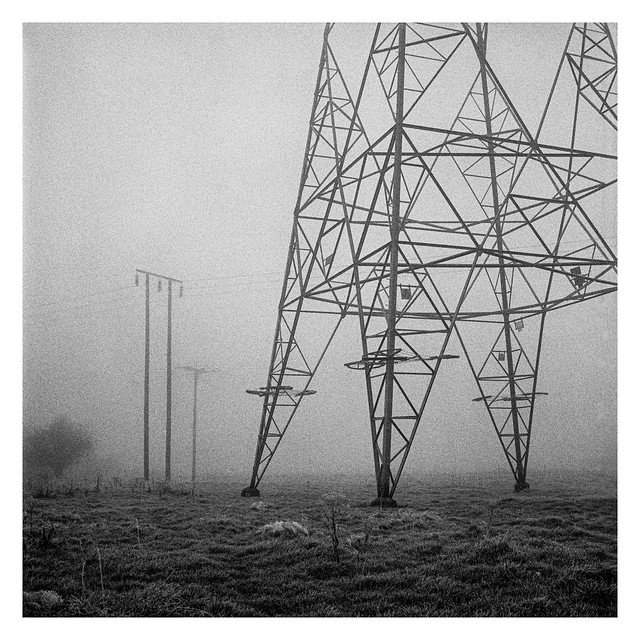
It’s been a while since I posted a power-lines picture I think, so let me rectify that. If you’ve read this blog for a while you’ll perhaps realise that I find pylons and power lines an appealing choice of subject matter. Not to the extent that I go looking for them purposefully, but they often draw my eye. This pylon, stood like some metallic sentinel on the foggy and frosty Woodhouse Washlands certainly caught my attention.
I took myself off for a trip to the seaside today. I don’t often tend to go there on cold January days, but I figured that a change of scene would get my creative juices flowing (plus I could eat some fish and chips while looking out at the sea…). The day was sunny and bright, but bittely cold with chill winds – the remnants of storm Malik that was now headed east out to sea – so a hat, gloves and a fully zipped up jacket were a definite necessity. I’m feeling tired now, and ready to hit the shower when I finish typing this, but my belly is full of my fish and chip dinner, and I have two rolls of 35mm film to be developed, so the day counts as a success. The pictures will turn up here in a bit, although I’ve got two other rolls of stuff to root through before that happens. It’s nice to be back in the black again, photographically speaking.












 Steel City Snapper photography