A quick post today as I have to go out. Here’re a couple of photos of the Coastwatch building on Mablethorpe’s north shore.
Not to be mistaken with Ghostwatch. 🙂
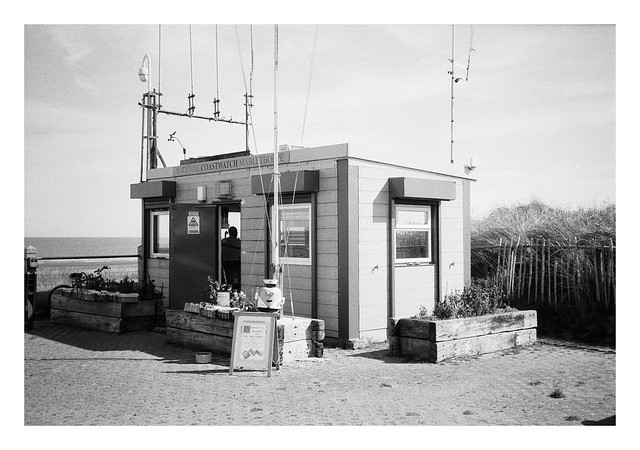

Olympus 35RC & Eastman Double-X.
Taken on 13 September 2019

Steel City Snapper photography
35mm, medium format and large format film photography (with the odd bit of digital every now and then…)
A quick post today as I have to go out. Here’re a couple of photos of the Coastwatch building on Mablethorpe’s north shore.
Not to be mistaken with Ghostwatch. 🙂
Olympus 35RC & Eastman Double-X.
Taken on 13 September 2019

This is the view looking north from the Lincolnshire seaside resort of Mablethorpe. There is a small promentory at this point on the shore above the outfall from The Cut, a drain that takes water from the surrounding low-lying countryside – mostly agricultural land – and this section of steps leading down to the beach is at the easternmost point.
The steps form part of an extensive system of coastal defenses that were built and strengthened following the devastating North Sea Flood that occurred in 1953. This winter storm hit on the night of Saturday 31 January and, coupled with a high spring tide, resulted in a storm surge of over 5 metres above the average sea level in some areas. Large areas of low-lying coastal land were deluged in the countries bordering the North Sea, particularly The Netherlands, where 1,836 deaths were recorded. Although loss of life was less severe in England and Scotland, there was still a tragic loss of 336 people. The flood waters reached as far as 2 miles inland in places and forced the evacuation of over 30,000 people from their homes.
The photograph below shows the outfall where The Cut enters the North Sea. This area is submerged at high tide.

Olympus 35RC & Eastman Double-X.
Taken on 13 September 2019
Following my initial, less than fully-successful, outing with the Holga, and then the second, much more fruitful attempt, I decided to take the camera with me on a trip to Mablethorpe, my childhood seaside haunt on the Lincolnshire coast.
It was Friday 13th. Take it as you will…
As well as the Holga, I also took a 35mm rangefinder and my Zeiss folder (which had half-a-roll of Ektar still inside). I took several rolls of film on the trip – three rolls of expired Tri-X, and a roll of expired Pro 400H for the Holga. A roll of Portra 400 each for the Zeiss and my 35RC, plus a couple of rolls of B&W also for the 35RC. I figured it’s better to bring back unused film from a trip than to run out while there, so I was good to go on that front.
Where I wasn’t so good was the Holga itself. It would seem that, probably when placing it in my bag and completely unnoticed by myself, that I inadvertently knocked the shutter setting into bulb mode.
So, the day progressed nicely. The weather was lovely – bright and sunny (but not too hot) and with photogenic whisps of high altitude clouds adding interest to the sky – and I soon got to taking some photographs (in fact I stopped at a couple of places during the journey when I saw some photogenic scenes). In all I shot three rolls through the Holga – the Pro 400H and two rolls of expired Tri-X, two through the 35RC (Portra 400 and Eastman Double-X) and the remaining Ektar and the Portra 400 in the Zeiss. Quite a busy day, all told, and very enjoyable. I was happy that I’d found a bunch of nice photos and looked forward to seeing the results.
I sent the colour rolls off for processing on Saturday, and took the B&W to my local lab today and got the results back this lunchtime. Eager to see the results, I held the negatives up to the window and was quickly dismayed to see that they were very thick – a clear sign of overexposure. Although difficult to tell without a loupe, it was also apparent that some were blurry – even moreso than I would expect from my Holga (which is pretty sharp in the centre). Picking up the camera I examined the shutter control and, with a sinking heart (and a deal of profanity!) saw the cause. All three rolls through the camera had been shot on bulb mode.
I felt pretty down about it and, for a moment, was tempted to just throw the lot in the bin. Instead, I decided to try scanning them to see how bad they looked. The truth is, they were pretty bad – almost white from overexposure and soft across the whole frame from camera-shake. Again, I was tempted to not waste my time and give it all up as a bad job.
But I didn’t.
Partly because of the cost of film and processing, but mostly because I didn’t want to lose all my photos from the Holga, I carried on. As I progressed I found that some images, while still blurrier than normal, were not as bad as I first thought (I had either been particularly quick on the shutter release, or posess a hitherto unknown robot-like ability to stand rigidly still). I was able to recover lots of detail during scanning; did some processing in Lightroom to punch up the contrast, which helped; and then – although this is not something I would normally do with film photos – decided to run them through Nik Silver FX. The result was contrasty, moody and grainy images that I felt I could live with (luckily, it’s a look I like). I’ve yet to receive the Pro 400H shots, which will be similarly afflicted – It might be that they end up being converted to B&W if any are worthwhile.
So, without further ado, here are some of the images I rescued. As with my other Holga misadventure, these aren’t what I’d envisaged, but they’re also much better than I initially feared. I think that they were worth saving.
I guess there might be a moral about not giving up in here somewhere. Again, take it as you will.


Holga 120N & Kodak Tri-X (expired).
Taken on 13 September 2019
Yesterday’s photo had the Grand Hotel in the background and here it is again, albeit much closer this time, providing the brick backdrop to the funicular station.
The funicular railway here was built almost 15 years after the hotel, opening to passengers in 1881, and it still serves residents and visitors to this day. There were originally a total of five funicular railways at the resort, but there are only two still in service today: the one here (the Central Tramway), and another on the south cliffs (aptly named the South Cliff Lift). Another between these two (the Saint Nicholas Cliff Lift, just the other side of the Grand Hotel) is still in place, but the bottom station is now an ice-cream parlour while the two carriages are fixed in place at the top of the incline and make up the Saint Nicholas Cafe.
The other two were in the North Bay area of the town. The North Bay Cliff Lift was closed in 1996 and has been dismantled and placed in storage, while the Queen’s Parade Cliff Lift appears to have had a somewhat ill-fated lifespan, being subject to runaway cars, accidents and mechanical failures until a landslide eventually caused it to close for good in 1887, just nine years after it opened.
There are various meandering pathways to and from the seafront for those who don’t wish to ride in style (or some seriously imposing sets of steps for those of a sturdy disposition!).

Pentax Espio 140M & Kodak Colorplus.
Taken on 13 July 2019
Following on from yesterday’s photo of the lobster pots, here’s the same location from a different point of view – this time a little further north up the shore. This was taken on a roll of Colorplus that was in the camera before I switched over to the Superia 100 that I used for yesterday’s shot.
I don’t live particularly close to the coast (although that’s probably not saying that much in the UK where it’s never more than about 70 miles to the sea (as the crow flies at least), so enjoy grabbing photos when I get the chance to visit.
The large building at the upper left of the frame is the Grand Hotel which, when it opened in 1867 was the largest in Europe. When viewed from above, it can be seen to be in the shape of a letter V, a tribute to Queen Victoria.
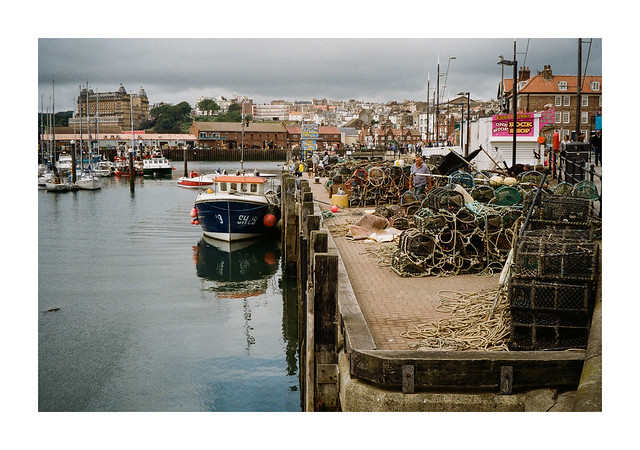
Pentax Espio 140M & Fuji Superia 100 (expired 2008).
Taken on 13 July 2019
There are heaps of lobster and crab pots on the harbour side at Scarborough (as, no doubt, there are at many fishing towns and villages around the British coast). There are probably a uncountable number of shots to take of these devices on any given day – the geometry of ropes, the rust of the metal, the tangles of seaweed, and the crusts of barnacles mean that there is no shortage of interest there for the inquisitive eye. You do, obviously, have to put up the a strong fishy smell in order to get your shot, but that just enhances the atmosphere (both literally and figuratively) and puts you in a proper frame of mind.

Pentax Espio 140M & Fuji Superia 100 (expired 2008).
Taken on 13 July 2019
Ok, so you’d be unlikely to see The Hoff or Pamela Anderson here in Scarborough, even twenty-five years ago, but it’s all the same thing really, isn’t it? Well, maybe without the L.A. glamour, hot weather, and crime-fighting shenanigans.

Pentax Espio 140M & Fuji Superia 100 (expired 2008).
Taken on 13 July 2019
The Pentax Espio 140M that I bought for the princely sum of £1 at the steam rally the other week seems to work ok. It’s sharp (although maybe not quite as sharp as the Canon Sure Shot’s I own), and is very compact. The lens still seems pretty decent even when zoomed, and it has a range of metering and focussing modes that neither of my Sure Shot’s have.
It also has a panorama mode. At last, I can get those Hasselblad X-Pan type shots I always dreamed of. Well, kinda. Panorama mode here, like many other 35mm compacts with the feature, is actually achieved by way of a mask that blocks part of the frame, so all you’re really getting is a standard 35mm shot but with big black bars obscuring the top and bottom of the image. The same mask is visible in the viewfinder when the setting is activated, which does make composing the shots straightforward.
While it won’t give the resolution that an X-Pan (or a medium format camera with 35mm back) will provide, the results aren’t too bad, even if they could easily be achieved with any other camera by just cropping your image.
So, without further ado, here are four panoramas taken with the camera. Can you guess which two are actually just crops of a full 35mm frame done in Lightroom because I’d badly composed the images in-camera? 🙂
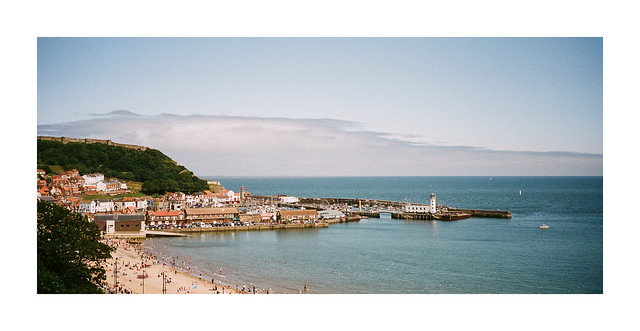


Pentax Espio 140M & Fuji Superia 100 (expired 2008).
Taken on 13 July 2019
As I type this Flickr is still undergoing its site maintenance involving the moving of everyone’s accounts, pictures etc. (billions of photos and videos, and over 100 million accounts!) across to a new hosting platform. I think it was scheduled to take 12 hours, but like many IT projects, is taking a little while longer than originally planned. As such I can’t get at my photos to add them in the normal way so, instead, here’s one I’ve uploaded directly.
Note: This isn’t meant to be a metaphor for Flickr’s account migration project. 🙂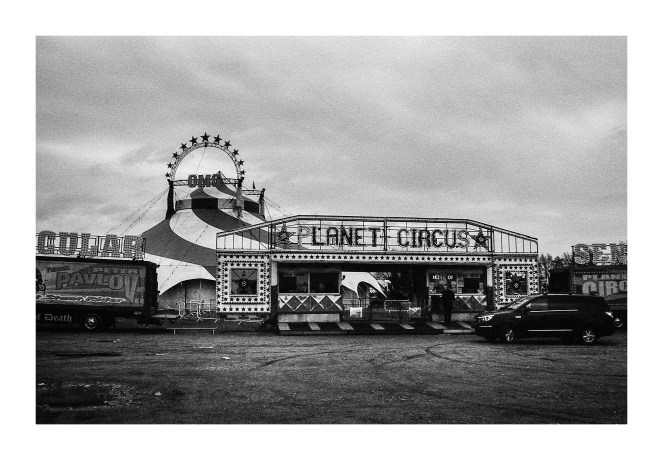
Nikon F80, Nikkor 28-80mm f.3.5-5.6 AF & Fomapan 400.
Taken on 20 February 2019
“Bracing”, that’s the word we use to describe those seaside walks in bitterly cold wind.
This day however was far from bracing – it was taken back in February during an unseasonably warm period. Good old climate change, eh? At least we’ll get some nice warm days at the seaside in the middle of the winter before the sea swamps the place altogether so we can never visit it again.
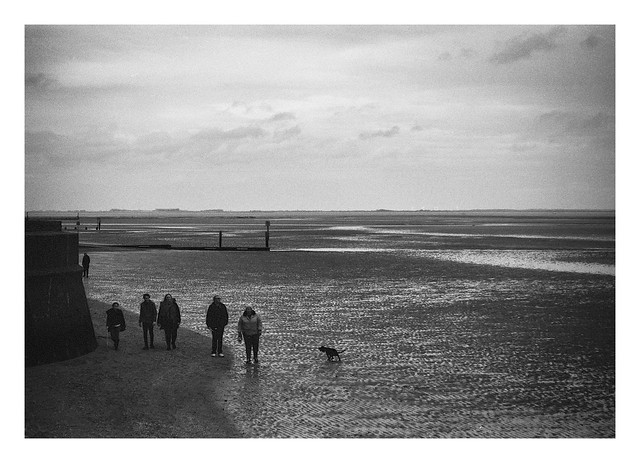
Nikon F80, Nikkor 28-80mm f.3.5-5.6 AF & Fomapan 400.
Taken on 20 February 2019
 Steel City Snapper photography