No-one is bowling here. Not really a surprise as it was only about 8:30am when the photo was taken. There is, if you look closely, a bird on the green though. Maybe it had a tiny set of bowls that I couldn’t make out.
Today’s thrilling post is brought to you by Squarespace I-have-a-headache-and-don’t-feel-like-typing-much (dot com). 🙂
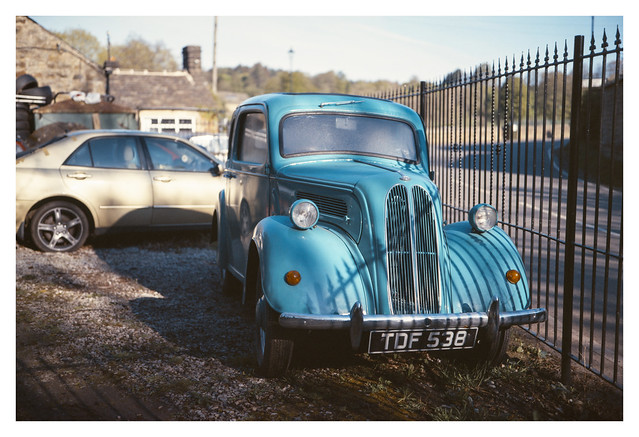
A couple of photos of a nicely painted Ford Popular which I came across while out and about a few weeks ago. The first shot was taken through the railings which, given the GW690 is both large and a rangefinder, meant it was a little difficult to frame the image. I poked the lens barrel between the bars so I knew they wouldn’t be in the shot, but I was still a little concerned about parallax error. I think it came out ok though.
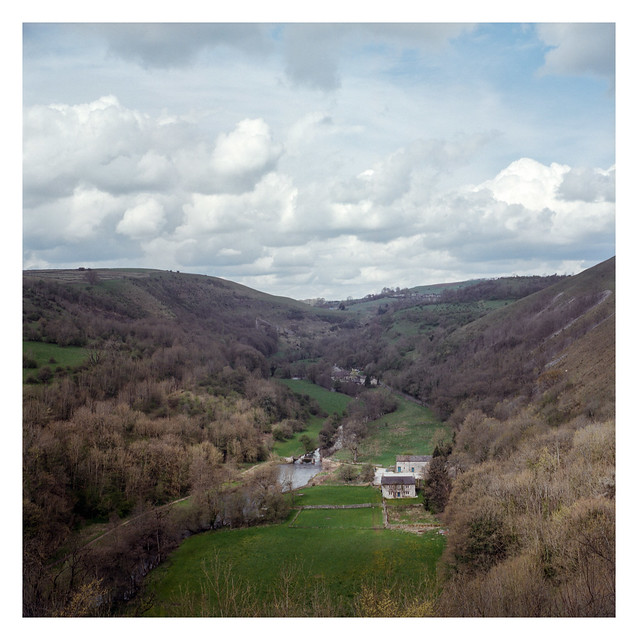
Another view of Monsal Dale (these will come to an end in a day or two, in case you’re fed up of seeing the place). It’s from almost the same vantage point as the colour version I posted a few days ago but this one was made after I’d walked down to the valley floor, across the bridge you can see middle-right in the picture, followed the river beneath Headstone Viaduct, past the weir, and then up a deceptively long and, in parts, steep footpath back up the other side to my starting point.
If you click the image and zoom in, you can make out a person stood in the courtyard between the two houses you can see at the bottom of the dale.
Another bridge picture today, this one crosses the River Wye not far upstream from the Headstone Viaduct but is of a much smaller scale.
I shot another roll of my expired film this morning so I’ll hopefully (if the film gods smile down upon me) be able to post some results from that before too long.
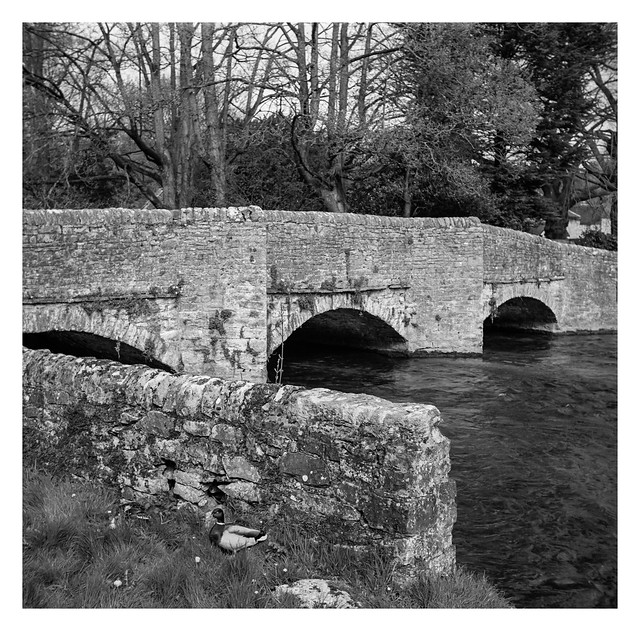
A couple more photographs of the packhorse bridge at Ashford-in-the-Water today. I shared another photo of the bridge a couple of days ago and mentioned that the sheep paddock at one side of the bridge contained only ducks on this occasion. You can see a couple of them (well just the back-end of one) in the second picture.
On the day that I visited Ashford-in-the-Water, I also drove up to Monsal Head, a scenic viewpoint which overlooks a stretch of Monsal Dale where the valley takes a sharp bend. As with Ashford, the River Wye flows through (and indeed, eroded) the dale here too, a few miles upstream from the village.
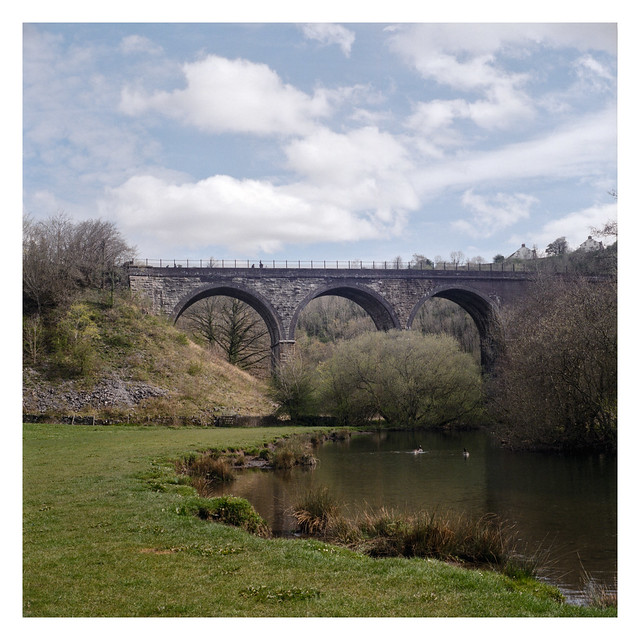
One of the main features of the valley is the disused Headstone Viaduct which used to carry the Manchester, Buxton, Matlock and Midland Junction Railway. The line was open between 1863 and 1968. The route of the railway now forms the Monsal Trail, a popular route for hiking and cycling. The viaduct is 300 feet in length and 70 feet tall.
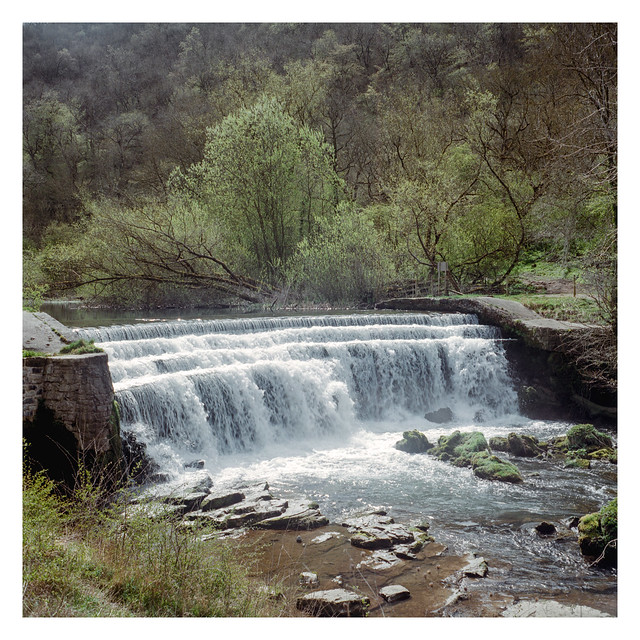
A little downstream from the viaduct a weir slows the flow of the river.
Yashicamat 124G & Fujifilm Pro 400H. Lab developed. Home scanned and converted with Negative Lab Pro.
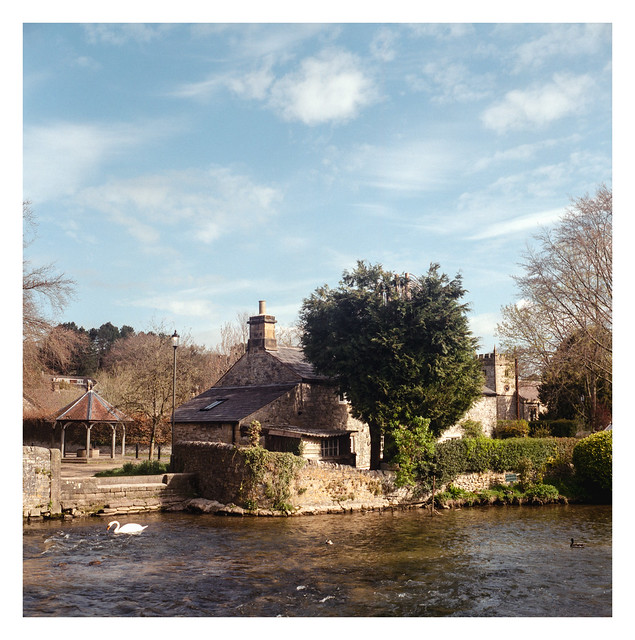
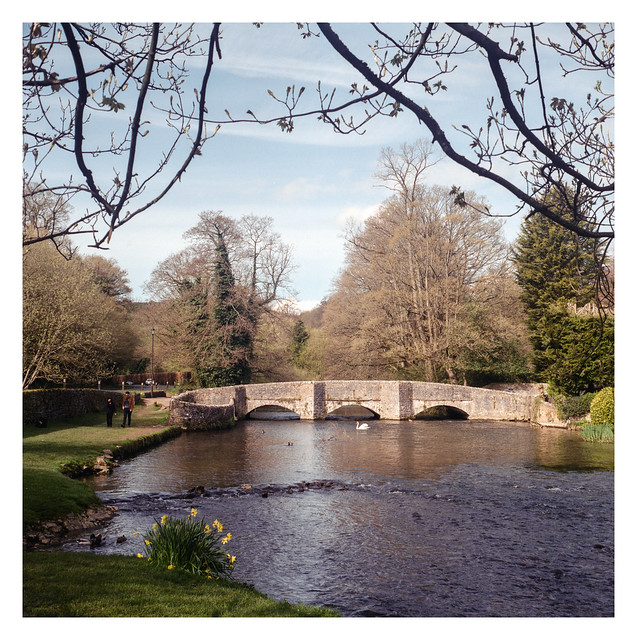
Three more photos from Ashford-in-the-Water, all taken on the banks of the River Wye where it flows past the edge of the village. It’s really quite picturesque.
The bridge in the third image is Sheepwash Bridge, a 17th century packhorse bridge which is a Scheduled Monument, giving it legal protections from modification. To the left of the bridge in the image is a stone pen. Lambs would be places in this pen so that their mothers would be enticed to swim the river to get to them. As they swam they would be pushed beneath the surface to clean their coats before they were sheared. There were no lambs in the pen on this day, although there were a couple of ducks.
That’s the same swan in all three shots. 🙂
Yashicamat 124G & Fujifilm Pro 400H. Lab developed. Home scanned and converted with Negative Lab Pro.
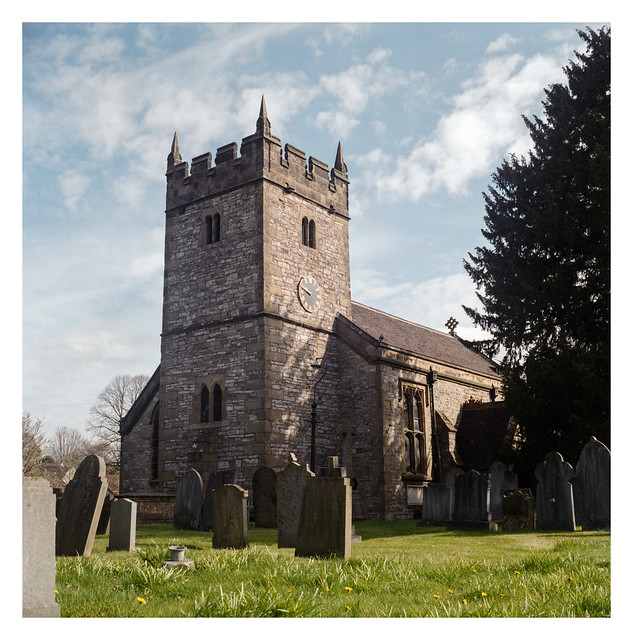
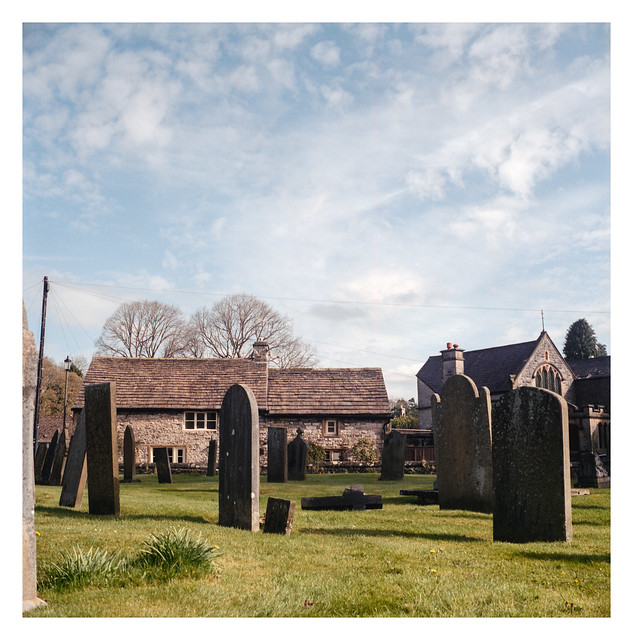
Just a quick post today with a couple of photos showing Holy Trinity Church in Ashford-in-the-Water, and a view across its graveyard. The church dates back to the 12th century but was apparently re-modelled extensively in the 19th century.
Yashicamat 124G & Fujifilm Pro 400H. Lab developed. Home scanned and converted with Negative Lab Pro.
I visited the village of Ashford-on-the-Water last month. It’s a quaint little place full of picturesque cottages, and old church, and attractive scenes where the River Wye flows through. This was the first time I’ve visited the place since a school trip back when I was probably about ten years old (on a residential week at the nearby Thornbridge Hall).
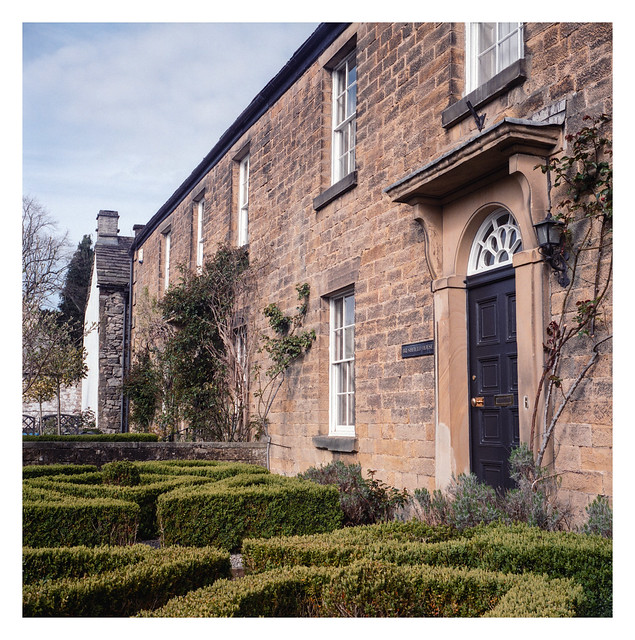
This house caught my attention with it’s maze-like pattern of miniature hedges in the front garden.
Yashicamat 124G & Fujifilm Pro 400H. Lab developed. Home scanned and converted with Negative Lab Pro.
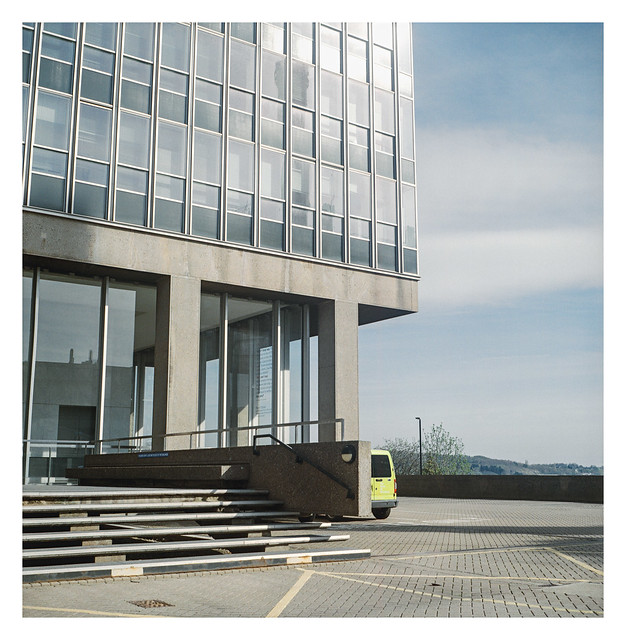
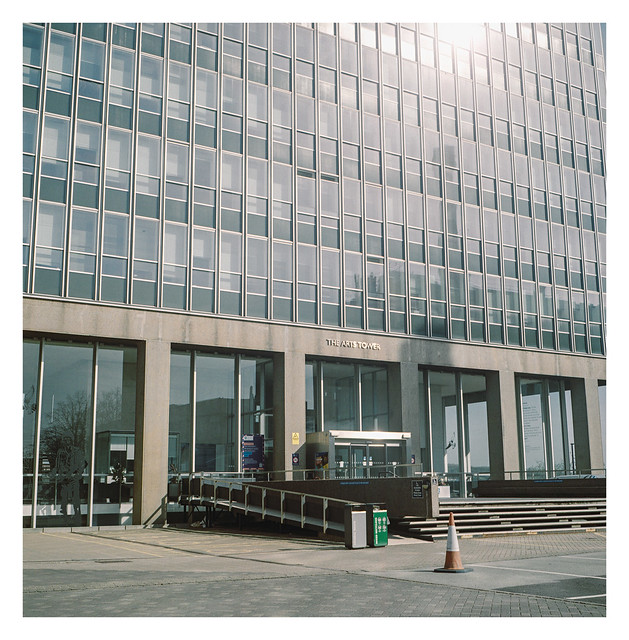
One of the more noticable structures in Sheffield is the university Arts Tower. While it is not very tall when compared with towers in other cities (it’s not even the tallest building in Sheffield) at a mere twenty stories, the fact that it sits partway up the hillside beside Western Bank means that it is visible from far afield. It should be noted that far afield in this case is probably still not that far – Sheffield is a hilly city (said to be built on seven hills, like Rome) so the best views of the Arts Tower are from the north east where it can be seen from further down the flatter area around the Don valley. It can be seen peeking over the top of hills from various locations as well though.
The building opened in 1965 and housed the Departments of Landscape, Modern Languages, Philosophy, Biblical Studies, and Architecture. There were eighteen arts departments located in the tower originally although, as the university and student body has grown, some of these have moved to new locations.
One of the most well known features of the building is the paternoster lift system, with many a tale being told of people going right over the top of the looping elevator system. Most of these are from people unaware of how a paternoster works and under the assumption that the unfortunate passengers would be somehow flipped upside-down as the lift reached its apex. They do make for better stories though. 🙂
It being such a focal point in Sheffield’s skyline, I’ve taken a good number of pictures of the tower which can be found here.
Yashicamat 124G & Lomography Color Negative 100. Lab developed. Home scanned and converted with Negative Lab Pro.