35mm · Film photography · Photography

Barcelona market stalls

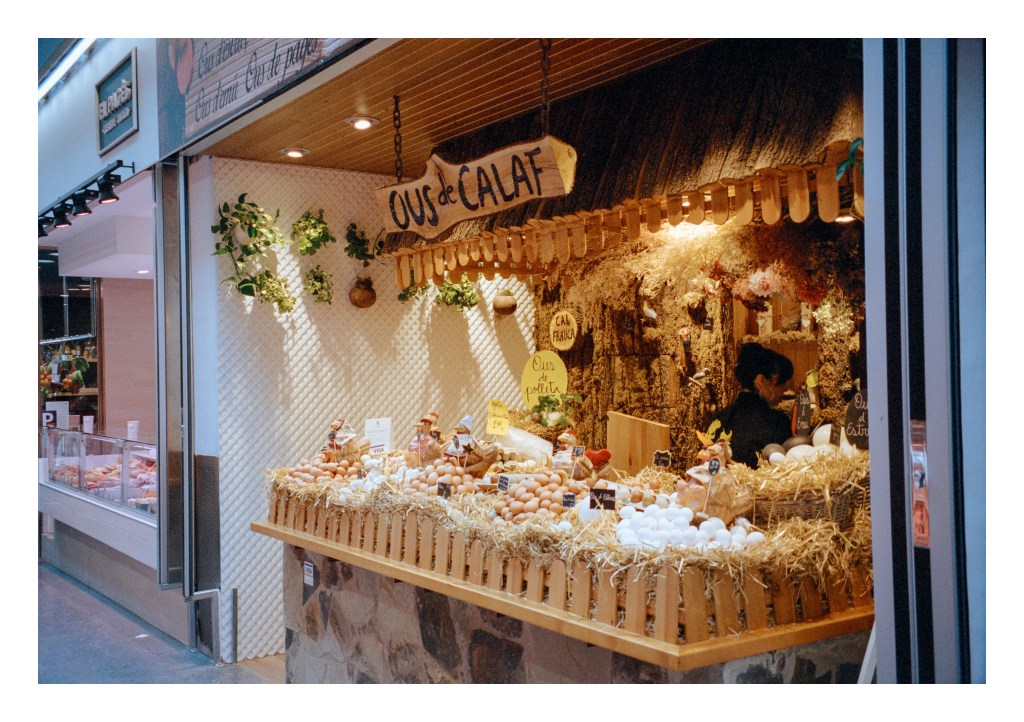
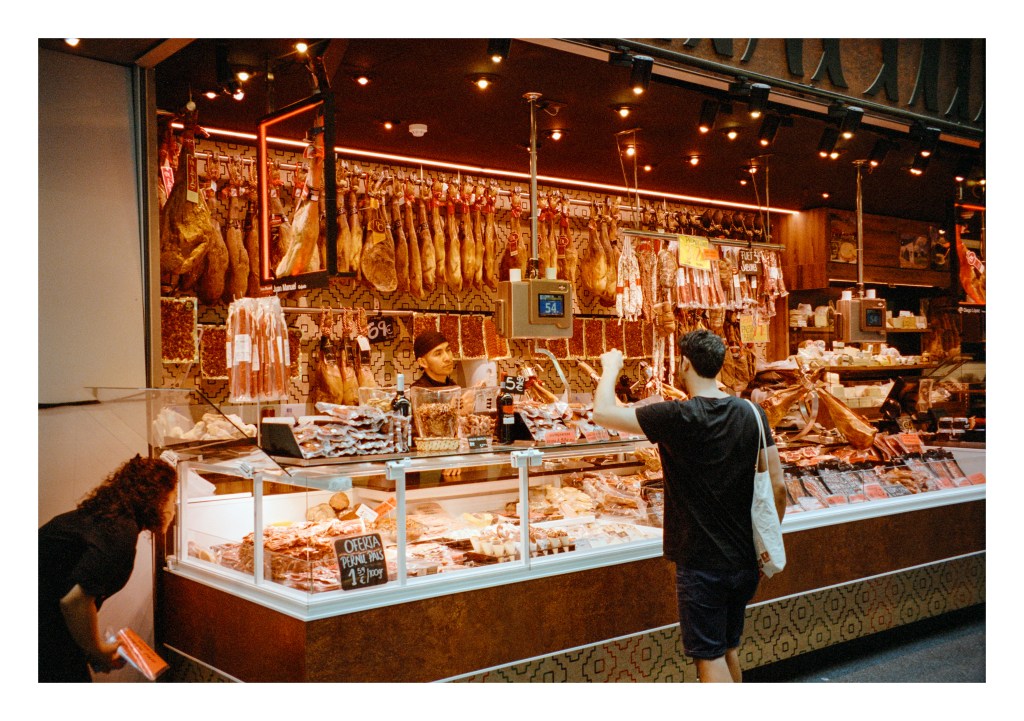
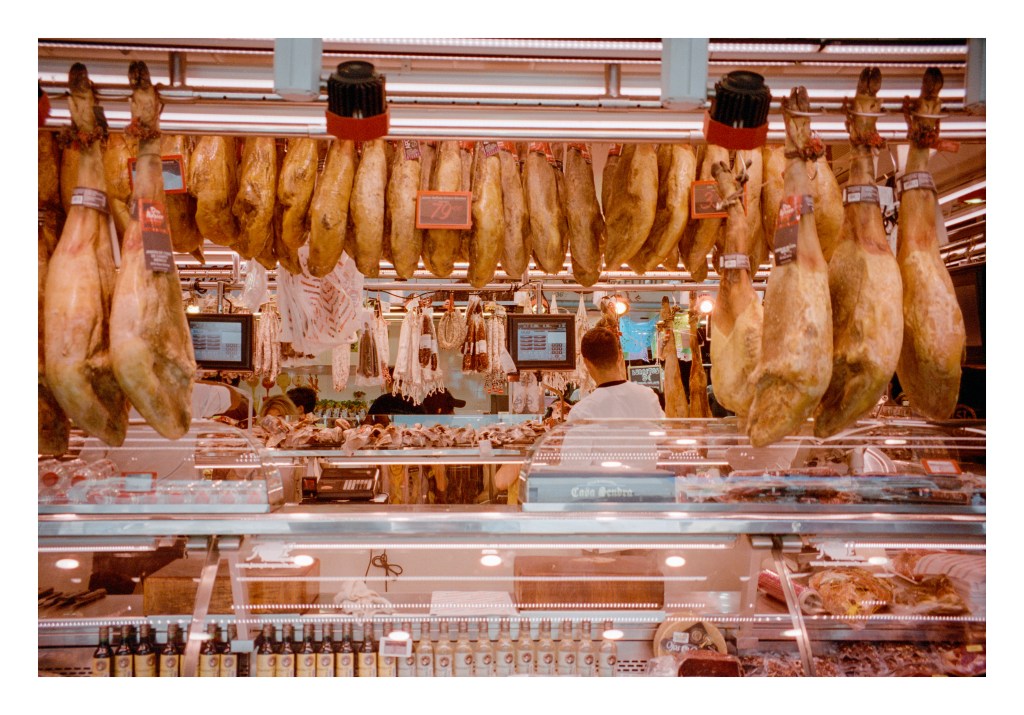
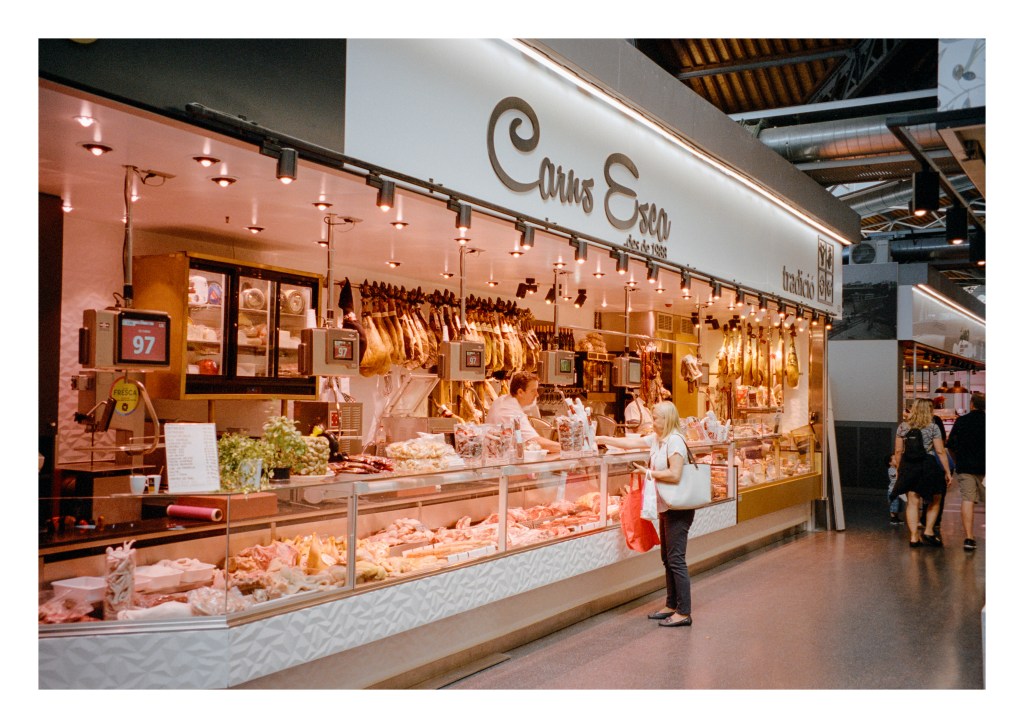
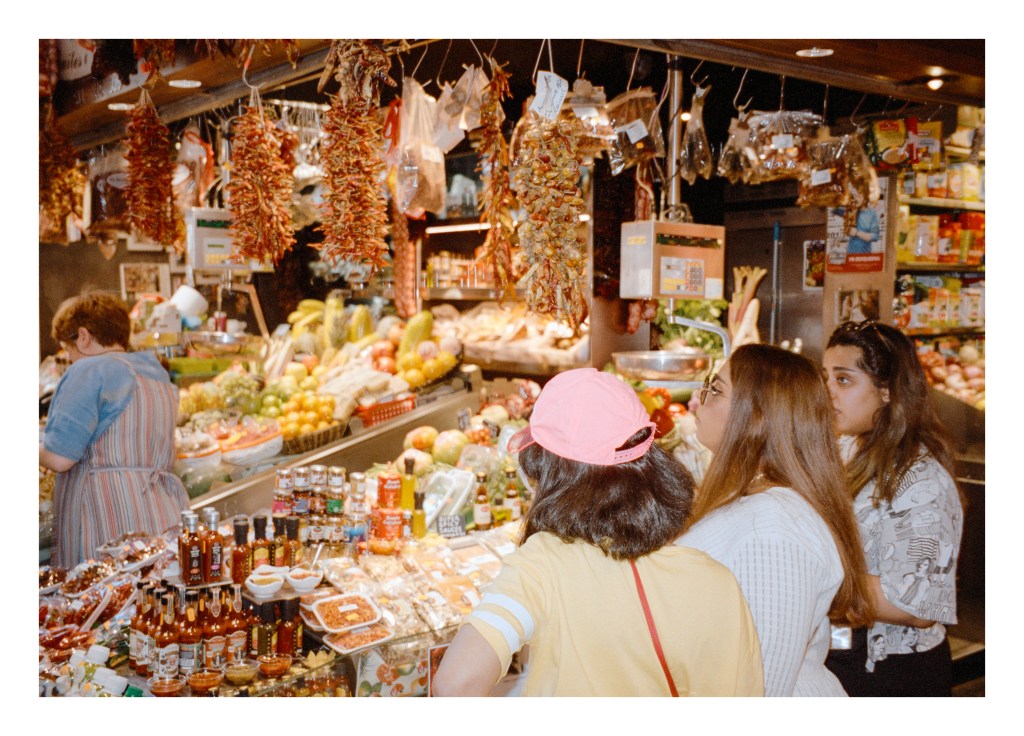
I’ve been re-scanning some older negatives over the past couple of days – some Portra 400 shots made during a trip to Barcelona with my wife back in 2019. The main reason for the re-scanning (actually not re-scans really, as the originals were lab scans) is to see what they look like when converted with Negative Lab Pro. The answer is… much better than any previous attempts I’ve made.

The original lab scans were fine but I know I can get much more resolution and detail out of my Plustek than the scan sizes the lab provides can offer – even their large scans – with the bonus of it not costing me anything to do so. And I’m finding that Negative Lab Pro is giving me colours that I’m actually happy with!

So today, here are several photos I took inside one of the markets in Barcelona – the Mercat de Sant Antoni, I believe. I guess that British market stalls are just as interesting to look at really, but there’s a definite draw in seeing the different wares on offer in other countries. Some markets in the UK might provide delicatessens akin to the ones here, but they are not commonplace, so it’s always interesting to see the mundane through the eyes of a visitor.

Canon Sure Shot Z135 & Kodak Portra 400.

Taken on 17 June 2019

35mm · Film photography · Medium Format · Photography

Colour blindness – struggles with converting colour negatives in a way I’m happy with

One of my biggest issues with colour film is, well… the colour. Getting the darned stuff to look “right” is a test for my patience and also my sanity it can seem. Even when I get it looking right, a later glance reveals that I was completely incorrect and it looks terrible. How much of this is down to the actual results of my efforts (or the lab’s) and how much is down to the obsessive perfectionism that my brain likes to lay on me from time to time is up for debate.

I’ve gone through a number of iterations when it comes to scanning colour film negatives over the past five or six years. When I first began scanning my own film, my only option was my Epson V550 and the Espsonscan software that came with it. This gave passable results but not ones I was ever truly happy with. Colours would look “off” sometimes, with odd colour casts which would differ from film to film. I tried using ColorPerfect as a Photoshop plugin, which addmitedly helped (a bit) but also seemed to render shadow areas full of horrible looking noise.

Later, when I got my Plustek 35mm scanner, it came with a copy of Silverfast, so I tried that with it’s built-in film profiles. While I was able to get better results – and in some cases ones I was quite happy with – they still didn’t look right, no matter how I played with the settings.

So then I tried Vuescan. Again, never quite right (although it does a great job on 35mm slides).

I then decided to start getting my colour film developed by a lab that provided scans at a reasonable price. There was an additional cost for posting my film off, and a delay while I waited for the results, but on the whole the scans were nice, if perhaps a little warm looking (the lab would have changed that had I asked though). For a while I was happy, but the thing that put me off in the end was the resolution of the scans. While 35mm was acceptable, they used the same “x pixels on the short side” ratio whether it was a 35mm or medium format negative, leading to the frustrating situation where a 6×6 120 film negative would come back with a smaller scan than a 35mm image. So I went back to using my local lab and scanning them myself again. This decision was made mostly when I discovered Grain2Pixel.

Grain2Pixel – a free Photoshop Plugin – converts linear scans to positives. Here, at last, I thought I had found THE solution. It gave me the best results I’d seen so far… most of the time anyway. Some films, unfortunately, it struggled with (for me at least), particularly Kodak Portra, always giving the images a blue cast that was difficult for me to remove satisfactorily. With a lot of faffing about in Lightroom I could get them close to where I wanted, but I was still unsatisfied, and there would always be a few problem negatives that seemed to actively reject giving anything close to accurate colours.

Negative Lab Pro (NLP) has probably been the go-to solution for scanning colour film negatives for a few years now. I’d played with the trial vesion before but not been any more satisfied with the results than from Grain2Pixel, so never paid for the license. Last week though, I decided to have another go. This time I spent much more time understanding how it worked and, lo-and-behold, after RTFM’ing I got much better results. After playing with the 12 free conversions that you get with the trial version, I decided to bite the bullet and put my hand in my pocket for the full version.

This week I’ve been scanning a variety of negatives, using Vuescan to create a RAW DNG file of the images, and then converting them in Negative Lab Pro. I’ve mostly been happy with the results – particularly some Portra 400 negatives that I’m very pleased with (see examples below).

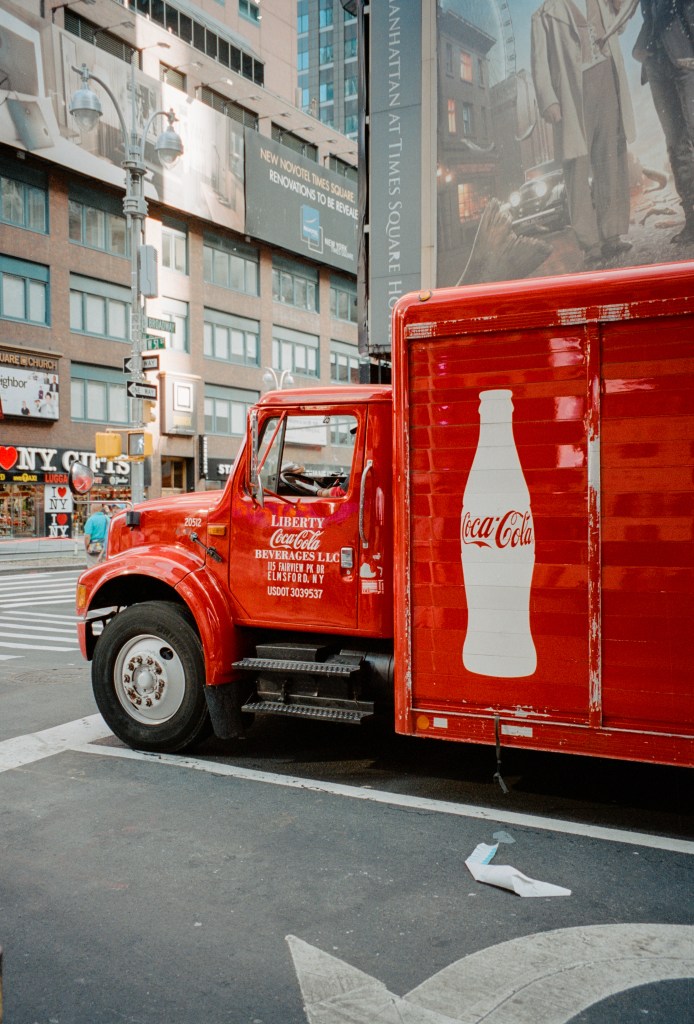
This is a Noritsu lab scan of a 35mm Portra 400 negative.
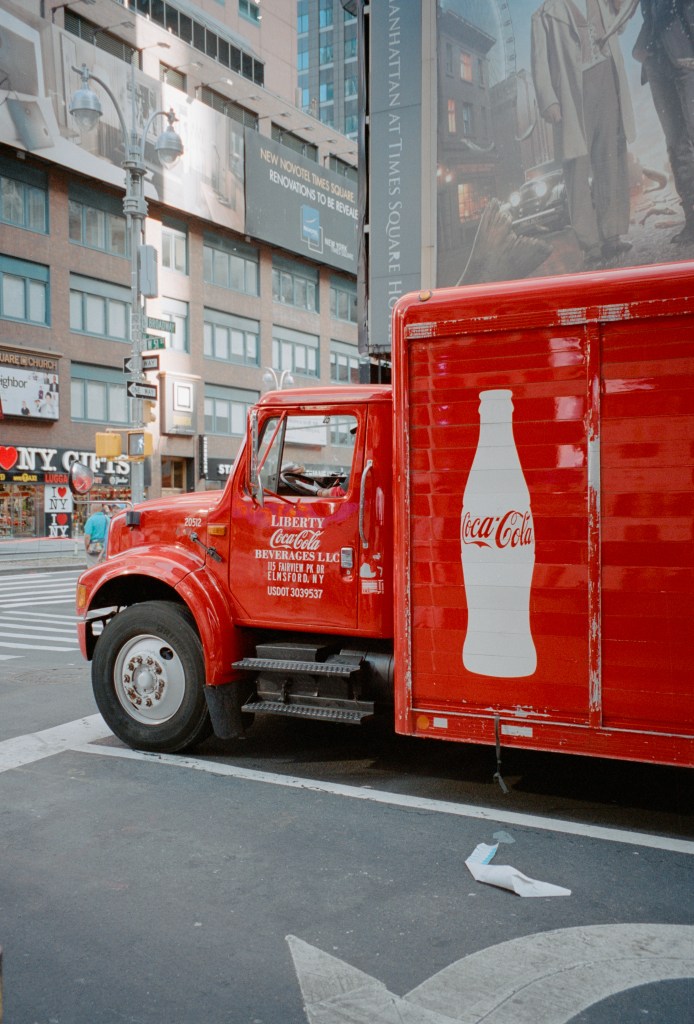
And this is my Plustek 8100 scan, converted in Negative Lab Pro (with a few minor lightroom tweaks to add a touch more contrast). It has considerably higher resolution than the lab scan.
And, for the sake of completeness, this is the unedited scan straight from Negative Lab Pro (althougth I obviously made tweaks during the actual conversion process).

However, I’ve spent most of my time playing with a set of Portra 160 negatives that were exposed about a year ago and which I had been unable to get results that I was truly convinced by. Grain2Pixel didn’t give me the results I wanted, nor did Vuescan, and it was my old friend EpsonScan that had given me the best result (although still not good results). So. I’ve re-scanned the negs, got the RAW DNGs, and been messing with them in NLP. The good thing about NLP is that it’s non-destructive. I can un-convert the original file back to a negative and re-convert it using different settings. This gives a lot of scope for experimentation to get a look I’m happy with. I’m still not sure I’m there with this roll of film yet, but I’m happier than I was before.

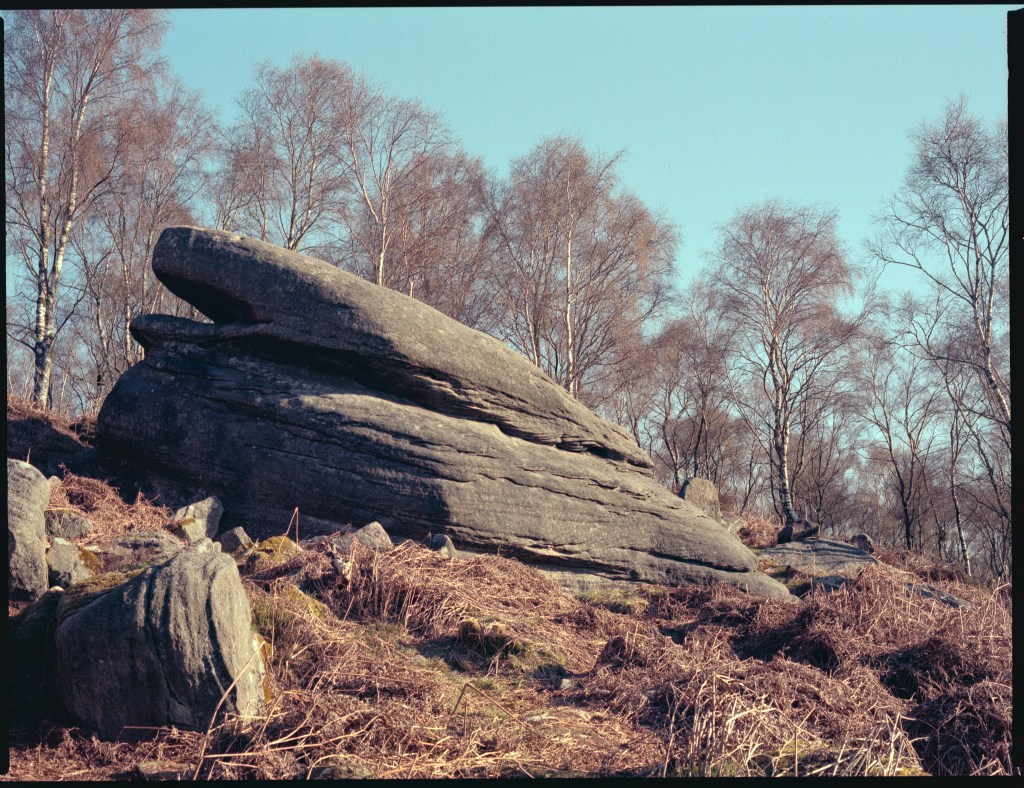
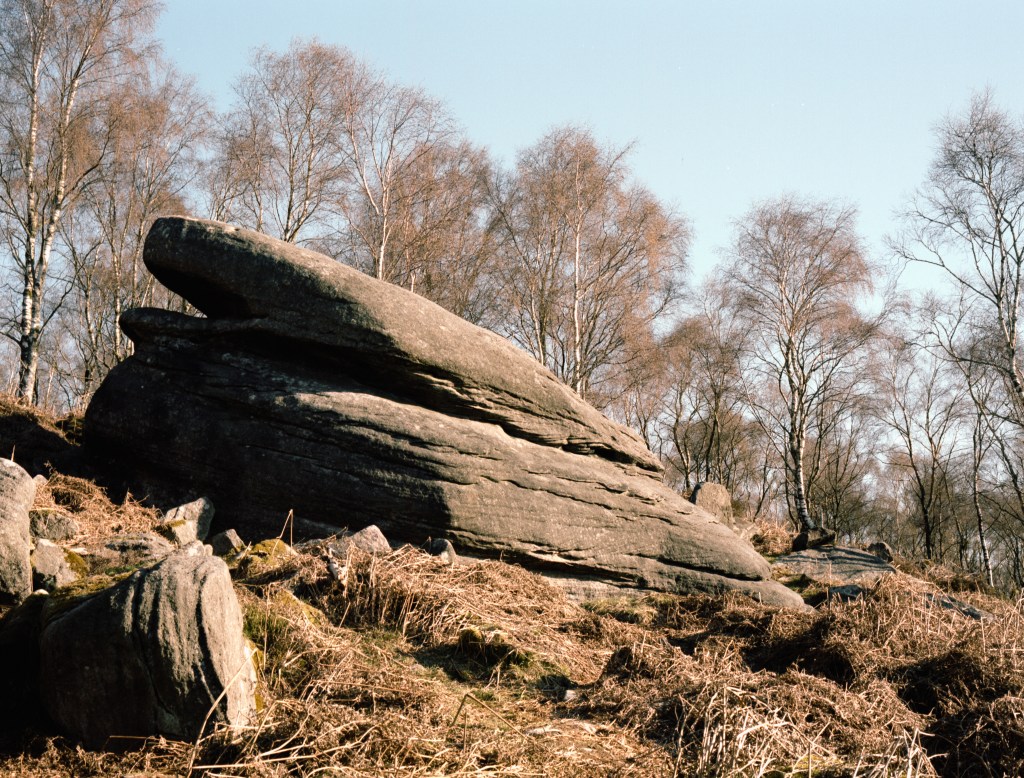
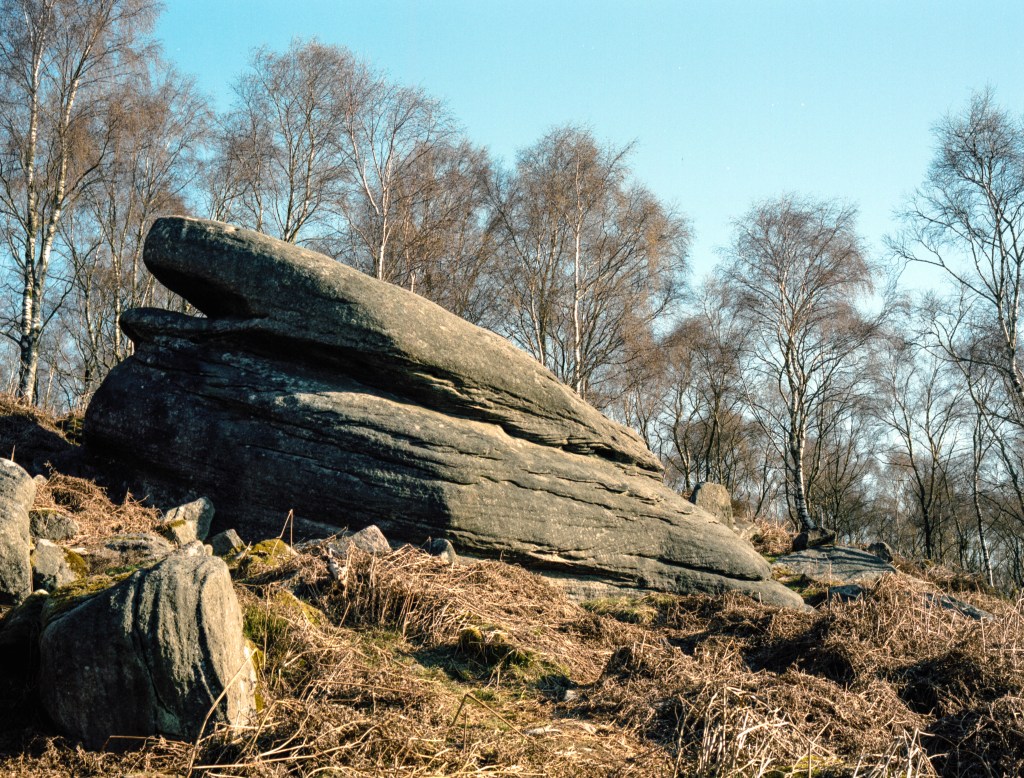
The first shot on the roll was the one that gave me the most headaches – a photograph of a large gritstone boulder in front of some silver birch trees, lit my bright early morning light. The Epsonscan result looked wrong – all cyan and brown, but not in a subtle way. The first NLP version looked better intitially, although maybe still not right. My second attempt with NLP using a different scanner profile and different tweaks was much better though. Here are the three versions (so far!):

My initial Epsonscan attempt. It looks off. Admitedly, more tweaking in Epsonscan might fix this, but it was beyond my talents and patience.
The first Negative Lab Pro attempt. Better, but still not right.
My latest Negative Lab Pro attempt. I’m not saying it’s perfect, but this one feels much more natural to me.

I think, at the end of the day, I’m never going to get a “perfect” set of colours. There are too many variables at stake. What I need to do is nail a workflow that allows me to get colours that I like on a consistent basis. I think that this is the most difficult part of all, but the journey continues. Now I plan on re-scanning a bunch of different film stocks to see how NLP compares with my earlier scans. Maybe another post at some point…

Bronica ETRSi, Zenzanon 75mm f/2.8 & Kodak Portra 160.

Taken on 6 April 2021

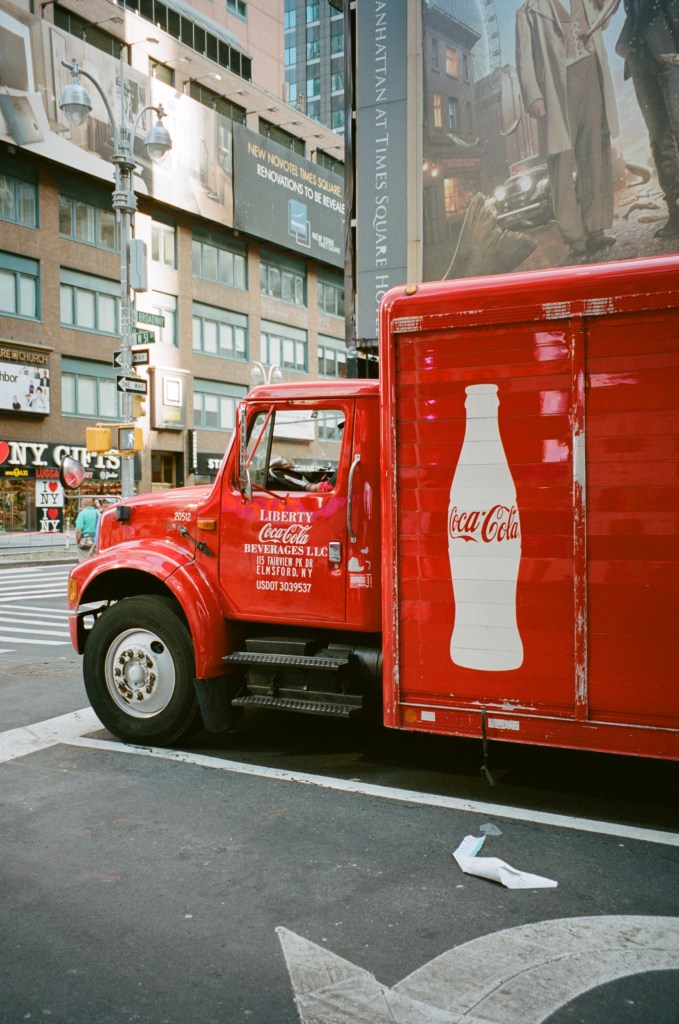
(Coke truck shot with a Canon Sureshot Z135 on Portra 400 in 2019)

Film photography · Medium Format · Photography

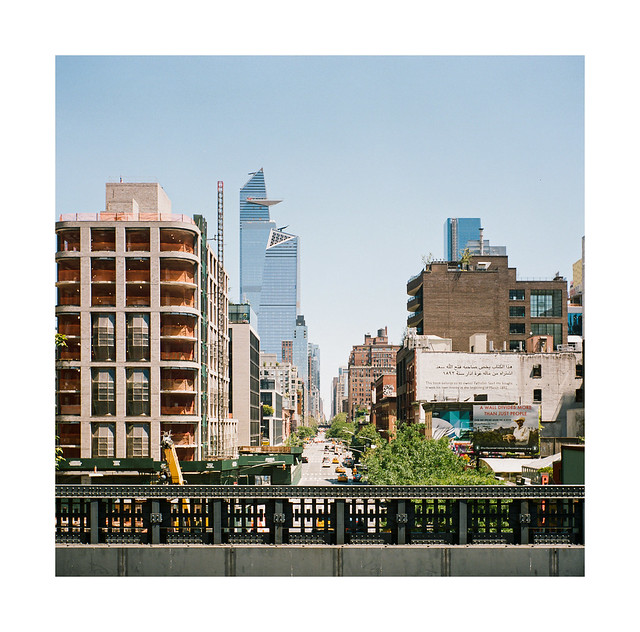
North to Hudson Yards

We’ve had a visitor this evening, so just a quick post today. I’ve dug a picture made a couple of years ago during our trip to New York from the archive. It depicts the view north up 10th Avenue from the High Line where it crosses the junction with W 17th Street.

So, New York New York
Great place to make some photos
Maybe I’ll return
?

FILM - North up 10th Avenue

Zeiss Mess-Ikonta 524/16 & Kodak Portra 400.

Taken on 27 May 2019

Film photography · Medium Format · Photography

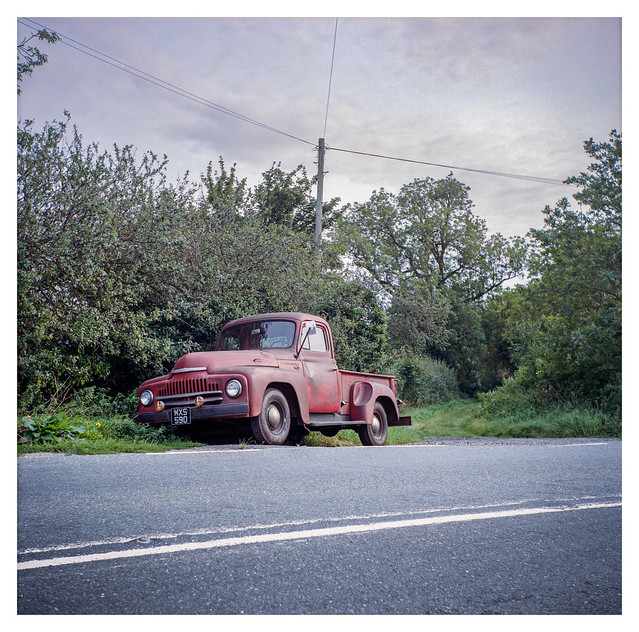
International Harvester

After yesterday’s Chevy photos, I’ll continue a mini-theme of classic American vehicles, this time an International Harvester pick-up truck. Which I think is an L-Series, but which I am again willing to be corrected on. I believe the tow-truck, Mater, in the Cars movies was based in part on an International Harvester.

Like yesterday’s Chevy, this was photographed on my trip to Mablethorpe. While the Chevy is a permanent feature at the garage where I made the photo, this truck was just parked on the verge on a bend in the road not too far from my destination, so I pulled over and took a few quick shots.

International

Zeiss Mess-Ikonta 524/16 & Kodak Portra 400. Grain2Pixel conversion.

Taken on 11 September 2020

35mm · Film photography · Medium Format · Photography

Chevy Sedan Delivery

I made a few pictures of this vintage Chevy on the way to Mablethorpe the other week, some with my Canon Sure Shot Z135, and some with my Zeiss-Mess-Ikonta 524/16. I photographed the same car before when I passed by last year, using the Zeiss on that occasion too, but with some Ektar (and in bright sunshine). The conditions this year were more subdued, the same layer of thin, high cloud that would be present most of the day, obscuring the sun so that much of of the light was diffused, removing much of the contrast. Despite this, I still like how both these images turned out.

I think the car is a Chevy Townsman from the early 50s, but I’m happy to be corrected by someone more knowlegeable about such things.

EDIT: I’ve been informed my fellow blogger, Jim Grey, that it’s actually a Chevrolet Sedan Delivery. Thank you Jim.

Chevy
This is the Z135 shot, taken on Kodak Gold 200, scanned on my Plustek 8100 as a linear tiff and then converted with Photoshop and Grain2Pixel.
Chevrolet Townsman
And this is the Zeiss shot, this time taken on Kodak Portra 400, scanned on my Epson V550 as a linear tiff and converted with Photoshop and Grain2Pixel.

Taken on 11 September 2020

Film photography · Medium Format · Photography

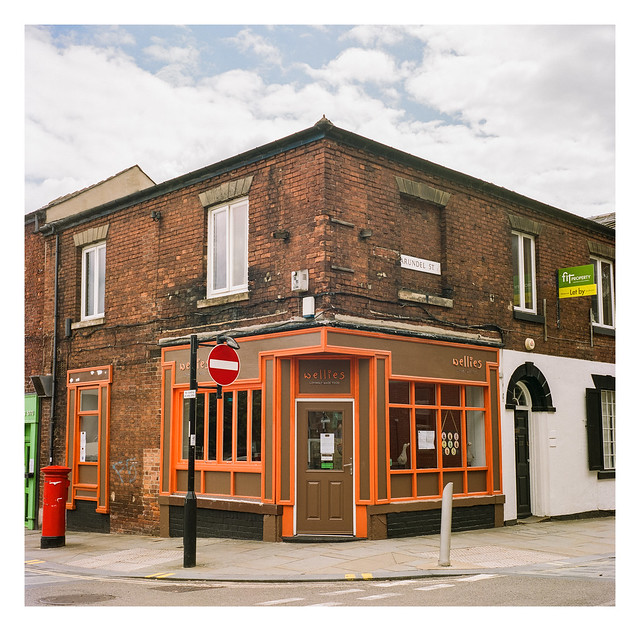
Wellies

On the day I started my street-portraits project, I parked my car on a street close to the city centre. My intent had been to use all twelve frames of the Portra 400 for the photographs of strangers I planned to make. However the first thing I saw was this corner cafe and I made a photo of it before I even came close to asking a person for their picture.

I’m wondering if a “corner shops” project might also be fun to do too. It has benefits of not being as stressful to pursue as asking people for their portraits, plus it has that social history angle of recording structures at a moment in time. I always enjoy looking at photographs of how things used to be and this will be my own small addition to the genre.

Obviously, most photographs I make that have recogniseable locations or contemporary objects in the frame do this to some extent anyway, but most of those are made randomly as a result of my particular eye for subject, not part of a more focussed project.

If I do pursue this, it will be concurrent with the street-portraits project, which I fully intend to complete.

Anyway, here’s the sort of thing I would envisage as part of the project…

Wellies

Yashica Mat 124G & Kodak Portra 400.

Taken on 11 July 2020

Film photography · Medium Format · Photography

One hundred people who I don’t know #1-9

This post contains my first set of portraits for my “One-hundred people who I don’t know” project which I first posted about here.

The aim of the project is to make one-hundred portraits, each subject being a person I don’t know, using the same camera and film for consistency of results (and also to allow me to see how I develop and, hopefully, improve through the course of the project).

The camera chosen is my Yashica Mat 124G TLR, and I will be using Kodak Portra 400 film.

My first outing took place last weekend and I was quite nervous about the endeavour. I’m far from an extrovert person and I was concerned as to how people might react when a stranger asked them if he could make their portrait, but the outing resulted in my asking fourteen people, eleven of whom kindly agreed, which I count as a resounding success!

Of the eleven photos, nine of them turned out successfuully enough to form part of the project. Some of these nine are not perfect – the fault of myself for missing focus or firing the shutter at the wrong time to get the picture I’d envisaged – but not so much that I won’t include them. It may be that I set myself stricter technical standards in future, but for now I’m happy with what I achieved.

The two shots that didn’t make the cut were more noticeably out of focus. Again, my fault, not the subjects. My apologies to both!

So, in chronological order, here we go…

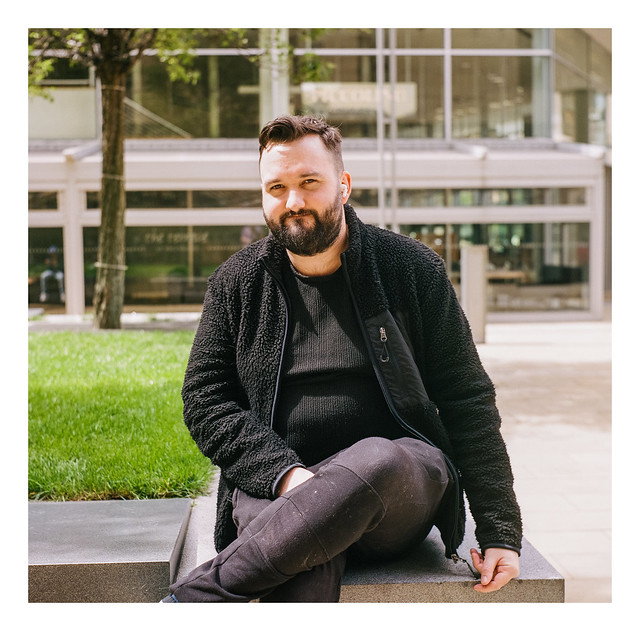
#1 – This was the second person I asked on the day but the first to say yes. I like the backdrop of the photo as it does a good job of isolating the person in the frame. I wish I’d gotten his face-mask a little more in frame – a little detail that places the picture in time.

One-hundred people who I don't know #1

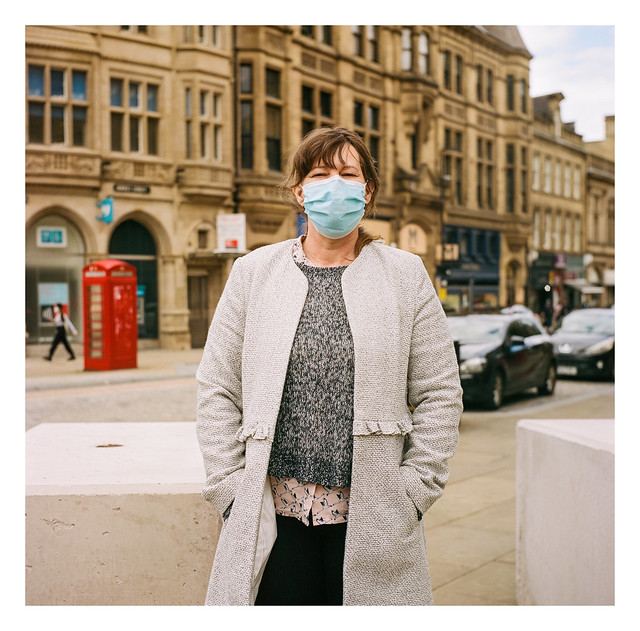
#2 – The third person I asked and the second to agree to take part. She was friendly when asked, replying “Well, you don’t know me!” when I explained my aim of photographing one-hundred strangers. She left her mask in place, which I don’t mind at all. As per my comment on the photo above, it’s a good marker of the times we’re currently going through.

One-hundred people who I don't know #2

#3 – This guy was the sixth person asked, although the fifth person I’d photographed as the previous shot was one of those that didn’t quite work out. Spotting the guy’s cameras, I thought that he might be more inclined to let me photograph him, and I was right. He chatted a little about my camera as he has one the same. He also gave me his business card and I’d intended to send him a copy of his photo but I managed to lose the card somewhere. If you’re reading this, my apologies!

One-hundred people who I don't know #3

#4 – The seventh person asked (and the first in an unbroken run of six people who all agreed to participate – everyone else I asked on the day in fact). I felt a little guilty as he was listening to music on a pair of ear-buds that I didn’t notice until he removed one when I asked if I could take his picture.

One-hundred people who I don't know #4

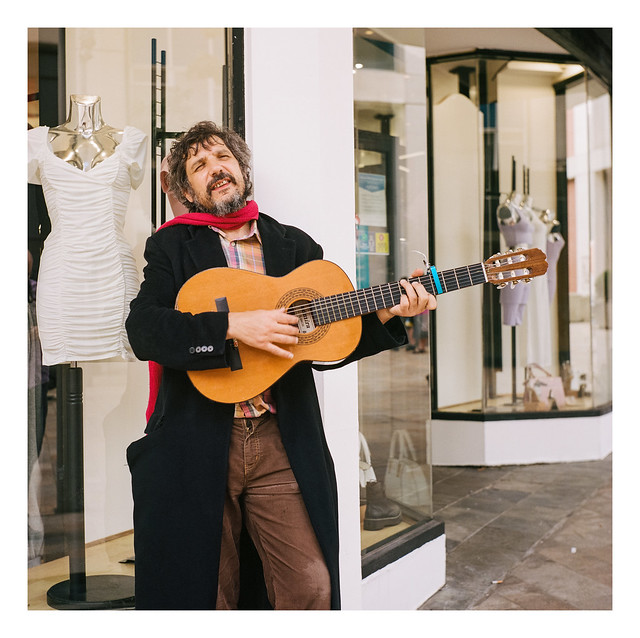
#5 – The first of two street musicians whose portraits I made. I did wonder if these should count for the project – although they were both asked if I could make a picture, and they’re both people I don’t know, the fact that they’re probably photographed by lots of people amde me wonder if this was a bit of a cheat on my part. But, hey, it’s my project so street performers are in (as long as I ask their permission to make a portrait).

One-hundred people who I don't know #5

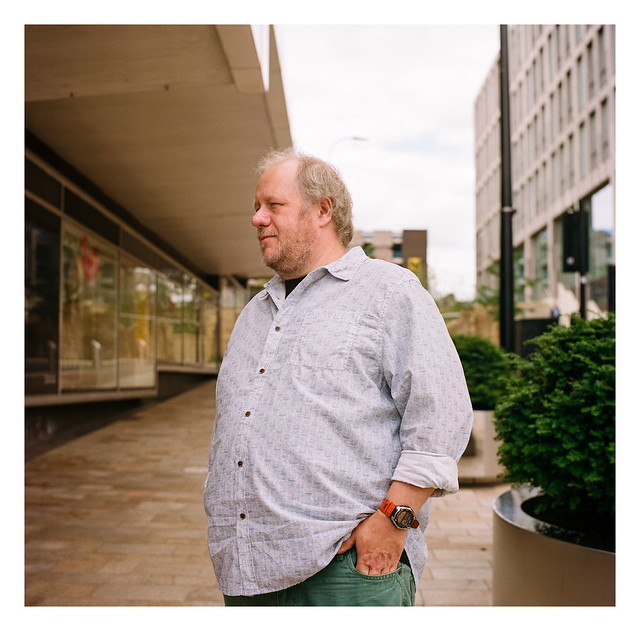
#6 – This chap was stood outside the entrance to a department store and, while I didn’t ask, I wondered if he might have been waiting for his partner to emerge. He allowed me to make the photograh, but presented me with a profile view. I like this shot a lot – it’s one of the few that show a nice fall-off in depth of field, and it also has the sharpest focus on the subject of all the images I made. I like the profile view too.

One-hundred people who I don't know #6

#7 – I spotted this woman carrying the potted plant and instantly thought that she would make for a nice portrait. The plant would provide an added bit of story to the photograph. I wasn’t, however, willing to ask her to stand still with the heavy-looking plant while I made the picture, and thought I would have to miss the opportunity. So I was quite pleased when she stopped to have a breather by perching the plant atop a roadside bollard as it gave me a chance to ask if she’d take part. I wish I’d made the photo when she was looking towards me, but I’m still very happy with the result. She was the only person on the day who asked if I would be publishing the photos anywhere, so I gave her the address of the blog. If you’re reading this, thank you once more. I really appreciate your letting me make the picture.

One-hundred people who I don't know #7

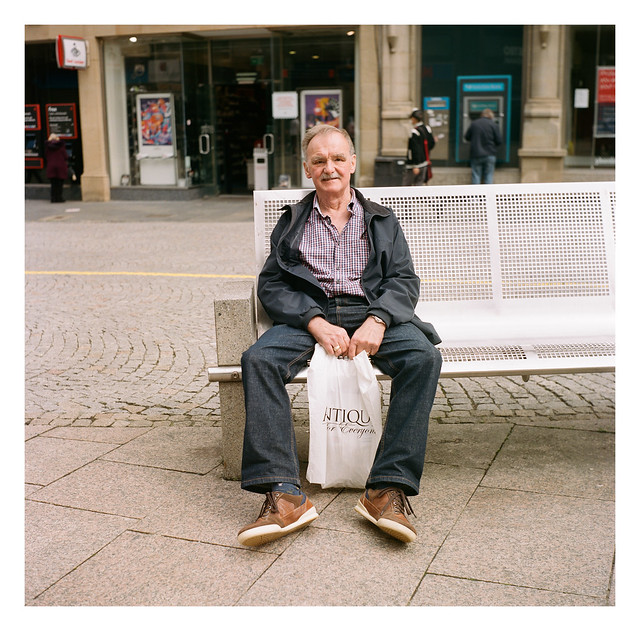
#8 – Another person who I suspect might have been waiting for his other-half to emerge from a nearby shop. I quite like the central positioning on this one. Because of social-distancing rules, it was difficult to get head-and-shoulders type shots using the Yashica Mat’s fixed 80mm lens, and I’ve ended up with a variety of different stlyes. These compositional choices are things that I hope I will become more proficient with over time.

One-hundred people who I don't know #8

#9 – Another favourite from the set, and the second street musician portrait. I like the sense of action in the picture, as well as the framing of the man and his reflection in the door panels behind him. It’s not completely in focus on his face if you zoom right in, but not so much as to be detrimental to the photograph.

One-hundred people who I don't know #9

The two shots where I missed the mark were of a girl running an ice-cream van. She had a beaming smils and I’m disappointed the photo was a little out of focus. The second was the last person I photographed on the day, another photographer who was walking the length of the city-centre with his camera – a Nikon F5 I think.

All things considered, I think I did ok on this initial outing. I have a lot to learn, but at least I now know that many people are happy to let a stranger make their portrait, which was perhaps the biggest hurdle for me to overcome.

More to come as the project continues!

Yashica Mat 124G & Kodak Portra 400.

Taken on 11 July 2020

35mm · Film photography · Medium Format · Photography

Day 365 – Twelve favourite photos from 2019

My initial plan for today’s post was to publish 12 photos that were taken this year but which haven’t featured in the blog, but on second thoughts I’ve decided to take the more traditional route. There might still be some that never appeared here before though – I tend to upload more stuff to Flickr than gets featured here – so aren’t you the lucky ones. 🙂

Today also marks the 365th consecutive blog post of the year – a target I attempted once before but which fell through when other events in my life took precedence. Not every blog was written on the day it was posted – in situations where I’ve been away from home I’ve pre-written blogs and then scheduled them to automatically publish (or made them live from my phone). Because of the way I link my photos from Flickr, I’ve found it’s a complete PITA to try and write and publish from mobile devices.

Anyway… Before I get on to the pictures, I just want to take the time to thank all who’ve viewed, interacted or commented on my blog over the year and to wish everyone a happy new year.

So, the photos…

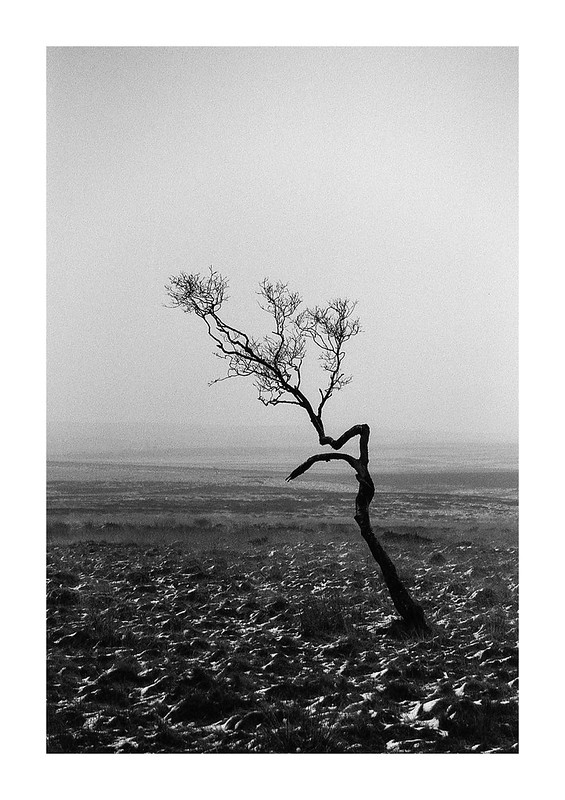
January – This tree sits on the moors just south of Sheffield and is just a few metres from the roadside. It’s distictive shape made for an easy composition. Sadly the tree has now suffered damage – the last time I passed all that remained was the trunk as the upper branches have been broken off. 😦
FILM - In a lonely place (35mm)

Nikon F80, Nikkor 28-80mm f/3.5-5.6 AF & Fomapan 400. Taken on 20 January 2019

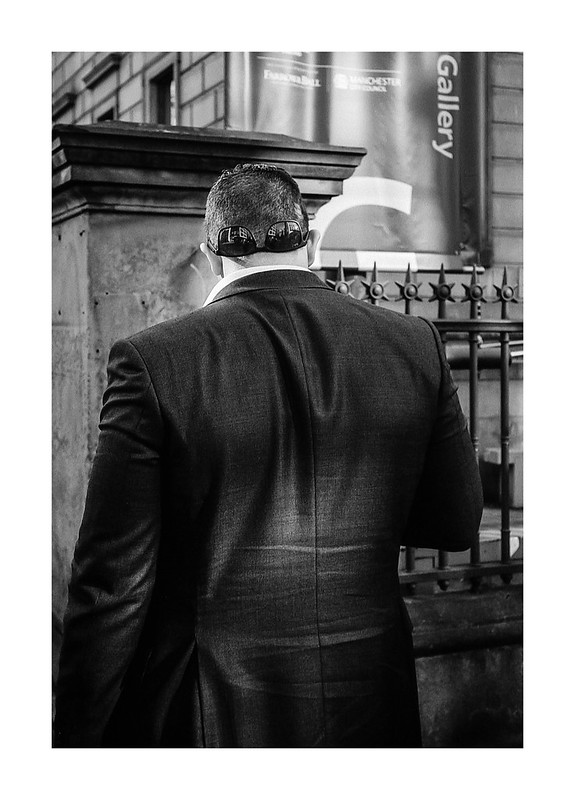
February – Eyes in the back of his head? One of the tenets of street photography is to be prepared and ready to catch that decisive moment when it occurs. Sadly, this is rarely the case for me and I’ve missed loads of potentially nice shots due to fumbling with the camera. This was one of the times I didn’t.
FILM - He's got eyes in the back of his head

Olympus 35 RC & JCH Streetpan 400. Taken on 15 February 2019

March – Portraiture is not something I have much of an interest in, particularly studio portraits (although I do enjoy looking at environmental portraits), so when an opportunity arose to photograph some models at the local camera club I wasn’t sure whether I’d enjoy it or not. While I can’t say it ignited any desire to take more portraits, I was very pleased with my results, one of which is below. It isn’t prefect (the creased backdrop lets it down a little), but the way the Sigma 105mm lens and the Kodak P3200 rendered the images is lovely.

FILM - WPS Model Session-2

Nikon F80, Sigma 105mm f/2.8 OS HSM & Kodak Tmax P3200. Taken on 19 March 2019

April – A gate on a public footpath through Edale in the northern Peak District National Park. I think this photo has a certain charm to it, there’s a sense of mystery as to where the path leads and what might be beyond the gate. This is from the penultimate roll of film through my Yashica Mat 124G last year. I shall have to rectify this situation and shoot with the camera again post haste!

FILM - A path near Edale

Yashica Mat 124 G & Fomapan 100. Taken on 20 April 2019

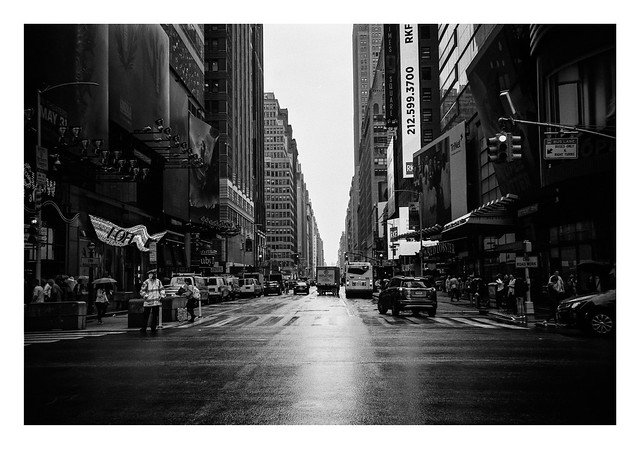
May – During May I visited New York with my family. It’s the second time I’ve visited (and I’d love to return – although I think my wife would prefer somewhere else in the US if we get across the Atlantic again) – I could have spent all day, every day just walking the streets taking photos. It was a family trip though, so I grabbed whatever I could. This is just a view down 7th Avenue after a rain shower, but it screams New York to me.
FILM - 7th Avenue

Canon Sure Shot Z135 & Ilford HP5+. Taken on 28 May 2019

June – A box of pre-owned pool balls on a stall at the Sheffield Steam Rally. I think I might have said at the time that colour would have been a more obvious choice here, but I love the contrast given by the HP5+.

FILM - Balls

Nikon F80, Nikkor 28-80mm f/3.5-5.6 D & Ilford HP5+. Taken on 30 June 2019

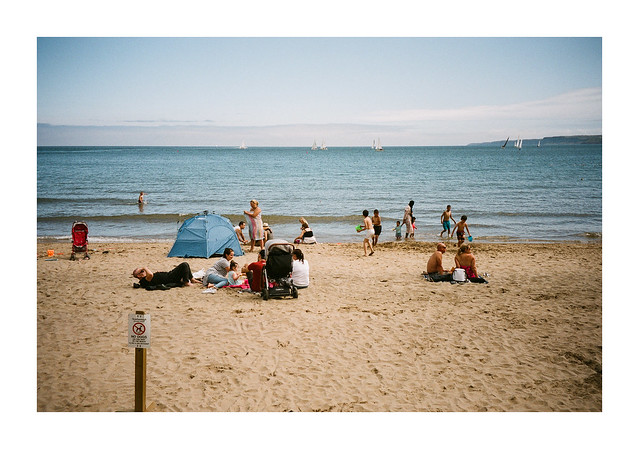
July – The beach at Scarborough. My wife and I took a trip to the seaside and I shot a roll-and-a-half of film during the day. This is just a snap of the beach, the people enjoying themselves there, and some yachts in the sea beyond, but it has a nice “Martin Parr” feel to it that I like. It was also an opportunity to test the little Pentax Espio compact that I’d bought for £1 a fortnight before.
FILM - On the beach

Pentax Espio 140M & Fuji Superia 100 (expired 2008). Taken on 13 July 2019

August – Taken at the Lincoln Steam Rally – the first time I’d attended this event, but it was huge and I hope to go again in 2020. I shot four rolls of film on the day, but this Ektar shot of a vintage truck is a favourite. The almost 70-year-old Zeiss Mess-Ikonta continues to impress with it’s superbly sharp lens.

FILM - ERF

Zeiss Mess-Ikonta 524/16 & Kodak Ektar. Taken on 17 August 2019

September – A day trip to my childhood seaside haunt: Mablethorpe. It’s a place I’m always drawn back to, even though I’m always slightly disappointed that it hasn’t remained frozen in time as I remember it from when I was a child. Another day where several rolls of film were shot (including three botched rolls through my Holga because I had it set to bulb mode!). I’ve many photos from the day that I like, but this is the one that always springs to mind when I think back.

FILM - Water dragon

Olympus 35 RC & Kodak Portra 400. Taken on 13 September 2019

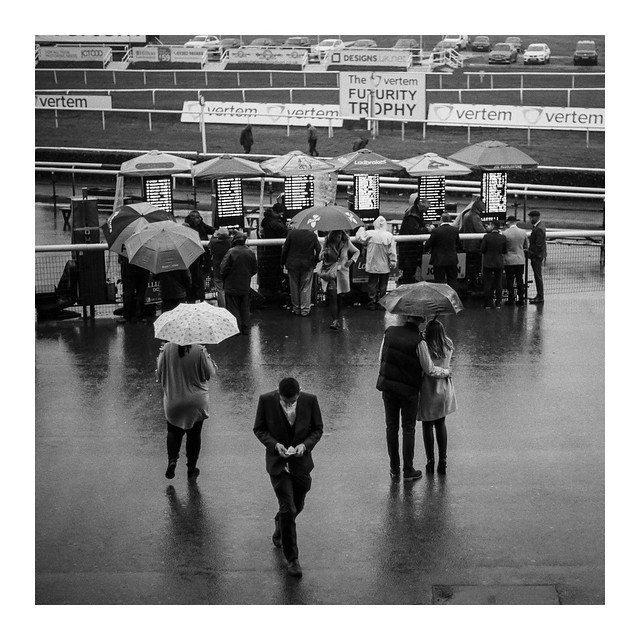
October – I took a trip to Doncaster racecourse with my dad, and this is one of the photos from the day. The weather was awful, with heavy rain all day, but oftentimes bad weather makes for good photos.
FILM - A day at the races

Olympus OM-1, Zuiko 75-150mm f/4 & Ilford HP5+. Taken on 25 October 2019

November – This shot is potentially my favourite of the whole year. The simple but beautiful charms of the Holga coupled with a wonderfully foggy day made for some amazing photographic opportunities.

FILM - The path untaken

Holga 120N & Kodak Tmax 400. Taken on 30 November 2019

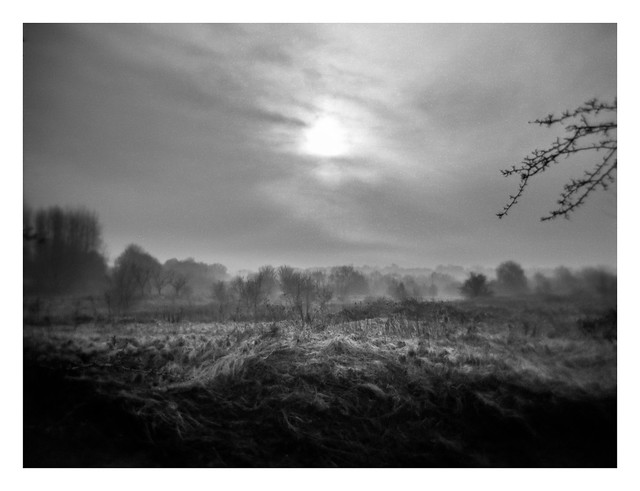
December – December is a little difficult as, as I type this, I have three rolls of film waiting to be processed still and there might be a showstopper on there (or possibly not), but this image that I took just before Christmas on a lunchtime walk is definitely worthy of the spot. It’s another Holga 120N image, but cropped to a 4×3 ratio (the bottom of the frame has a river in it, but it didn’t add a lot to the overall image and the landscape crop works much better. The way the Holga renders out-of-focus details is wonderful, and almost impressionistic in style.
FILM - Breaking through

Holga 120N & Kodak Tmax 400. Taken on 18 December 2019

So there you have it. Twelve favourite shots from 2019. As with any list like this it’s subjective, and if I were to do it again tomorrow several of the selections might change, but for now it will do.

One final word – I’ll proof read it later, so apologies in advance for any typos or grammatical goofs. 🙂