
A while back – last year I think, although it could have been 2020 – I got in touch with the film manufacturer Fomapan. I’d had some issues with a batch of Fomapan 100 that I’d bought which was resulting in a lot of small white speckles on the scanned negatives. This wasn’t dust, but some problem with the film that was becoming apparent when it was developed. A bit of reasearch online produced a number of other reports of the same probleM, some with the same batch number as the rolls I had, so I got in touch with the company to ask if they could do anything to help.
They provided some instructions on how the issue with the problem batch might be addressed, and confirmed that there had been an issue with some rolls of the film that had been produced. Unfortunately, I didn’t have any luck after following the special instructions and the next roll still showed the same speckles, albeit slightly lessened. In addition, Fomapan also sent me a few rolls of film to recompense me for my troubles, some Fomapan 400, and also a roll of Retropan 320.

I’d never shot Retropan before so was curious as to what it might produce. Unfortunately, thanks to the pandemic and various lockdowns, the film languished in the freezer for quite some time, awaiting its day in the sun. That day came a few weeks ago when I took a trip to Leeds for the day with my wife and her sister. They hit the shops while I went off to make photos (and also visit the Royal Armouries museum). I burdened myself with choice on the day, having three film cameras, plus my little Ricoh digital compact. The film cameras included the Yashicamat 124g (with the Retropan), my Olympus XA3 (with some HP5+), and the newly acquired RETO Ultrawide & Slim (with some Agfa Vista Plus 200 – some of the shots which have already been seen here on the blog recently).
I wasn’t massively enthused about shooting the Retropan, even though trying a new film usually means at least some excitement is to be had. Most of the photos I’d seen online from other people had a bit of a flat look about them, which isn’t something I tend to favour. I also looked into what speed to shoot the film at, having had issues with underexposure when shooting other Foma films at box speed in the past. The general concensus was to overexpose it by at least a stop, with one person suggesting that 80asa was the sweet spot. In the end I opted to shoot it at 125asa and develop it normally.

The experience of shooting the film went without hitch, and developing was likewise straightforward. The film felt quite thin, but went onto the spiral without any problem. As with other Foma films, I pre-washed it before developing and got the usual witches brew of green liquid when I poured the rinsing water away.
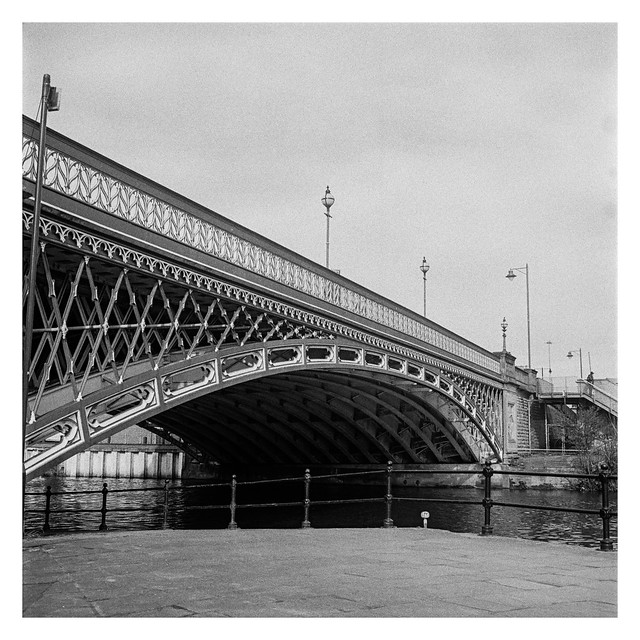
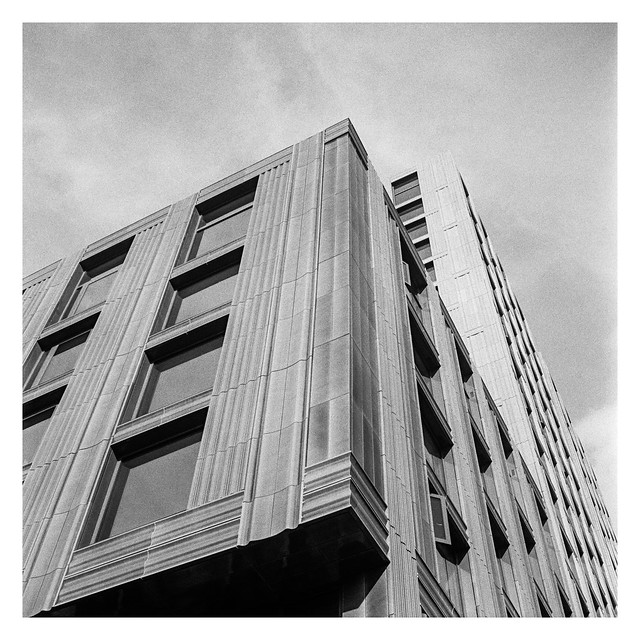
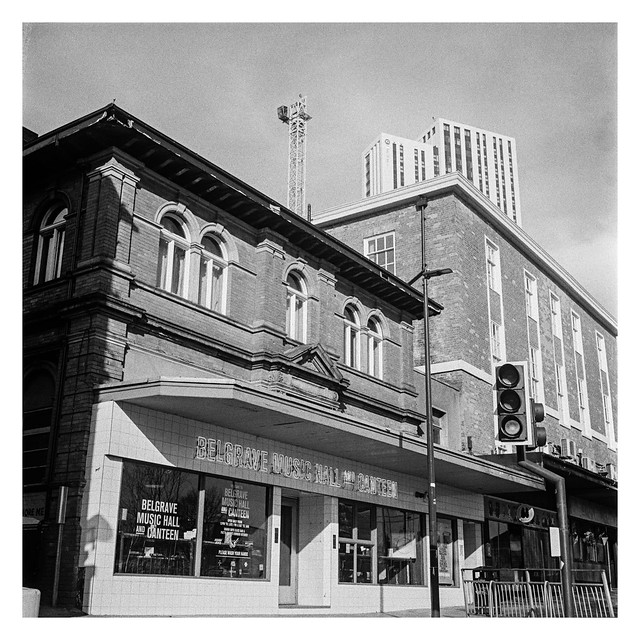
The photos are actually quite nice. Not the look I tend to go for, but there’s something there in the tonality that I find quite pleasing. There’s lots of grain present, but also good detail, and using my usual post-processing settings as a starting point soon got the scans where I was happy with them.

So, would I buy a roll with my own money and shoot it again? Honestly, probably not. I’d go for one of the other Foma line instead. But I wouldn’t turn down a roll that came my way for free. 🙂

Yashicamat 124G & Fomapan Retropan 320. Ilfotec DD-X 1+4 10mins 20° .
Taken on 26 February 2022
 Steel City Snapper photography