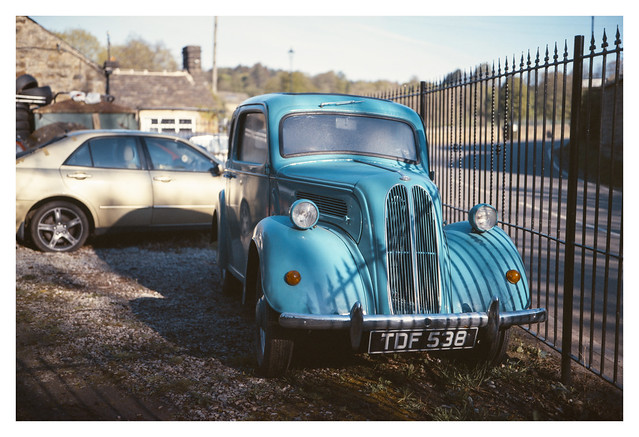
A couple of photos of a nicely painted Ford Popular which I came across while out and about a few weeks ago. The first shot was taken through the railings which, given the GW690 is both large and a rangefinder, meant it was a little difficult to frame the image. I poked the lens barrel between the bars so I knew they wouldn’t be in the shot, but I was still a little concerned about parallax error. I think it came out ok though.
This is the first in what I hope to be a series of posts in which I document the results from shooting some of the expired film I have in my stash – and I have quite a bit! However, in order to keep some sort of a leash on this exercise, I will only include film that is at least ten years past its use-by date.
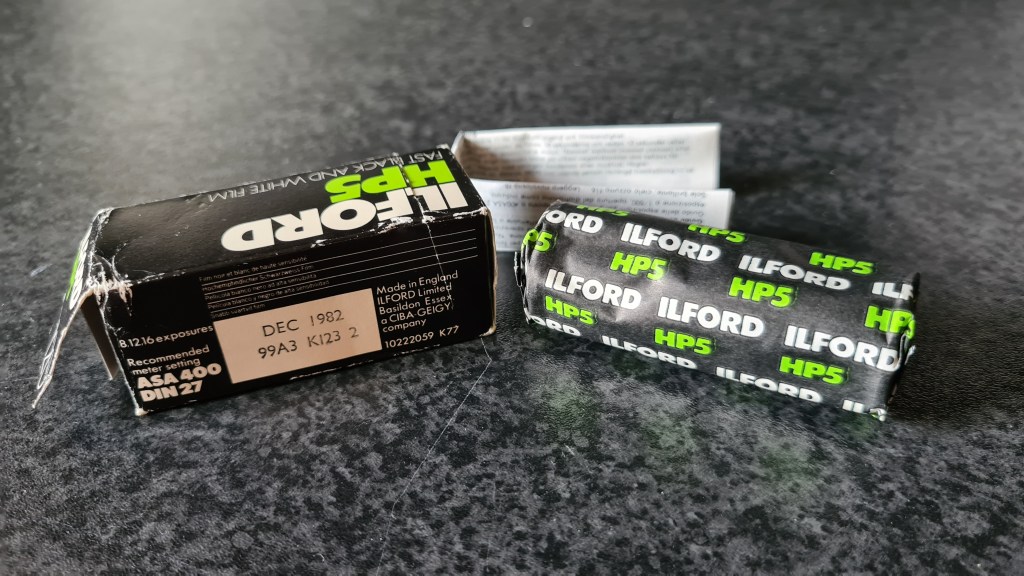
For this first instalment, I’ve decided to send the Delorean back to 1982, back before Ilford added the “Plus” to it’s stocks, back before I’d even entered my teens, and show the results from a roll of HP5 that expired in December 1982.
I chose the HP5 for a couple of reasons. Firstly, I shoot the modern version of the film quite a lot, so was interested to see how they compare (even if it may be an unfair test given the age of this roll) and, secondly, because I have four rolls of this film all from the same year so this first one will serve as a useful test on how it performs before I shoot any more of it. While the person who I got the film from had kept the film frozen, I have no idea of it’s provenance before that.
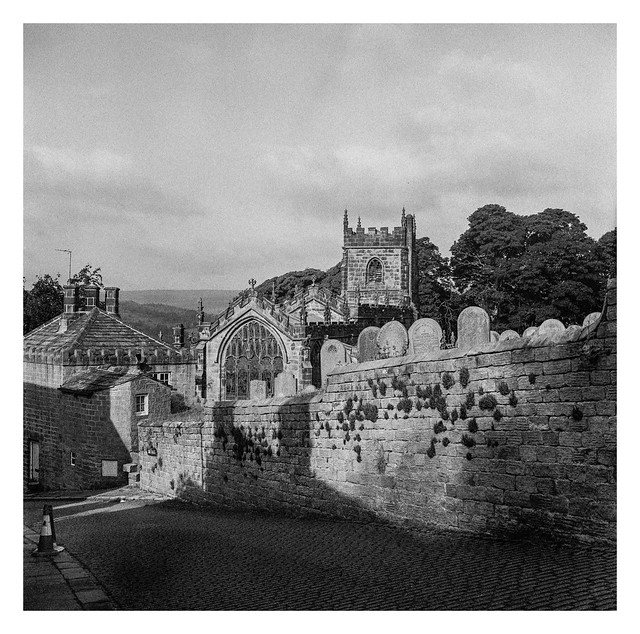
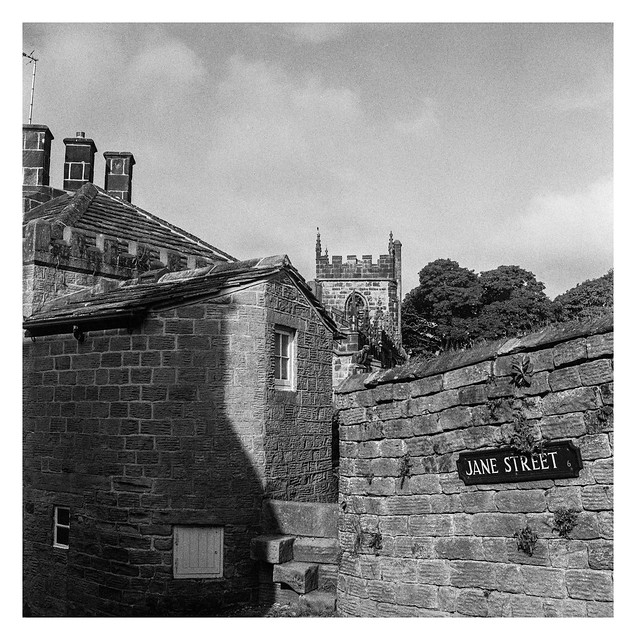
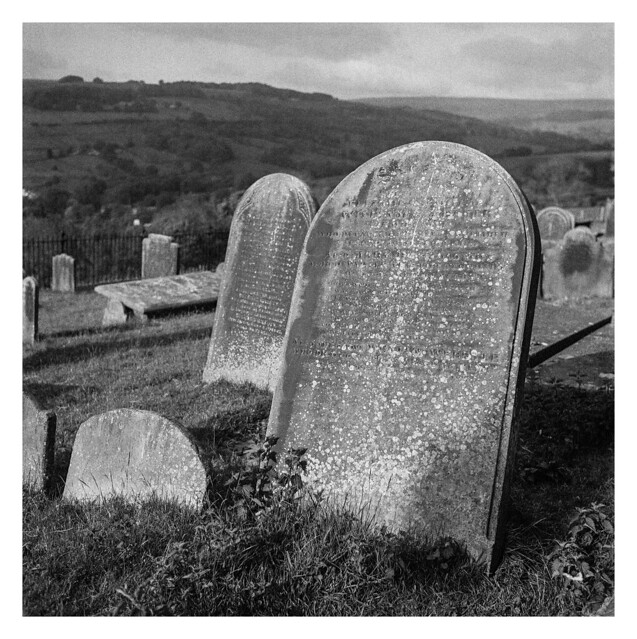
The sensible thing would have been to shoot the film in, around, or at least fairly close to home. That way, should the experiment be a disaster, at least I wouldn’t have wasted too much time on it. But the weather was nice so I decided to head out into the countryside, to High Bradfield over on the other side of the city. It was a risk but, hey, you only live once, right? I also took a second camera loaded with a fresh roll of Ilford FP4+ as well but only took a single shot with it, so the weight of the expedition would rest on the forty year old HP5.
I loaded the film before leaving the house and almost immediately felt some mild panic when the Yashicamat’s film advance crank partially jammed after a few turns. But, after some gentle pressure, it continued to wind the film on to frame #1. Arriving at my destination, I shot five shots at High Bradfield before driving around the surrounding area and photographing anything that caught my eye. Most of the other pictures were taken around Broomhead reservoir further to the north, although none of the reservoir itself. I rated the film at 100asa using my usual half-a-stop of over-exposure per decade of expiry that I use for expired black and white films. All metering was via incident readings from my Sekonic L-308.
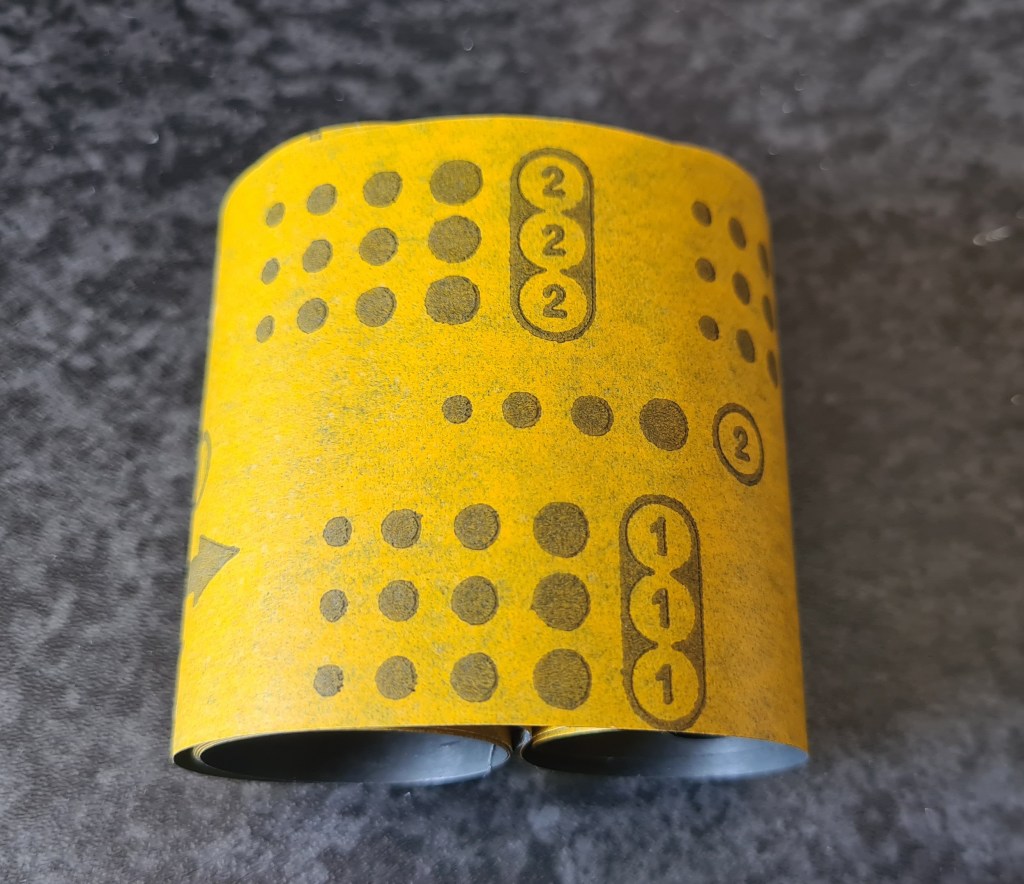
This is what old Ilford backing paper looks like. I’m not sure if the mottling is just a factor of its age.
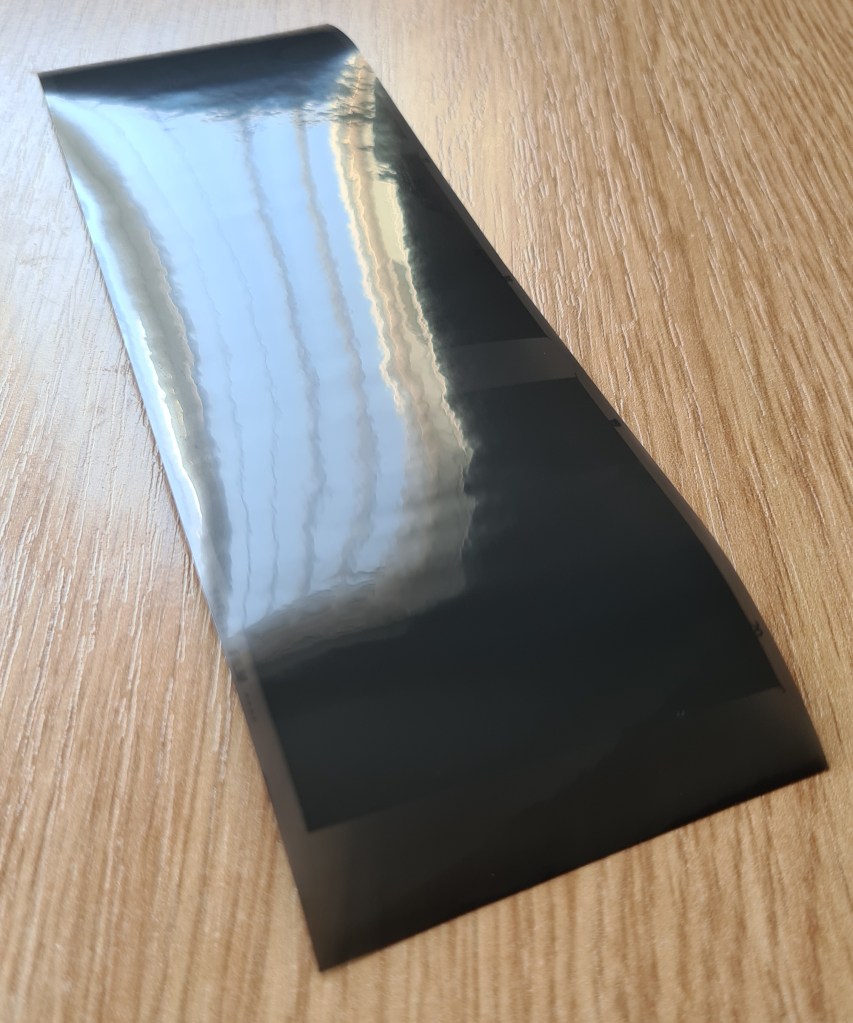
As I went out early, I was home in time to get the film developed and decided to use some Adox Adonal for the job. Ordinarily I use Ilfotec DD-X when developing modern HP5+ as it controls the tones and grain really nicely but, as this was a roll of film decades past its best, I thought the Adonal might be a good choice as I’d read that it can help to reduce fogging where it exists on old films. I used a 1+25 dilution and developed the roll for six minutes, inverting for the first minute, and then for 10 seconds at the top of each remaining minute. After that I used a one-minute stop bath and then fixed for five minutes. I washed the film using the Ilford method and then a final soak in rinse-aid before hanging it to dry for three hours. I was very happy to see easily visible images on the negatives, albeit perhaps slightly thin ones. One thing that I noticed was that the strip of negatives had an unusual, waxy sheen (see the picture below). I’m not sure if this is a factor of the film (perhaps on a different base back then?), it’s age, or even my development (although the chems should all have been in good condition).
It’s perhaps difficult to tell from this picture, but the whole roll of developed negatives had an odd, waxy sheen to them.
So, on to the photographs.
Given the age of the film I’m very happy with the results. While the negatives were a little bit thin, this wasn’t a huge problem and I was able to rectify this for the most part during the scanning phase and in Lightroom (where I also applied my other usual processing and sharpening). The grain is much more apparent than I am used to with modern HP5+ but it’s possible that this is a result of my developing them in Adonal rather than the expired nature of the film – I’ve heard other’s speak about how Rodinal developers can emphasise the grain in HP5+.
I think that I’ll rate the next roll of this HP5 I shoot at 80asa, or maybe even 50asa, and I think I’ll develop the next one in DD-X to see what difference that makes, if any, to the grain.
Here are my favourite eight shots from the roll. The other four were all ok technically but I didn’t think they worked as well artistically.
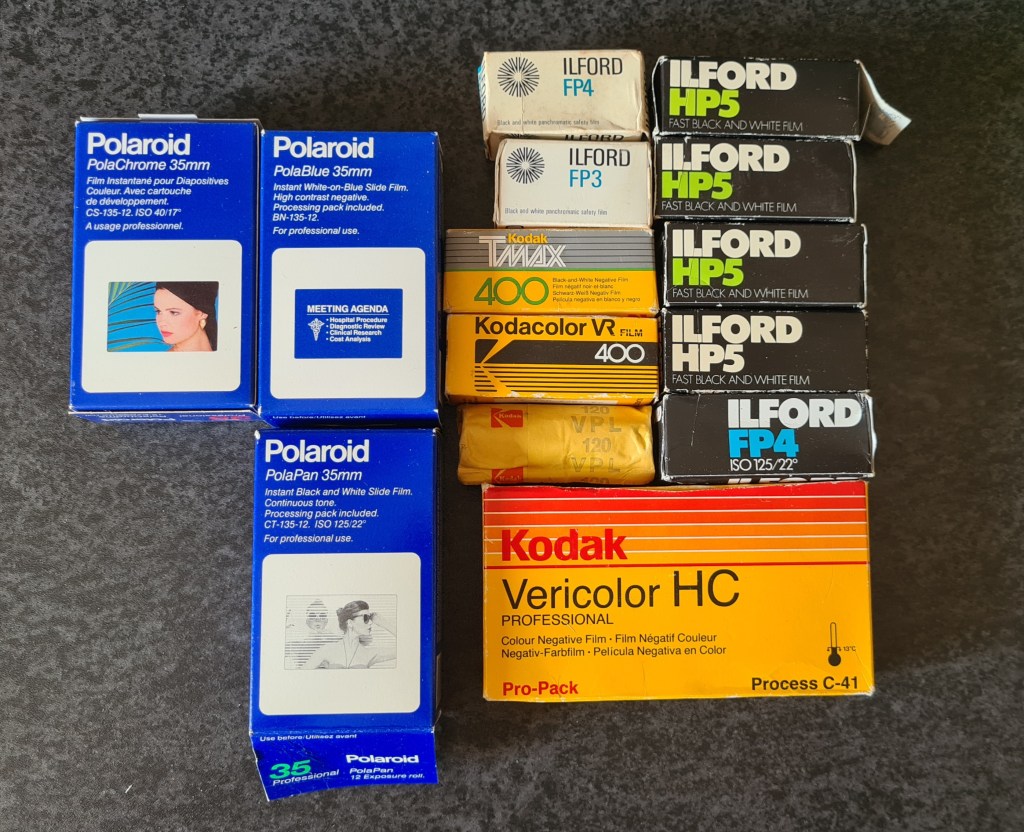
I’ve aquired some more expired film, some of past it’s best date by quite some margin – the oldest roll being the Ilford FP3 which is dated 1970! Now, normally I would stay away from old film such as this, but this didn’t cost me too much and I thought it might make for an interesting series of blog posts as I shoot the stuff and present the results here.
For the curious, the batch includes the following (in chronological order – oldest to newest):
1 x Ilford FP3 – 1970
1 x Ilford FP4 – 1981
4 x Ilford HP5 – 1982
1 x Kodacolor VR 400 – 1989
5 x Kodak Vericolor HC – 1991
1 x Ilford FP4 – 1993
1 x Kodak Vericolor VPL – No date on packaging, but I expect 1980s / 90s
1 x Kodak Tmax 200 – No date on packaging, but again probably 1980s / 90s (it was manufactured from 1986 I believe)
1 x Polaroid Polachrome – No date on packaging, but sometime after 1983 which is when it was introduced.
1 x Polaroid Polapan – No date on packaging, but sometime after 1983 which is when it was introduced.
1 x Polaroid Polablue – No date on packaging, but sometime after 1983 which is when it was introduced.
My plan is to try and shoot at least a roll of this each month. The HP5 and Vericolor both have the advantage of there being multiple rolls so I can shoot one and then re-assess exposure times for the remaining film. All the others are something of a crapshoot though, so I’ll be using the 1-stop of overexposure per decade of expiry rule for the colour stuff, and probably the same but with just half as much overexposure for the B&W. I’ve not decided on what chemicals I’ll use to develop the B&W (the colour will go to the lab), but probably not my expensive DD-X. Maybe Adox Adonal, but we’ll see.
The Polaroid film is possibly the most interesting of the lot – each roll comes with it’s own developing cartridge (and the film needs to be processed in a dedicated Autoprocessor device), so I’m looking forward to seeing how that stuff turns out.
It may be that the whole lot is an absolute waste of my time and effort, but I’m going to aim for optimism and, at the very least, there will be some blog posts falling off the back of the experience.
The oldest roll of expired film I’ve shot previously was some Kodacolor Gold 200 which had expired in 1989. While that showed definite signs of deterioration (odd colours and a mottled appearance) I was quite taken by the results, and I managed to win a prize in Expired Film Day from one of the shots. You can see some of those results here. I still have another roll of that same film in the feezer too.
As this post has been about expired film that I plan to shoot, here’s a photo made on some expired film that I did shoot five years ago. That roll was over twenty years expired and still produced lovely images, including this one.
Nikon F70, Nikkor 50mm f/1.8 AF-D & Kodak Tmax 100 (expired 1994 – shot at 50asa and developed for box speed).
This photo was taken the same day as the canal pictues that I posted here yesterday. Conisbrough is a mile or two down river from Mexborough and there is a nice railway viaduct there which spans the River Don. It was my intention to try and get a photo of the viaduct while I was in the area but, as it was the first time I’d visited and I’d not really planed a route, I ended up in the wrong place with quite a long detour if I intended to reach a spot where I could access the viaduct.
So, instead, I drove back the way I’d come and decided to take a few pictures of the castle. I shot a few frames on the expired TruPrint FG+ with my F80, and a few more with the Olympus XA3 which was, as usual, in my coat pocket. I had a polariser fitted to the 50mm lens on the F80 and, combined with the expired film, it resulted in some wildly vivid colours. I’ve actually toned down the blue in the sky for the shot posted here. The colours were reminiscent of an old postcard of the sort that used to be sold when I was little, with vivid, almost painterly tones.
Nikon F80, Nikkor 50mm f/1.8 AF-D & TruPrint FG+ (expired 2005). Lab developed. Home scanned and converted with Negative Lab Pro.
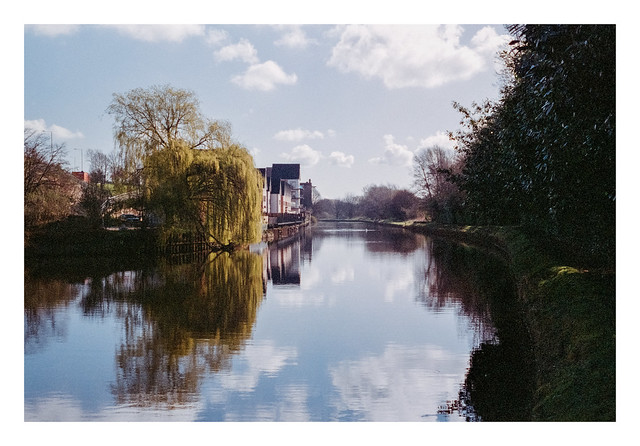
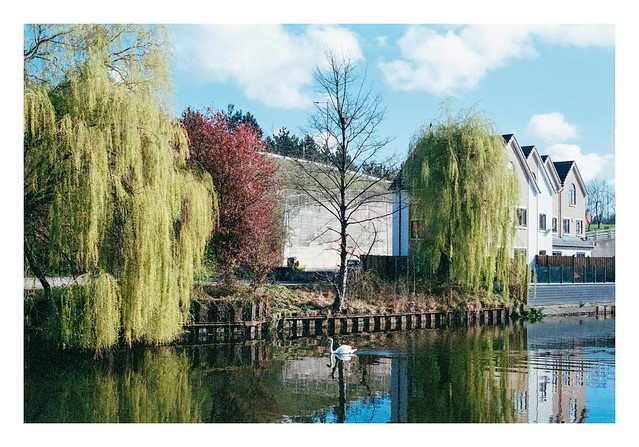
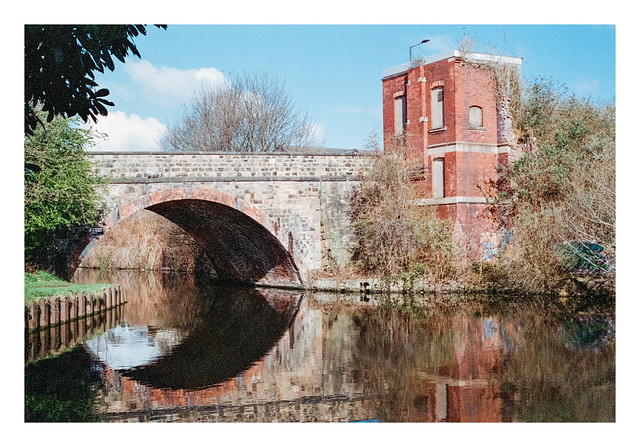
I’m not actually sure if this stretch of canal has a name. It’s a navigable route that runs beside the River Don at Mexborough, presumably because the river itself is not suitable passage in this area. The canal diverts from the Don just upstream of Mexborough and then re-joins it further along, just before the River Dearne also merges with the flow.
I’d visited Mexborough because I believed therewas a camera store in town, but when I got there the address appeared to be closed. Not wanting to waste the trip I had a wander around and took a few photos. The three here today are all taken close to one another from the canal towpath.
Although all three shots have been converted with the same settings, the first has a different tonality to the others. I’m not sure if this is a factor of the Negative Lab Pro processing in some way, or if it’s down to the camera’s metering of the scene perhaps.
I like all three of the photographs, but they probably would have been much better on non-expired film.
Nikon F80, Nikkor 50mm f/1.8 AF-D & TruPrint FG+ (expired 2005). Lab developed. Home scanned and converted with Negative Lab Pro.
The tall chimney of the Veolia Energy Recovery plant stands sentinel over these walls on industrial streets to the east of the city centre. I was shooting a roll of expired film on the day and, when I left the house, the sky was clear and full of light. Unfortunatley, by the time I’d parked and started walking, the sky was mostly covered by cloud. This wasn’t ideal – I don’t like shooting colour film in overcast conditions at the best of times, but even less so with expired film.
As it is, the results aren’t too bad and the grit of the film perhaps suits the conditions. I have more shots from this same roll to come – mostly shot in good light – and the grain is equally prevalent on those too. I have a second roll of this same stock left to shoot and think I’ll overexpose it next time, which is what I normally do with expired C41 film (using the one stop of over-exposure per decade of expiry guidance). I didn’t do that on this occasion as I’d been told the film was fridge stored and wanted to see how it looked shot a box speed.
Nikon F80, Nikkor 50mm f/1.8 AF-D & TruPrint FG+ (expired 2005). Lab developed. Home scanned and converted with Negative Lab Pro.
I had a longer post planned today about my experience with a film stock I’ve not used before but, as time is ticking on and I have that chilled out Friday feeling, I think it will have to wait until the weekend.
Instead one of my shorter form posts, this time with another of the RETO Ultrawide & Slim pictures from my first test roll.
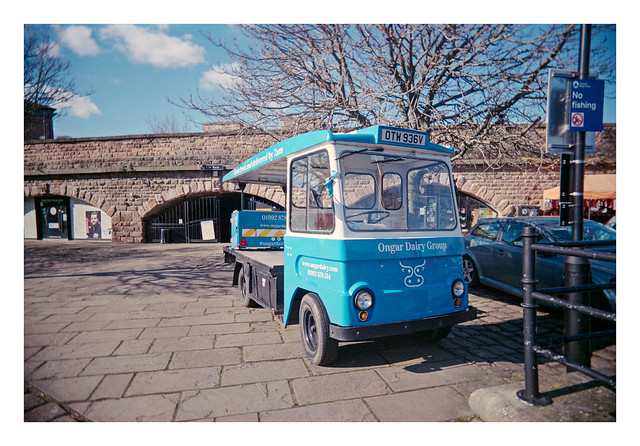
When I was young most people would have their milk delivered by a vehicle similar to this. Electric powered milk floats whirring around the early morning streets, crates of glass milk bottles clinking about on the back, stopping for the white-coated “milkie” to deliver each home’s order to the doorstep where it would wait to be fetched inside. Sometimes, on cold days, the milk would freeze and the foil tops would be pushed off the bottles by the expanding ice. Sometimes greedy birds would peck at the foil to get at the rich cream at the neck of the bottle (none of the homogenised stuff that we get today back then).
Reto Ultrawide & Slim & Agfa Vista Plus 200. Lab developed.
I discovered that someone had a few rolls of expired film available free of charge today, so I took up their offer to take it off their hands. It involved an hour driving to the other side of the city and back during my lunch-break, but it was a nice day and good to get out of the house and away from my desk. The lady with the film told me that it had been in the fridge since it was bought and it’s only the fact that the fridge broke down that they remembered it was there. It’s been there a while as the one roll with an expiry on the packaging is dated 2005. The other two rolls are in un-dated wrappers but I’m assuming a similar vintage. Given its storage, I might even be tempted to shoot a roll at box speed to see how it fares.
The dated roll is Tudor branded 200asa colour negative with 24 exposures, Tudor being a company that re-packaged films rather than manufacturing their own I believe. I’ve not opened the box yet, but when I come to shoot it I’ll look up the DX code to see if I can find out who manufactured it originally – possibly Fuji though.
The other two rolls are Truprint FG+, another 200asa film, and again with 24 exposures. Truprint was a mail-order photo lab and rolls of their film would be supplied with the returned prints. Although I don’t know for sure, I believe that the film might be rebranded Ferrania FG+.
As I’m taking about expired film, here’s a photo made on out of date Superia 100 at the Lincoln Steam Rally three years ago. I’m not sure if there are actually 34 plugs in this tin…
I was pleasantly surprised to hear today that Kodak is introducing a new 120 film choice. Or rather an existing film in 120 format in the guise of it’s consumer grade Kodak Gold. I’ve wished for a lower-cost alternative to Kodak (and Fuji’s) pro-grade films for medium format use so this is great to hear. Of course, here in 2022, Kodak Gold in 120 format is more expensive than Portra or Ektar were just a few years ago, but that seems par for the course at present.
I quite like Kodak Gold in 135 format (although I’ve tended to use Colorplus more), so I’ve splashed out on a pre-order of the 120 format Gold to see how it fares. Hopefully it’ll be in my hands sometime in early April. All things considered though, if colour film maintains its high price point then I’m likely to err even more strongly to my preferred black and white choices purely from an affordability standpoint, with my colour film use limited to where I know it’ll really be worthwhile. I tend to shoot much more black and white anyway so my current stocks of colour film are likely to keep me going for a while yet.
Another colour photo from the Reto Ultrawide & Slim today, and one which exemplifies how much of a scene is omitted when seen through the camera’s viewfinder. In this shot I had composed the scene to include the main arch and the smaller arch to the right. The leftmost arch, the person walking into frame left, and the rear of the car on the right were not present in the viewfinder. I guess I will begin to factor this in as I become more familiar with the camera over time.
Reto Ultrawide & Slim & Agfa Vista Plus 200. Lab developed.
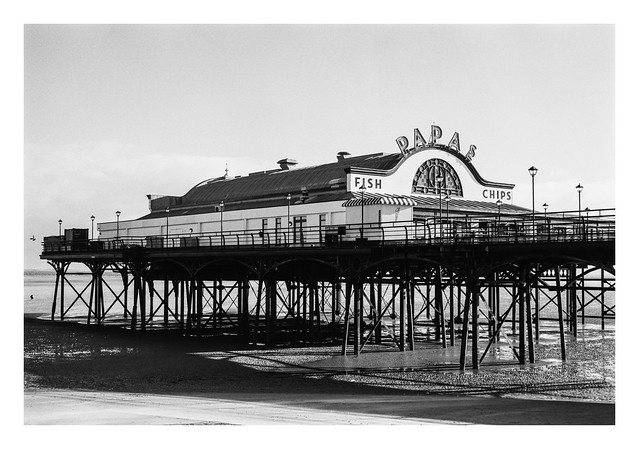
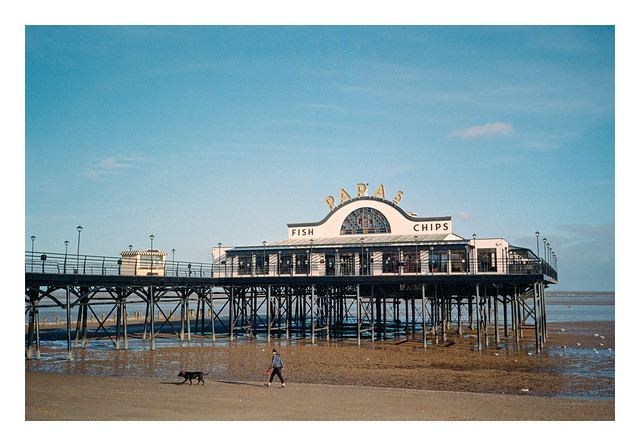
Papa’s has been featured on the blog before, back in 2019. It’s one of those subjects that presents itself as a great photo opportunity, with lots of detail and interest, set against the backdrop of the beach and sea beyond. I had fish and chips the day I visited when making the previous post. I had fish and chips again on this occasion, but it was much colder this time around so instead of eating them on the pier, I walked back to my car parked a short distance away on the promenade and ate them while I sat and looked out at the incoming tide.
There is something comforting about eating in the car like this. It reminds me of when, as a child, we would sometimes drive to a place named Sandilands not far from Mablethorpe in my grandparent’s car. My grandma would always stay in the car, but grandad would come down on the beach with us (us being some variant of my sister, my cousins, and myself) where we would collect the big white pebbles that were scattered around, and which my grandad placed on the ground around the base of their caravan as decoration. When it got cold, we would go back to the car and eat snacks and watch as the sea came in.
Olympus OM-2N, Zuiko Auto-S 0mm f/1.8 & Ilford Delta 100. Ilfotec DD-X 1+4 12mins @ 20°. / Olympus XA3 and Kodak Colorplus (expired 2012 and shot at 100asa)













 Steel City Snapper photography