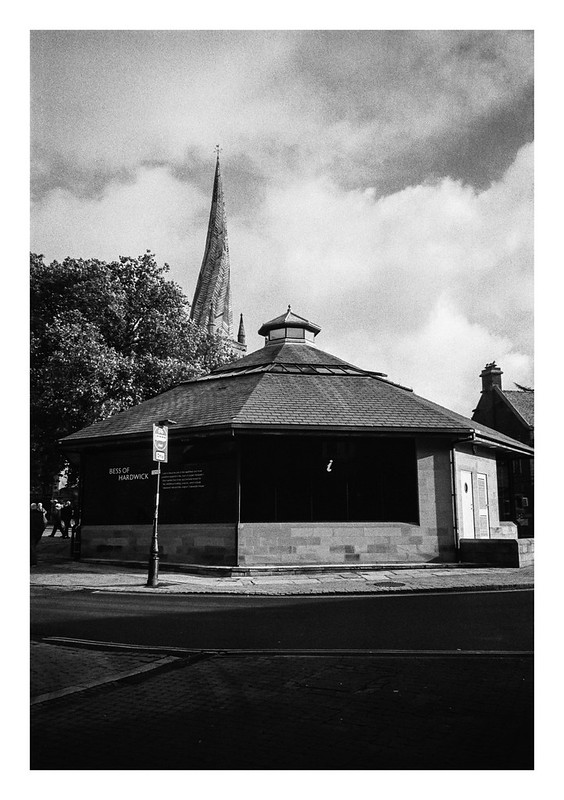
As I’m still top-and-tailing my camera review post (it’ll no doubt be a crushing disappointment after I’ve carped on about it so much over the last week or so…) so I’ll drop in a few photos I took inside St. Mary and All Saints church in Chesterfield a couple off weeks ago. This is the church famous for it’s crooked spire, a phenomenon believed to be caused by uneven heating of the lead in the stucture by the sun. While I’ve made a number of photos of the spire and outside of the building in the past, I’ve only ventured inside on two or three occasions – including this one.
I quite enjoy making pictures of the artefacts and ephemera within churches. Theres a wonderful sense of history to be had. As church interiors are often quite dimly lit, and as the use of tripods or (especially) flash are generally forbidden, I decided to shoot some Ilford HP5+ pushed to 1600asa. While this increased the grain and contrast a little, I’ve found that HP5+ handles both very well and they are not overwhelming at all.
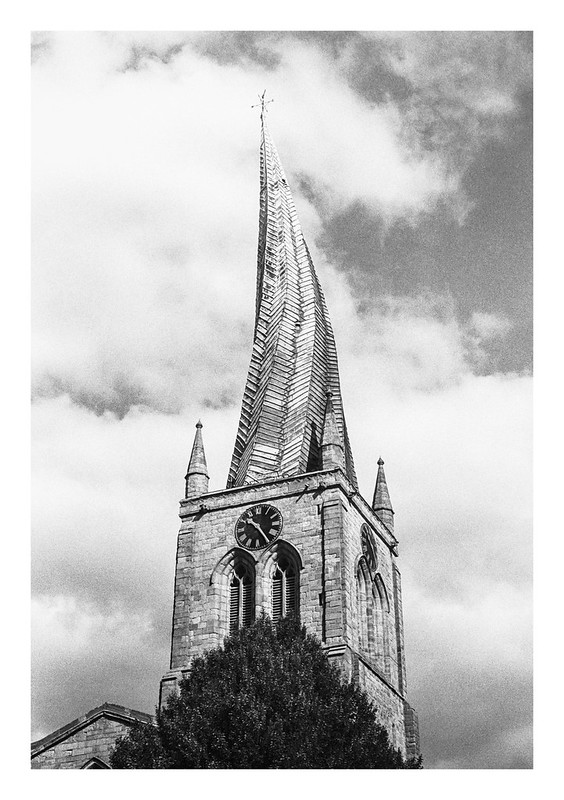
The famous Crooked Spire, viewd from a southerly aspect. This shot was made on an ealier visit using my Minolta SRT-101b, Rokkor 50mm f/1.7 using some expired Kodak Tri-C Pan film.
The nave of the church looking east to the altar. Note the now de rigeur Covid-19 social distancing sign.
A stout wooden cover atop the font.
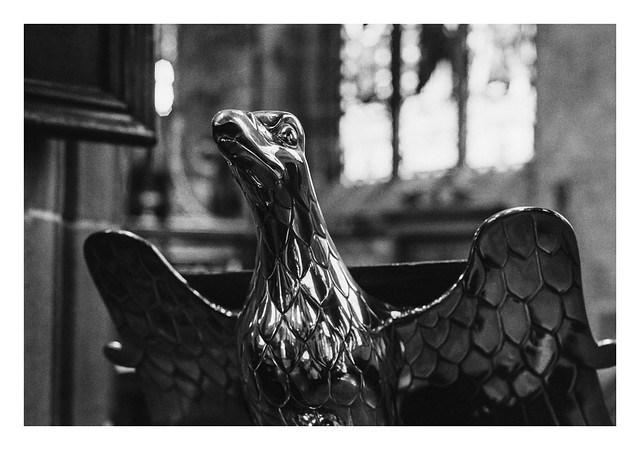
A lectern in the form of an eagle.
The pipes of the church organ.
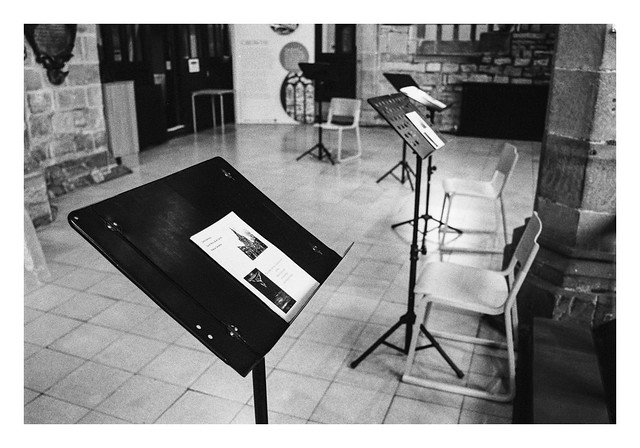
Chairs and music stands.
Various statues, shrines and other paraphernalia of the church.
The Crooked Spire is the dominant landmark in the town of Chesterfield, not too far from where I live. It sits atop the Church of St Mary and All Saints and there are a number of legends as to how it became this way, but the actual reason given is that it is due to uneven heating on the lead coating of the spire from the southerly sun, which results in uneven contraction and expansion, and that the original structure was both made from unseasoned wood and not designed to bear the weight of the lead.