Film photography · Medium Format · Photography

Crash! Bang! Rollop! What a Picture! A review and test of the Lipca Rollop II TLR

Lipca Rollop II
The Lipca Rollop II. Portrait by Nikon F80, Sigma 105mm f/2.8 OS HSM, and Ilford HP5+ (@1600asa).

A year or two back I was given a box of old cameras, four in total. These included a Voigtlander Vito B. a couple of Soviet-era rangefinders, and a Lipca Rollop TLR.

I tested the Vito B with a roll of film not long after receiving it, but not a single shot was even close to being in focus, and I suspect someone had attempted to repair it at some point but then not correctly aligned the zone-focus lens when putting it back together. Both the rangefinders had aperture rings that were locked solid, so I passed those on to people who might hopefully be able to repair them and make use of the cameras.

The Lipca though, while a little dirty, looked ok – the only issue that stood out being some rotted light-seals in the film chamber – so I decided to hold onto it and give it a test. In the end it remained in a drawer for the best part of two years until, a couple of weeks ago, when I finally decided to try it out. But before I go into detail on that, here’s a little pen protrait of the camera…

According to Camera-Wiki.org, the Lipca company (short for Lippische Camerafabrik Richter & Fischer) was formed in Bartrup, West Germany, in 1947. The owners, Fritz and Charlotte Richter, and Karl Fischer had moved some of their equipment and employees from Tharandt, near Dresden, which was in the Soviet zone as they feared the factory would be expropriated. The new company was fully founded the following year.

The company was a small organisation with around 50 employees working in a close-knit family atmosphere. Their peak output was around 1000 cameras per month.

They produced a number of TLR models, starting with the Flexo in 1948. This was to be re-named the Flexora following a trademark dispute with Franke & Heidecke. There were three variants of the Flexora before a new camera, the Rollop, was introduced – this model using an injection molded aluminium body rather than the sheet metal of the earlier cameras. Three versions were produced between 1954 and 1962. The main difference between models was probably the film transport which started as a knob winder on the Rollop I. A crank winder was introduced on the Rollop II, and this crank was upgraded to also cock the shutter on the Rollop Automatic, the final variant. The Rollop Automatic also featured an Enna Lithagon taking lens, replacing the Enna Ennagon on the previous versions.

When the demand for TLR cameras fell into decline in the early 60s, Lipca tried to gain a foothold on the emerging 35mm market by selling re-branded cameras from King, and Franka. Lipca also manufactured other equipment such as binoculars,slide-viewers, and they carried out some production work in conjunction with Plaubel. After a move to a new site in Bad Nauheim in 1961, all camera production ceased in 1962, and the Lipca name was dissolved in 1972.

The model I have is the Rollop II, a twin lens reflex camera with a 75mm f/3.5 Enna Ennagon taking lens (replicated in the viewing lens). Both lenses have a filter thread. Shutter speeds range from 1sec to 1/300sec with a bulb setting for long exposures. Apertures cover f/3.5 through to f/22. Shutter speed is selected by rotating a toothed wheel mounted around the taking lens, aligning the required speed with a red arrow at the 12 o’clock position on the lens barrel. Aperture is chosen with a lever that rotates around the lower right section of the lens barrel, this needs to be pulled out slightly to change the setting as it latches into the teeth on the shutter speed dial. This latching mechanism means the camera has a simple but effective shutter-priority function. For instance, if the shutter speed is set to 1/125sec and the aperture to f/8, then rotating the shutter speed to 1/300sec will simultaneously change the aperture to f/5.6. Changing shutter speed to 1/60sec would change the aperture to f/11 and so on. The aperture can still be manually set if required.

The shutter cocking mechanism is a lever on the upper-right of the lens barrel, and the shutter lever resides on the lower-right. There is a threaded cable release point just above the shutter lever.

Also on the front of the camera is a sync socket. M and X synchronisation settings are available from a small switch on the upper left of the lens barrel.

The film is advanced by a crank mechanism on the right of the camera. This operates in a forward / return action, rather than full rotation. The handle of the crank is hinged and can be latched to prevent accidental advancement of the film.

The camera viewfinder is a standard ground-glass affair, but with a horizontal split-prism in the centre. A magnifying lens hinges out from the front of the viewfinder housing for fine focusing, and the housing also features a sports-finder.

The left side of the camera houses the focus knob with distance scale, the film reel release knobs, and a small screw that holds the film compartment closed. When partially unscrewed, this is pushed in to pop open the back of the camera. There is also a cold-shoe on this side of the camera.

There are a couple of latches for a camera strap on either side of the body, and the base of the camera has a tripod mounting socket and four small metal feet.

The first thing I did with my Rollop II was to give it a clean. The bodywork is in pretty nice condition, the leatherette is all intact and there are no significant marks anywhere, but it was a little scruffy. A soft cloth and some rubbing alcohol removed most of the surface dust and dirt without trouble. I removed the focus screen housing to give it a better clean and to allow the mirror and inside of the viewing lens to be cleaned with a dust blower and (for the lens) some lens cleaner. Both lenses were cleaned on the outside, and I then cleaned the inside of the taking lens while the camera was in bulb mode.

While the light seals looked in a bit of a state, I decided to leave them alone for the time being (they are partially covered by the film tension plate, and I could see no easy way to remove it to allow access) and just see how the camera would fare with a test roll of film – some Fomapan 100.

In operation, the camera was straightforward to use and gave no unexpected surprises. My only issue being that the focus screen didn’t have a lot of contrast and it was quite difficult to see depending on the light. Using the magnifyer helped though. I found the shutter release to be easy to use and think that this lever-type release is perhaps better for keeping the camera steady than the push-button release on something like a Yashica Mat 124.

I went for a walk around a local nature reserve and shot the full roll. I noticed with some surprise that the camera would still fire even after winding on from the twelth frame, so took another shot for good luck, not really expecting anything from it. I would be surprised…

Testing a Lipka Rollop II
Testing a Lipka Rollop II-2
Testing a Lipka Rollop II-5
Testing a Lipka Rollop II-6

I developed the roll of film in my usual Ilfotec DD-X and was pleased to see a negatives appear. One instant plus was that my extra shot had given me a thirteenth frame! It was right at the very end of the roll, and I ended up having to crop it afterwards because of marks caused when drying the film, but still – a bonus! This pleasant surprise was, sadly, marred a little by the unfortunate fact that around half the frames had very noticeable light leaks.

Testing a Lipka Rollop II - 13 shots on a roll!
The lucky 13th shot. I had to crop it a little, and I’m not sure what has caused the circular mark at top-centre but, hey, beggars can’t be choosers!

While some of the light leaks looked normal given the state of the light seals, many of the affected frames had an odd arc of brightness across the centre of the frame, as can be seen in the three photos below.
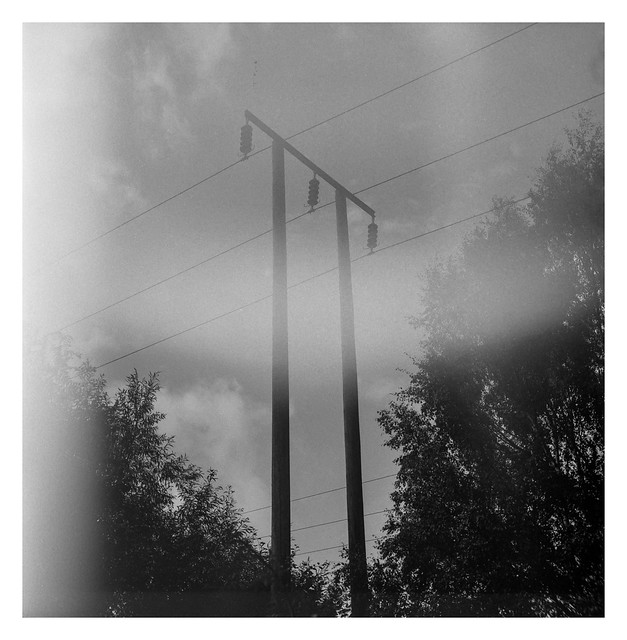
Testing a Lipka Rollop II - General light leaks
Testing a Lipka Rollop II - Front standard light leak

Based on these findings I decided to do what I could to replace the seals. With some degree of fiddlyness, I was able to replace the ones the were partially obscured by the film plate, along with the rest of the more accessible foam.

A few days later I took the camera out again, hopeful that my replacement seals would resolve the problems.

This time, when loading the film, instead of winding the crank four times as stated in the manual, I just wound it on three times hoping I would again be able to squeeze an extra frame from the roll.

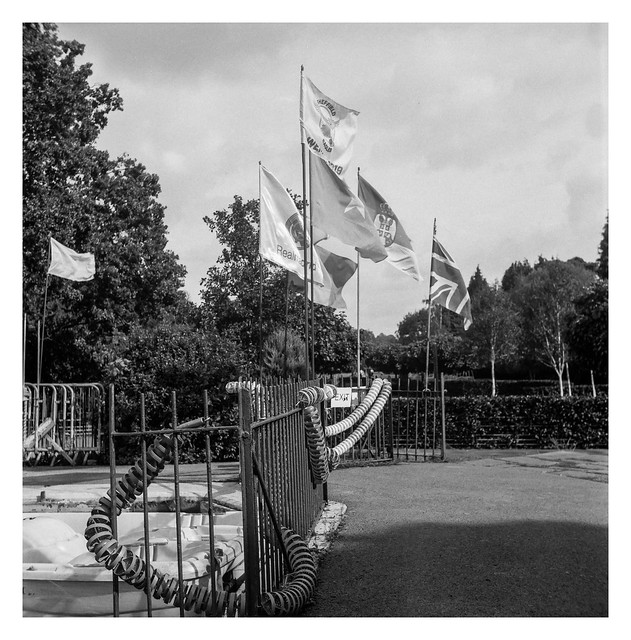
Testing a Lipca Rollop II
Testing a Lipca Rollop II-2
Testing a Lipca Rollop II-3
Testing a Lipca Rollop II-4

I again shot all (thirteen!) frames on a single outing, albeit the final bonus frame being a shot of a mug on the kitchen counter taken when I got home.
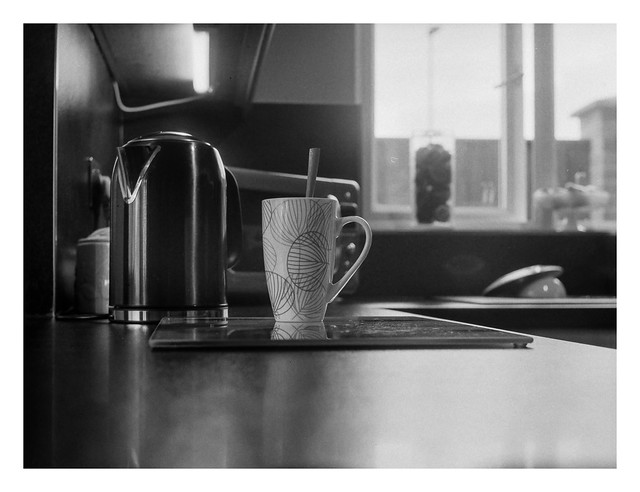
Bonus frame
The second bonus 13th frame. Maybe not the best shot ever, but again – bonus!

This time, most of the frames were free from light leaks – all except one, again showing the odd arc-shaped mark.

There was also one completely blank frame where I think I accidentally wound the film on without firing the shutter!

I decided to look at the camera more closely, and wondered if the light might be coming from the lens, rather than the film compartment. I shone a bright light at the front of the camera and opened the film compartment. This revealed a feint glow coming from the edge of the taking lens. Further investigation also revealed that the front standard had a very small gap when focused closely (so that it was racked out as far as it would go). This explained why the leak only appeared on certain frames – those where the camera was focussed at or closer to infinity where unaffected as the lens standard was racked back to the body of the camera, closing the gap. Only the shots where I had focussed on closer subjects had the problem.

I don’t have the necessary technical ability to repair this properly, at least not without risking more significant problems or breaking it completely and, as the camera was a freebie (and I already have a working TLR in the form of my Yashica Mat 124G) I don’t really want to pay the price of a professional repair. I think I will give it another test though – I have an idea to attach a skirt of black felt around the racking mechanism using some tape which ought to block the light getting in where it’s not wanted. Maybe not elegant, but hopefully it will work. I guess I’ll find out before too long! 🙂
Film photography · Medium Format · Photography

Holga 120N camera review

This is the first review of a camera I’ve ever written for this blog (or, indeed, anywhere else for that matter). I’m not a professional gear reviewer and there are doubtless more thorough reviews available where it comes to technical specifics, camera history and so on, so this is mostly going to be my own personal opinion of the camera based on my experiences to date.

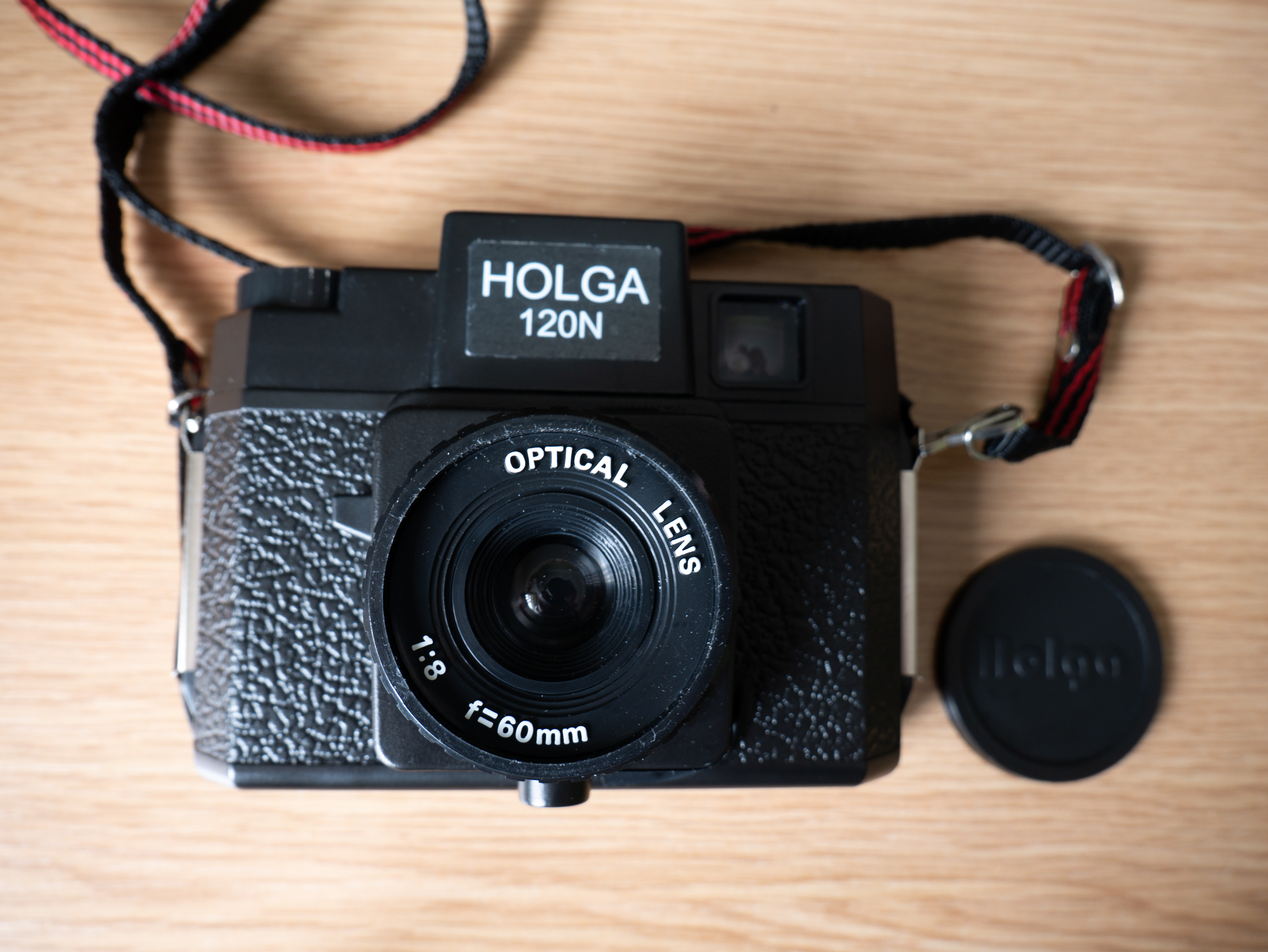
Holga 120N
The Holga 120N. Look at those tech specs – an “optical” lens!

A bit of history

The Holga was designed in China back in 1982. Because 120 roll film was the most widely available type of film available in the country back then, the camera was designed around this format and it was intended as an affordable mass-market camera for the home market. Unfortunately, the growth in adoption of 35mm film and the wide availability of imported 35mm cameras and film into China soon resulted in 120 film use being all but eliminated there.

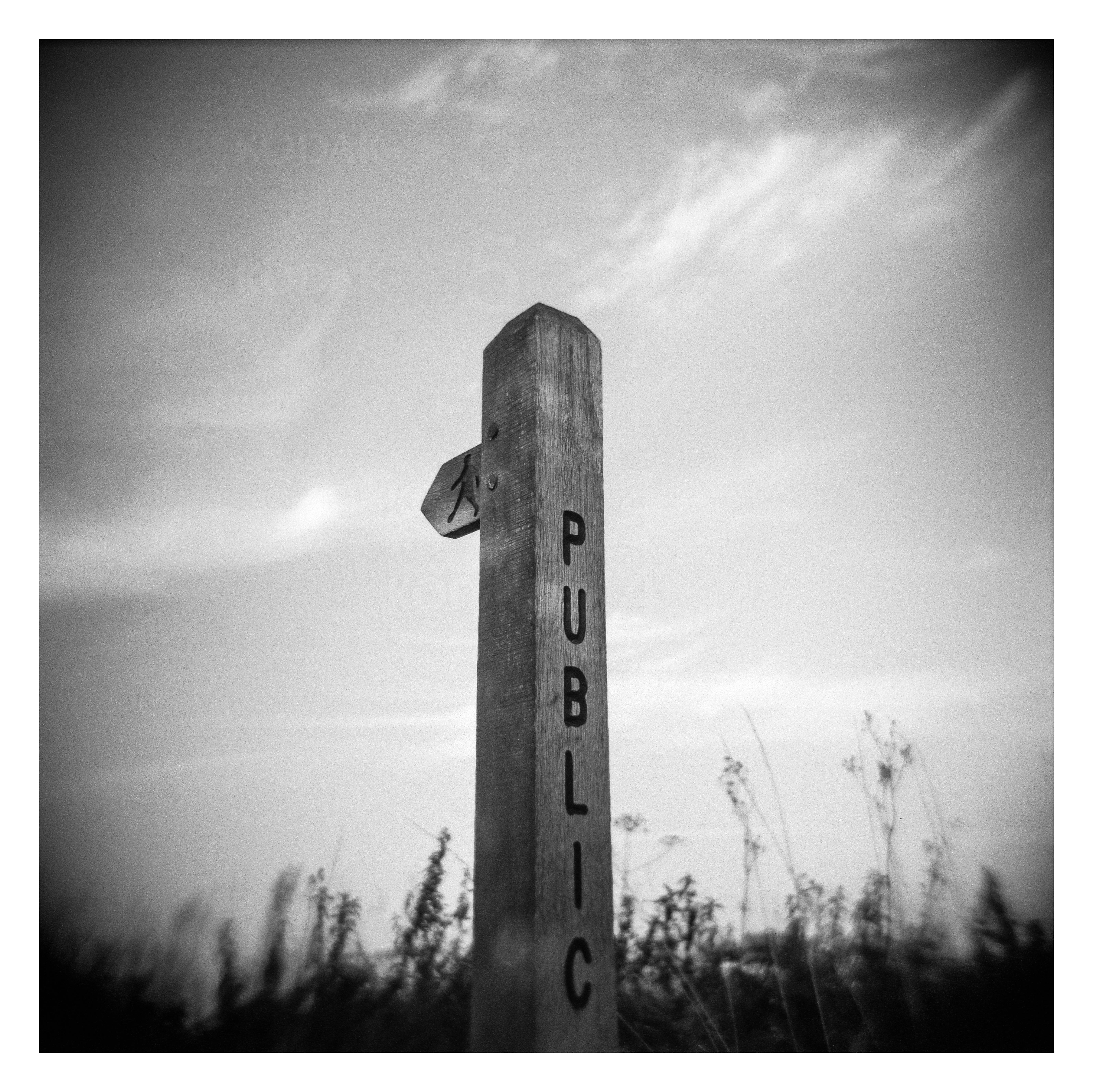
FILM - Public
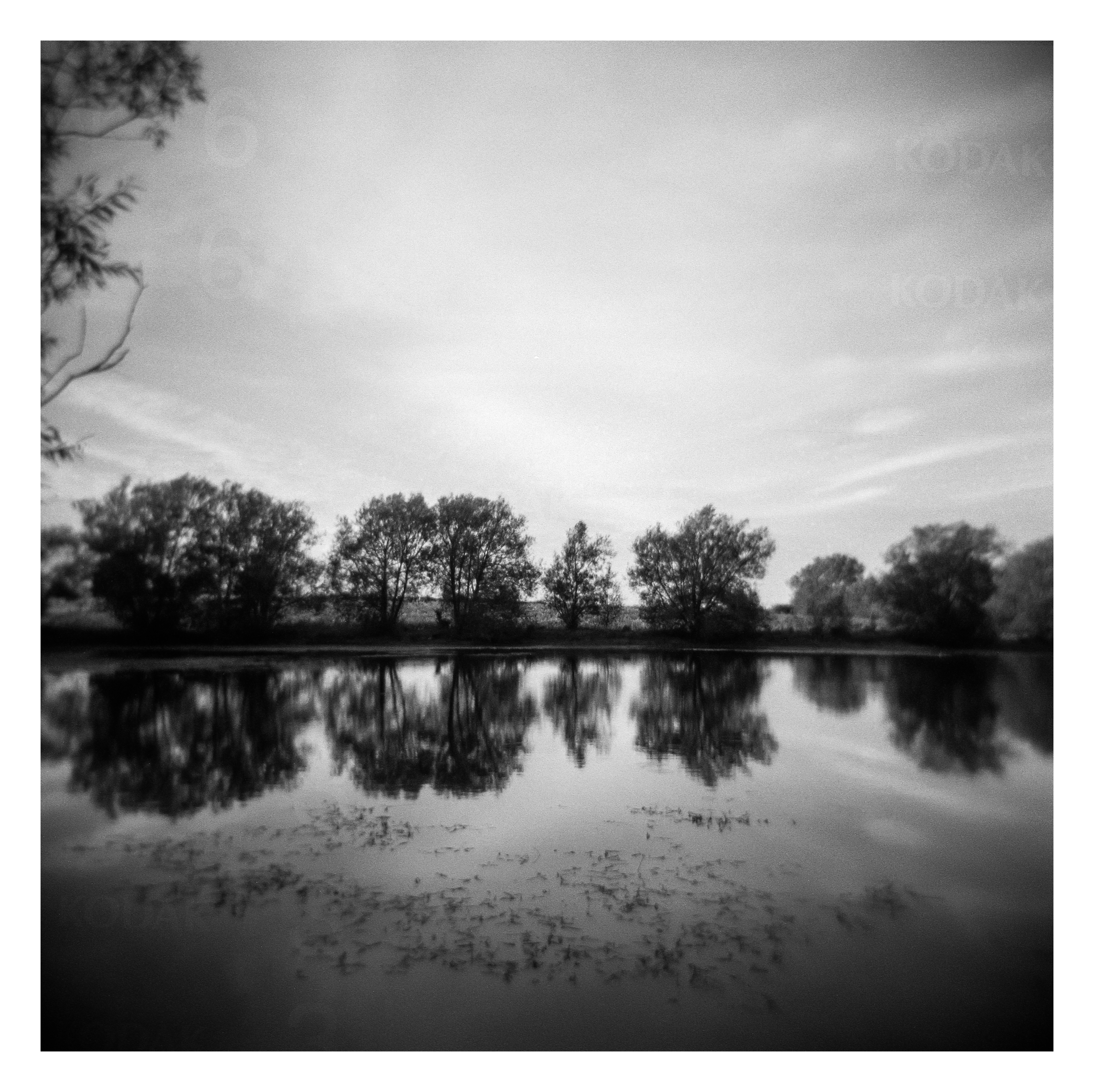
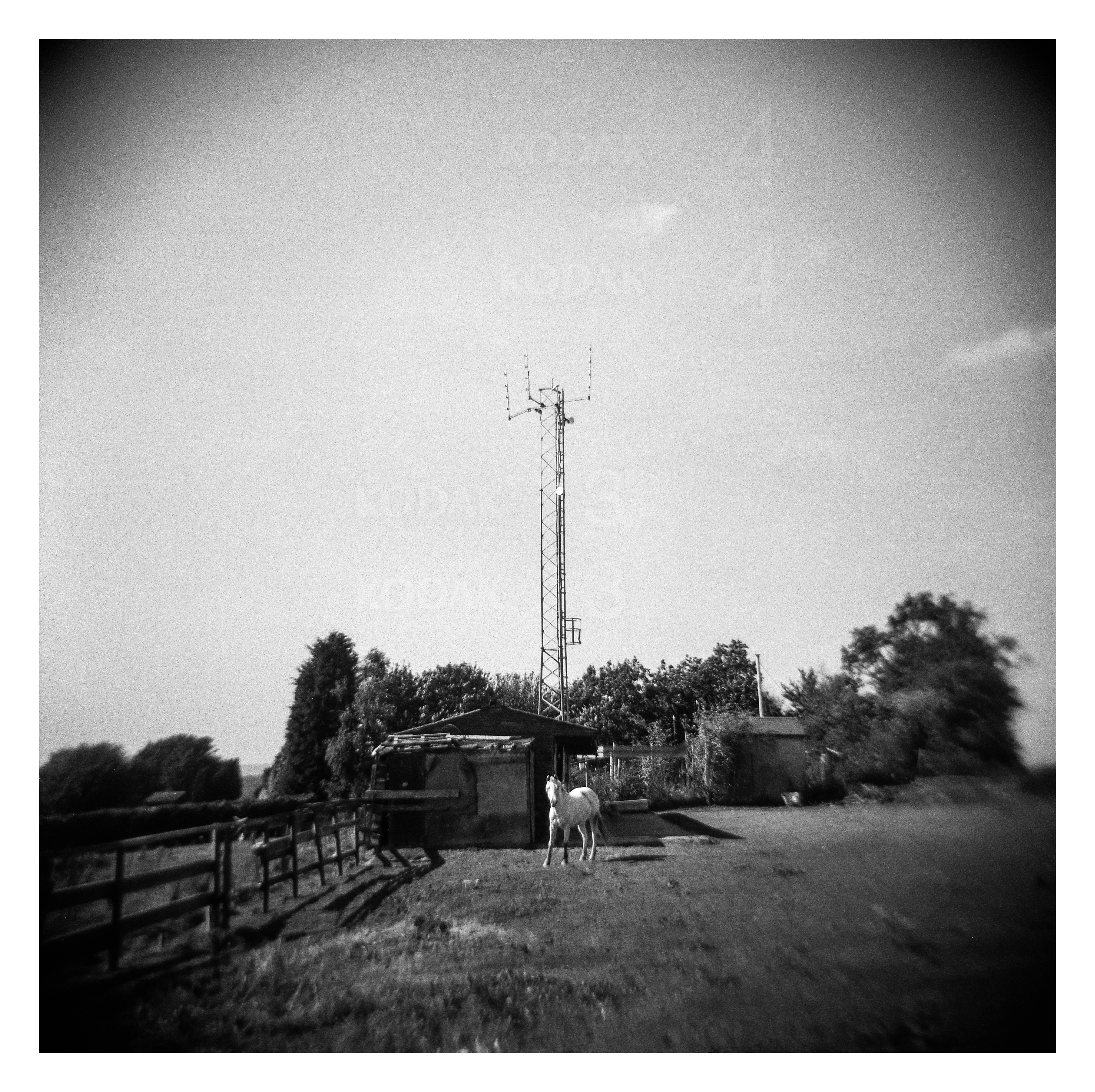
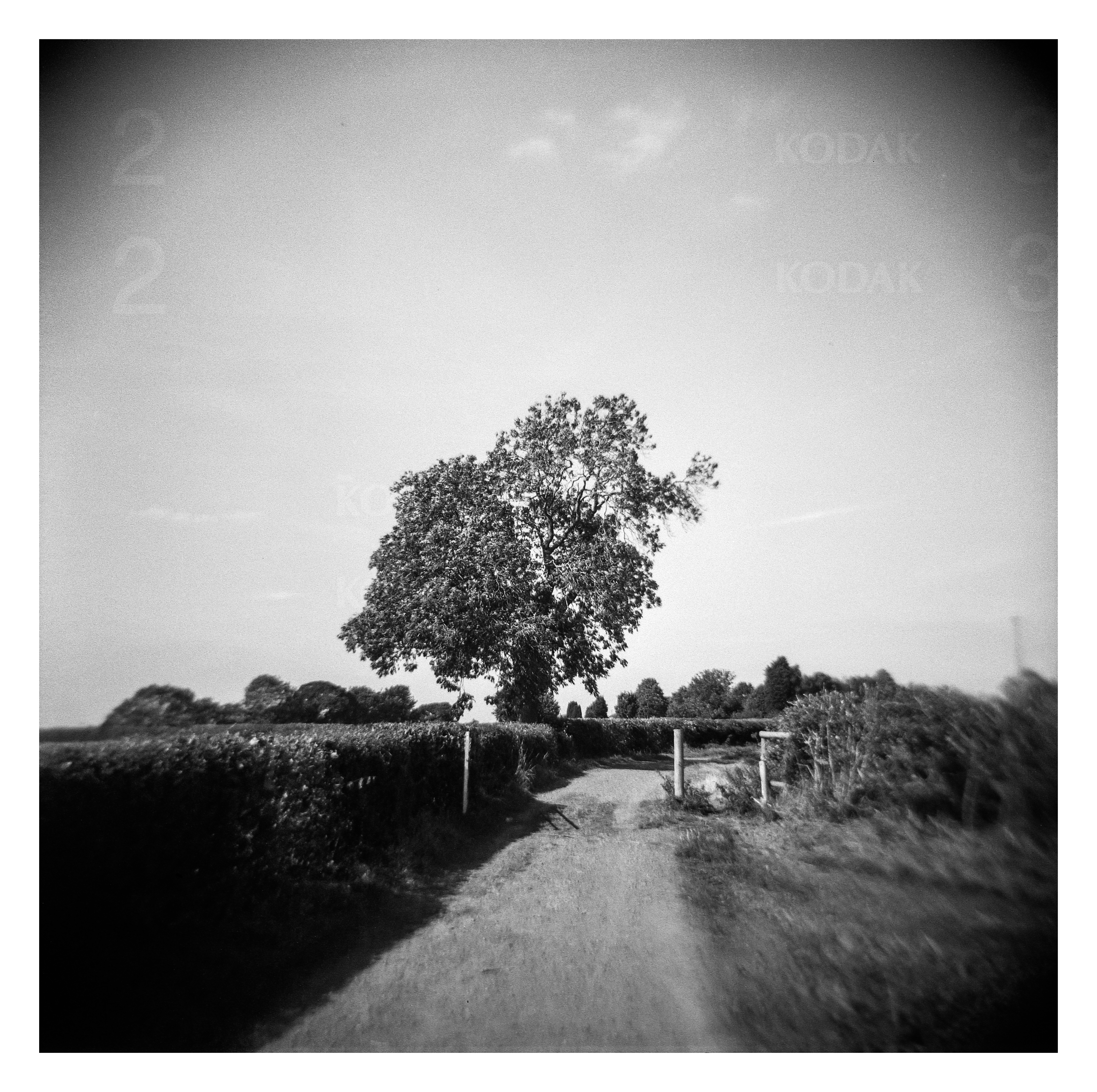
You may be able to spot some writing on ths (and other) photos in the post. This is due to the rolls used being froma faulty batch of Kodak Tri-X on which the backing paper details would bleed through onto the negatives. I believe Kodak did a recall when they discovered this, but I bought these second-hand so was stuck with them. They perhaps suit the Holga anyway, I think. 🙂

Holga’s manufacturer thus sought new markets outside China. Despite its very basic design and featureset, some photographers became attracted to the results the camera produced, placing value on the somewhat surrealistic, low-fi photographs it could produce and it gained a place for itself. The camera continued to fill a space in the market for a number of years, especially as a new-found appreciation of film photography took hold. The camera did end production in 2015, but demand has led to manufacturing recommencing and new Holgas can still be bought to this day.

The specs

This review is of the Holga 120N – the most basic model currently available (although still an upgrade from the earlier 120S model). There are a variety of other models offering various upgrades such as built-in flash, coloured flash gels, glass lenses etc. There are also 35mm, pinhole and TLR varieties too. Perhaps inspired by the success of Instax cameras, a range of colours is now also available to complement the original black.

FILM - Reflections through a plastic lens

The camera body is almost entirely made of plastic. Not expensive, high-grade, impact resistant plastic or anything fancy like that though. It has the feel of a cheap children’s toy (it is, after all, often described as a “toy camera”). The only metal parts that are present are, as far as I’m aware: the clips that hold the back to the camera (and to which the strap can be afixed); a small, basic spring that triggers the shutter blades (although I’m not sure about the shutter blades themselves – they could be metal too); a flash cold-shoe atop the camera; and a tripod adapter. Everything else is plastic, including (on this model) the lens.

The camera allows photographs to be shot in 6×6 or 6×4.5 aspect ratio, giving 12 or 16 shots respectively. This is controlled by fitting one of the two plastic masks supplied with the camera as required. These slot into the camera before the film is loaded and can’t be changed between shots on the same roll.

FILM - Horse antenna-2

The lens is a simple uncoated meniscus design with a focal length of 60mm which is around 33mm in full-frame terms. Focussing is managed by a simple zone-focus system with a series of icons on the lens barrel denoting subject distance. There are four icons representing distances of 1 metre (3 feet), 2 metres (6 feet), 6 metres (18 feet), and 10 metres (30 feet) to infinity. The lens vignettes significantly, and has very noticeable drop-off in sharpness as you move away from the centre. The centre is reasonably sharp, but no match for an even halfway-decent lens.

The camera has two aperture settings, controlled by a switch atop the lens. f/8 – denoted by a sunny symbol, and f/11 – denoted by a cloudy symbol. On earlier models this switch did absolutely nothing, both apertures being identical. Mine, however, does work, although I’m not going to bet my life on the accuracy of the settings.

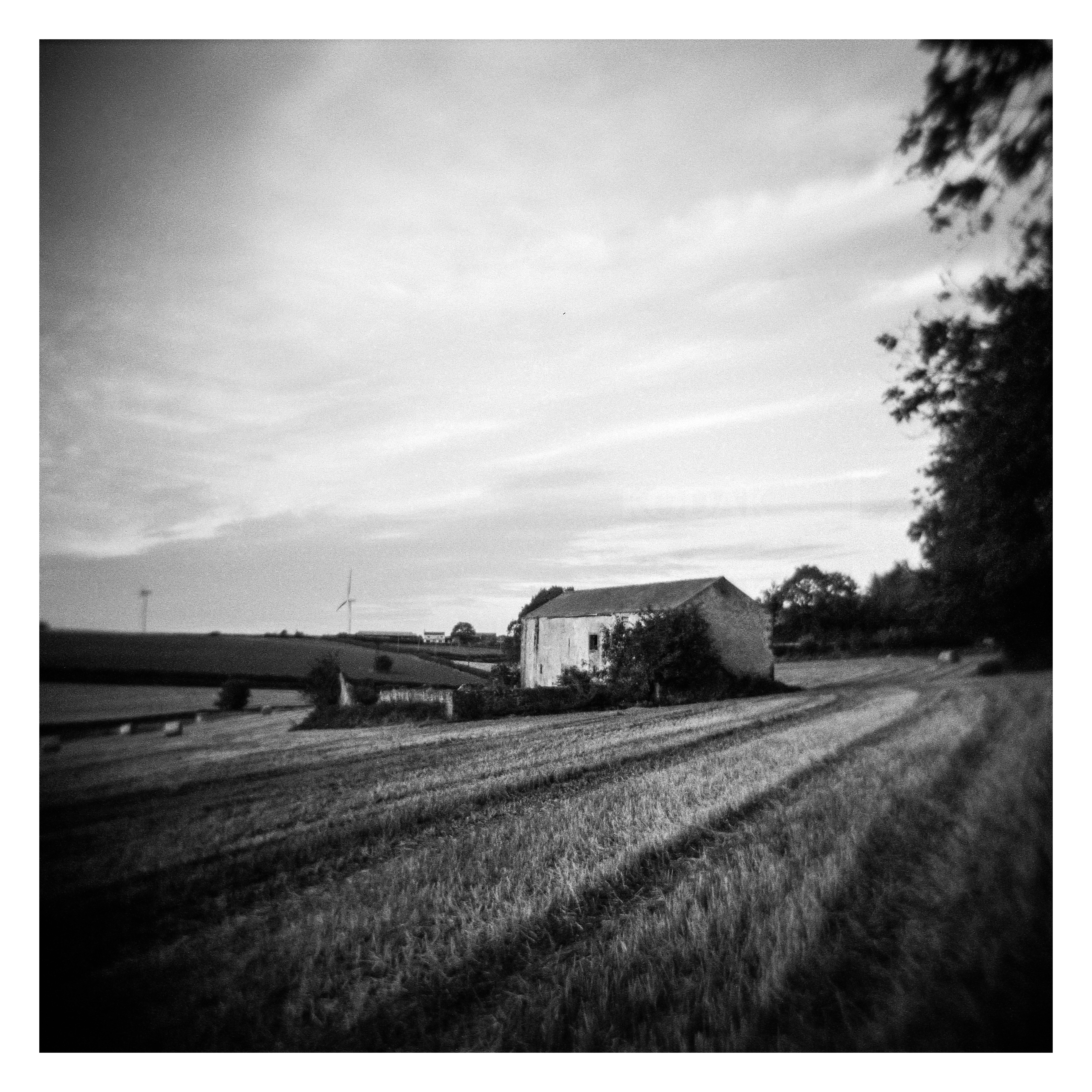
FILM - Farmed around

The shutter has a couple of speed settings, controlled by a small (and in my camera’s case, loose) sliding switch beneath the lens:

  • N – Which I presume stands for “normal”, which is supposed to be 1/100 sec, but could be anything from 1/60 to 1/125 depending on manufacturing tolerances. As the shutter is controlled by a simple spring, it’s likely that the shutter speed will gradually drift over the lifetime of the camera as the coil loses it’s tension through use).
  • B – Bulb setting. As the camera has no cable-release mechanism, this has to be controlled by holding the shutter lever in place manually. Even mounted on a tripod, this is likely to introduce some camera shake.

The shutter release is a simple lever to the right of the lens.

Film advance is controlled by a ratchetted dial on the top-right of the camera. There is no multiple-exposure prevention on the camera, so it’s possible to expose the same frame as many times as you like (or by accident!).

Film advancement is also governed by a red window on the rear of the camera. This has a sliding switch which should be set to 12 or 16, depending on the aspect ratio you have chosen, revealing the correct set of frame numbers on the backing paper.

Using the camera

To load the camera with film, the back is removed by releasing the two sliding metal clips at either side.  Before loading the film, you can choose to change the frame mask if required, which are held in place by a simple plastic clip at either side and are pretty easy to change. The fresh roll of film is fitted in the left compartment of the camera. The mechanics are simple – a small plastic peg to slot the top of the reel onto. There is no peg at the bottom of the reel and tension is maintained by a piece of foam rubber at the back of the compartment. The film is then attached to the take-up spool at the other side of the compartment (which has a similar single-peg / foam rubber arrangement – the only difference is that this peg is shaped to allow the film to be wound). After attaching the film, wind it on to check it is fitted correctly and then re-attach the back of the camera. You can now wind the film on until the first frame (1) is visible in the red window. It’s important that the slider on the red window is in the correct position or you will end up with a lot of wasted film or overlapping frames depending on the mask you have fitted (I speak from experience here!).

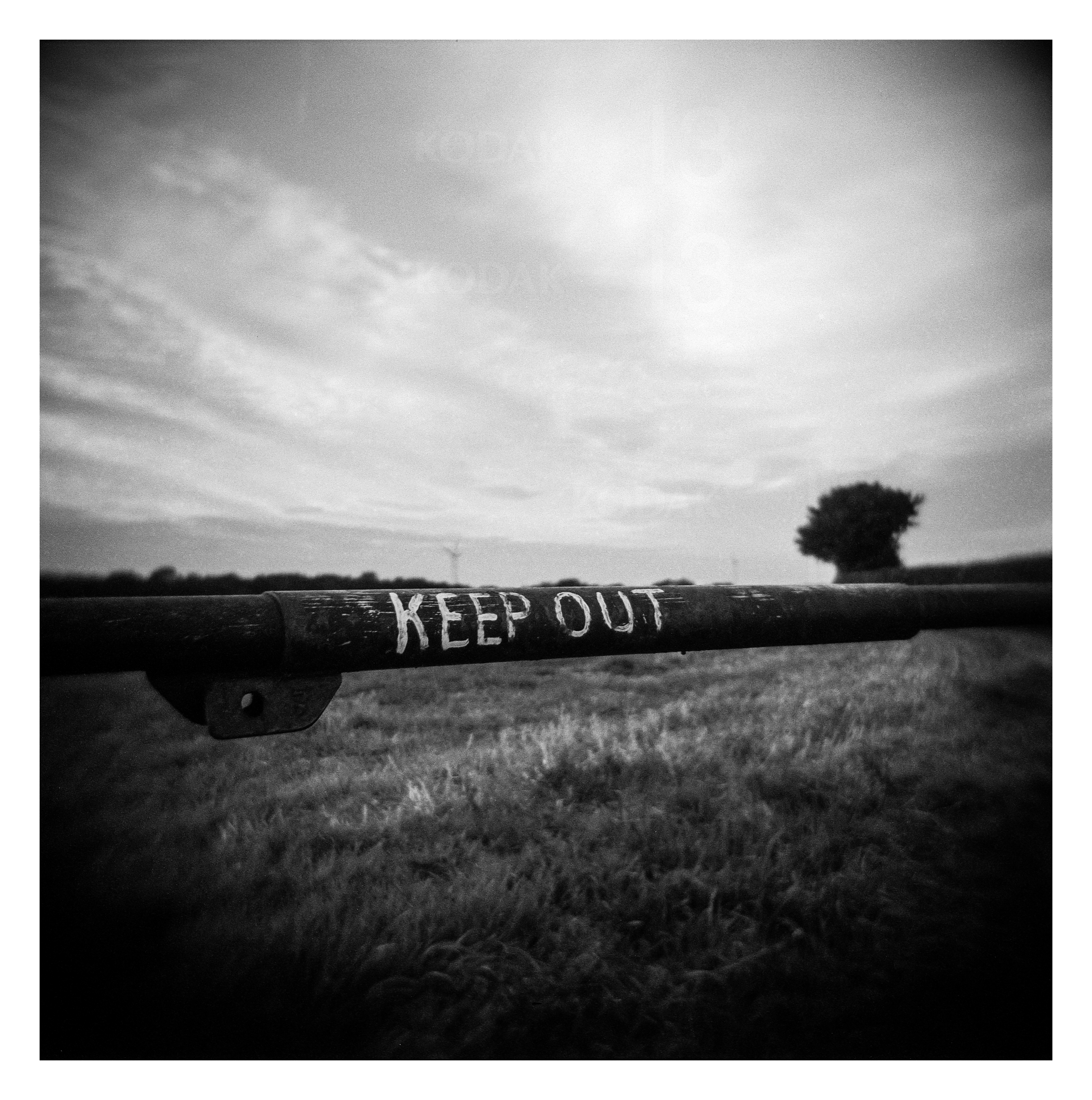
FILM - Keep out

Once the film is loaded and you’re ready to take your shot, you should check that the shutter and aperture settings are correctly set. You can then focus using the distance markers on the lens. The shutter is triggered by pressing the lever. If you’re using bulb mode, you will need to manually hold the lever down until the exposure is finished.

Once the shot is taken, wind the advance wheel until the next frame number appears in the window on the back of the camera.

When all shots have been taken, wind the film on fully until you can no longer see the paper through the window. You can now remove the camera back and take out the exposed film.

Personal observations on use

Loading film is a little tricky. Although the process is a simple one, the flimsy plastic construction means that it can be difficult to get the reels of film in or out of the camera and there’s a definite fear that you could easily break something if you’re not careful.

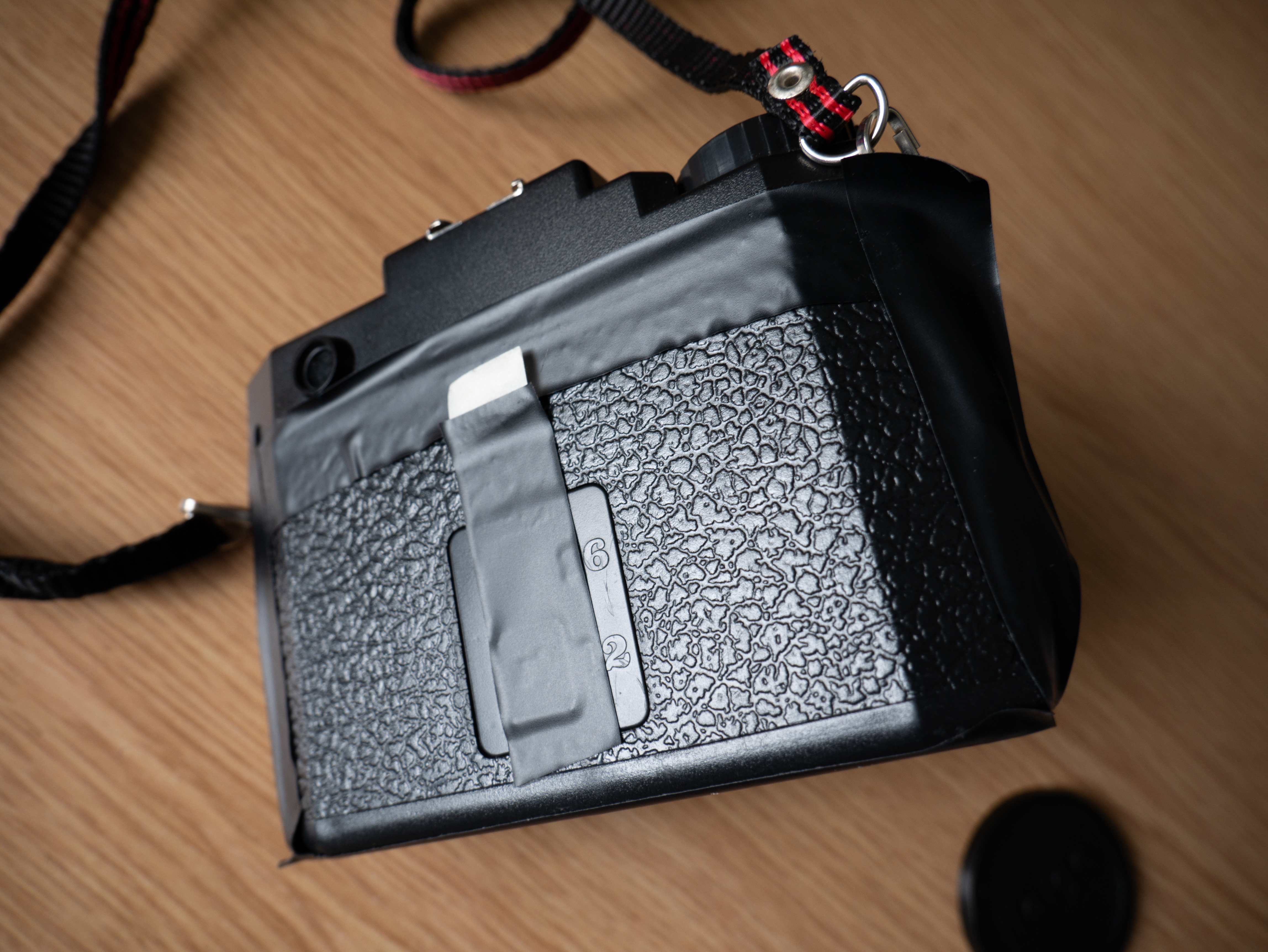
Making sure the camera doesn’t let in light (or fall apart!) is also important. While I did make a test photo when I first got the camera to see if it leaked light, and it seemed fine, I still don’t trust it. As a result I use black electrical tape to cover the seams where the back of the camera fits to the body. This tape also covers the clips at either side of the camera, giving protection against the back accidentally opening in use. I also use a piece of tape to cover the red film-counter window, only lifting it when I advance the film. Some people really like light leaks (and might even buy a Holga for this reason), in which case you can probably dispense with the tape – although I’d still advise some to hold the back on securely. There’s a difference between artistic light leaks and an entire roll of ruined film!

Holga 120N-2
All taped up securely!

It’s also important to check that your aperture and shutter speed switches are set correctly. While getting the aperture wrong might not ruin your results, the overexposure and camera shake that can result from being in bulb mode by accident (as I managed to do for three whole rolls! – see here and here) are more significant. I’ve now taped my shutter speed switch into the N position to avoid further accidental long exposures.

Focusing the camera is straight forward enough. As long as you can estimate the distances within a reasonable margin of error then your shots should be fine. Like with any zone-focus camera, because you’re looking through a basic viewfinder, it IS easy to forget to do this and take a whole bunch of shots with the camera set to the wrong focal distance. Likewise, and while I’ve not done this myself (yet), it’s also a simple thing to forget to remove the lens cap and shoot blank frames.

The photographs

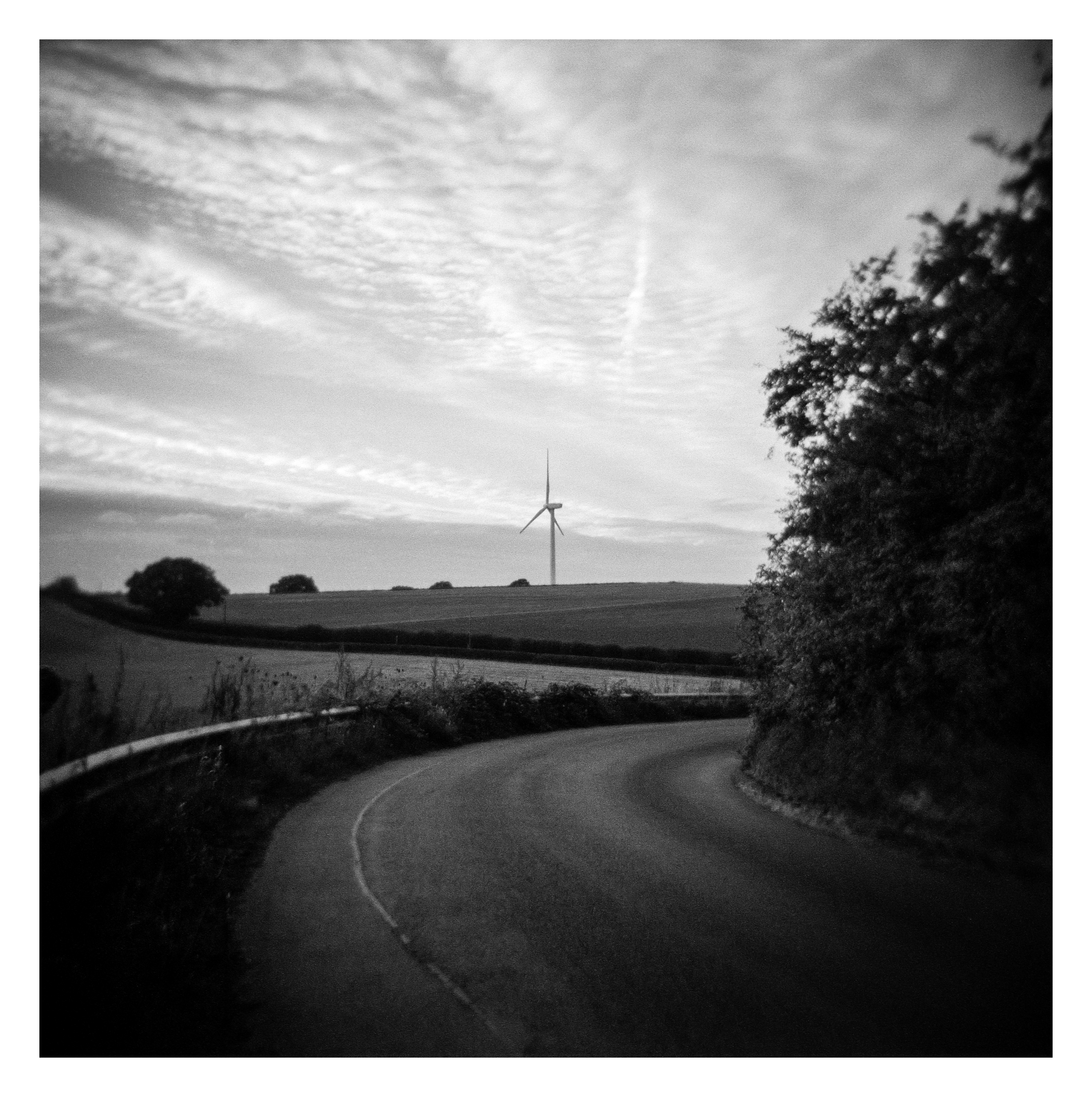
From a technical perspective, the Holga produces terrible photographs. They are heavily vignetted and only the centre part of the frame is sharp, and even then probably only “acceptably” so. From an artistic point of view, on the other hand, the Holga’s results can be beautiful. Their flaws can provide a sense of surrealism. The soft focus around the frame edges can give things an almost impressionistic air, with these elements taking on a soft, smudged, nostalgic look. The camera favours subjects being placed centrally, the eye being drawn to them due to the image imperfections.

FILM - Places we go to

Unless completely new to the Holga, I think most people buy into the “experience” that these cameras provide. The joy is to be found within the imperfections, not despite them, and learning how to make the camera shine is both challenging and rewarding. If you’re the sort of photographer who places a premium on image sharpness and equipment features / quality at all times then this camera might not be for you. If, on the other hand you can accept the camera for what it is, find beauty in imperfection, be prepared for the odd accident (or several!), and enjoy the hunt for subjects that the Holga can do it’s own brand of justice to, then it’s a pleasure to use.

FILM - Horse antenna

All photos: Holga 120N & Kodak Tri-X (expired).

Taken during September 2019